What is mandelic acid? Benefits, how it works, and who should use it
By Ulta Beauty Editors · Published September 2026
All products featured are available at Ulta Beauty. Ulta Beauty Advisors select products independently. Prices and availability are subject to change.
Mandelic acid is an alpha hydroxy acid (AHA) derived from bitter almonds. It works by loosening the bonds between dead skin cells at the surface, allowing them to shed more consistently and revealing softer, more evenly toned skin underneath. What sets mandelic acid apart from other AHAs is its molecular size: it is larger than glycolic acid and lactic acid, which means it penetrates the skin more slowly. That slower penetration tends to produce less irritation, making it a particularly suitable starting point for sensitive skin or for anyone new to chemical exfoliation.
The short answer: Mandelic acid exfoliates the outer layer of skin, can help with the appearance of acne-prone skin, and may help fade dark spots over time with consistent use. It is considered one of the gentler AHAs and is often included in routines for sensitive, acne-prone, and melanin-rich skin types.
What is mandelic acid?
Mandelic acid belongs to the same family of acids as glycolic and lactic acid. All three are alpha hydroxy acids, meaning they work on the surface of the skin rather than inside the pore. The key difference is in how each acid behaves.
Glycolic acid has the smallest molecular size of the common AHAs, which allows it to penetrate quickly and produce noticeable results in a shorter time. That speed also comes with a higher potential for irritation, redness, and sensitivity, especially if you are new to acids or have reactive skin.
Mandelic acid has a larger molecule. It moves through the outer layers of skin more gradually, which reduces the risk of stinging, peeling, or post-treatment sensitivity. For many people, this makes mandelic acid the more forgiving entry point into regular chemical exfoliation.
What does mandelic acid do for your skin?
Mandelic acid works in a few distinct ways, and understanding how it functions can help you use it more intentionally.
Exfoliation
The main job of mandelic acid is to exfoliate. It loosens the proteins that hold dead skin cells to the surface, allowing those cells to shed more consistently. Over time, regular exfoliation can leave skin feeling smoother, looking brighter, and better prepared to absorb other products in your routine.
Acne-prone skin
Mandelic acid is often included in formulas designed for acne-prone skin. Its exfoliating action helps discourage the buildup of dead skin cells that contribute to clogged pores, and it tends to be better tolerated by skin that is already inflamed or reactive than stronger acids. Some formulas pair mandelic acid with salicylic acid, a BHA that works inside the pore, for a more comprehensive approach to congestion.
Hyperpigmentation and dark spots
One of the most cited uses for mandelic acid is fading post-inflammatory hyperpigmentation (PIH): the dark marks left behind after acne or irritation. AHAs help speed up cell turnover, gradually bringing newer, more evenly pigmented cells to the surface.
Because mandelic acid penetrates more gradually than glycolic or lactic acid, it produces less surface irritation during exfoliation. For skin that is prone to post-inflammatory pigmentation responses, that lower irritation potential is meaningful. Over-exfoliation or aggressive acid use can itself trigger further darkening, which makes a gentler acid a more cautious and considered choice.
Texture and tone
With consistent use, mandelic acid can help improve the overall texture of your skin by smoothing uneven patches and reducing the look of congested or rough areas. Many people notice that their complexion reflects light more evenly after introducing it into their routine.
Fine lines
AHAs, including mandelic acid, are sometimes used in anti-aging skincare for their role in supporting cell turnover. Fresher cells at the surface may contribute to a softer appearance of fine lines over time, though the evidence for this is more limited than for exfoliation or pigmentation fading. It is a gradual effect that develops only with consistent, long-term use.
Who should use mandelic acid?
Mandelic acid suits a broad range of skin types and concerns, but it is particularly useful in a few situations.
Sensitive skin: If you have tried glycolic or lactic acid and found them too harsh, mandelic acid is often a more comfortable alternative. Its larger molecular size means slower penetration and less immediate stinging or redness.
Acne-prone skin: Mandelic acid's exfoliating action can help address texture and congestion without the harshness of stronger acids or aggressive spot treatments.
Skin prone to post-inflammatory hyperpigmentation: For skin types where irritation can trigger further darkening, the gentler delivery of mandelic acid is a practical advantage over faster-penetrating AHAs.
Beginners to chemical exfoliation: If you are new to exfoliating acids altogether, mandelic acid is a reasonable starting point. It is less likely to cause the dramatic peeling or irritation that some people experience when they first introduce glycolic acid.
Who should approach with caution: If you have an active rash, open wounds, or a skin condition being actively treated, check with your dermatologist before adding any new exfoliant. Mandelic acid also increases your skin's sensitivity to UV exposure, so a broad-spectrum SPF becomes non-negotiable as part of your daily routine.
Mandelic acid products to explore at Ulta Beauty
The following products contain mandelic acid and are available at Ulta Beauty. Each suits a slightly different use case, so the best fit depends on your skin type, what you are trying to address, and how much experience you have with exfoliating acids.
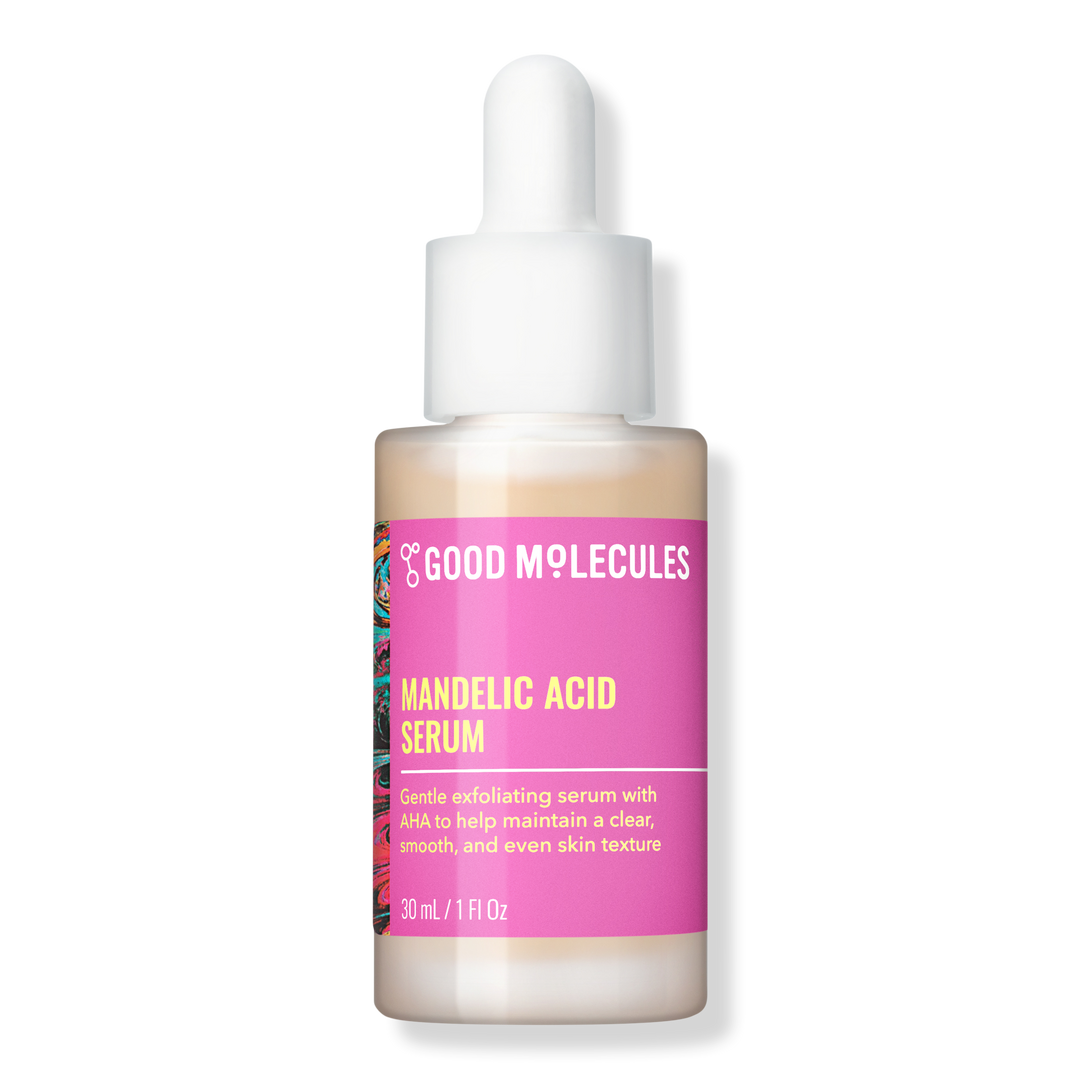
1 of 3: Best for beginners and sensitive skin
Good Molecules Mandelic Acid Serum
Exfoliating Acid Serum | $10.00
Shop Good Molecules Mandelic Acid Serum at Ulta Beauty →
Good Molecules Mandelic Acid Serum combines mandelic acid with mild polyhydroxy acids (PHAs) and two molecular weights of hyaluronic acid salt. The PHAs complement the mandelic acid with additional brightening and hydrating action, while the dual hyaluronic acid enhances the serum's silky texture and helps smooth fine dry patches. The formula is built around the same principle that makes mandelic acid a beginner-friendly starting point: a larger molecular size than glycolic acid, which slows penetration and reduces the chance of stinging or visible peeling.
The serum applies as a lightweight liquid that absorbs readily and layers cleanly under moisturizer. At an affordable price, it is a practical way to introduce mandelic acid into your routine without committing to a higher price point before you know how your skin responds.
Key specs: Mandelic Acid · PHAs · Dual-Weight Hyaluronic Acid · Lightweight Liquid · Exfoliating + Hydrating · Vegan · Cruelty Free · Sustainable Packaging
Application tip: Apply a few drops to clean, dry skin in the evening before heavier serums or moisturizer. Use up to four evenings per week. If you are new to mandelic acid, start at two to three evenings and observe your skin before increasing frequency. Wear SPF every morning without exception.
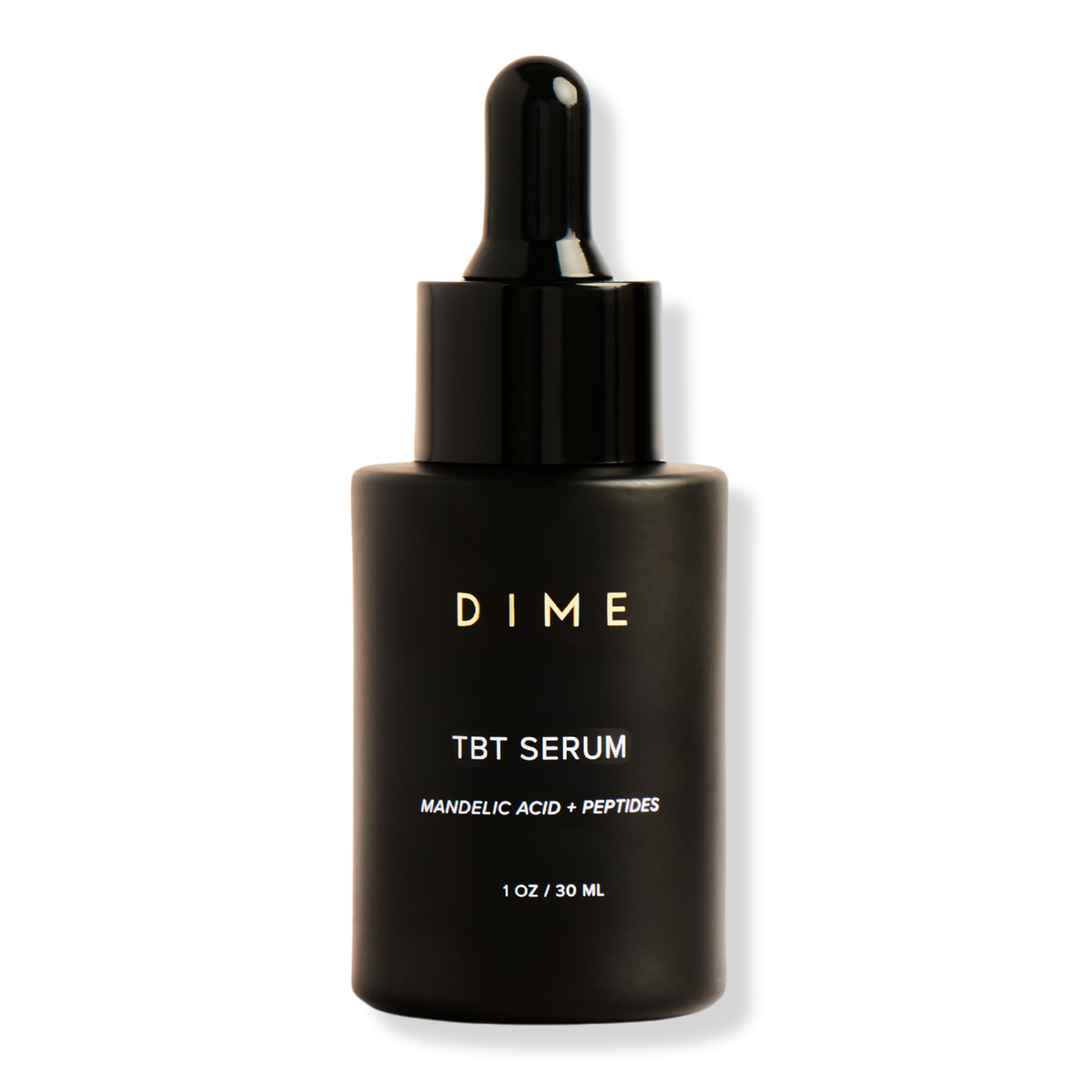
2 of 3: Best for acne-prone skin and congested pores
DIME TBT Serum with Mandelic Acid + Peptides
Hydrating Exfoliant Serum | $38.00
Shop DIME TBT Serum at Ulta Beauty →
DIME TBT Serum pairs mandelic acid with niacinamide, peptides, and resveratrol to address both active congestion and its aftermath. Mandelic acid handles surface cell turnover and helps reduce the look of blemishes and dark marks. Niacinamide supports the skin's ceramide barrier to help retain moisture and manage oiliness. Resveratrol brings skin-calming properties that help minimize the redness associated with breakouts. Three peptide forms (Palmitoyl Tetrapeptide-1, -7, and -38) support skin structure and firmness.
It is designed to be used morning and evening, which suits those who want a low-friction routine rather than a strict nighttime-only acid regimen.
Key specs: Mandelic Acid · Niacinamide · Resveratrol · Peptides (Palmitoyl Tetrapeptide-1, -7, -38) · Hyaluronic Acid · EWG Verified · Fragrance-Free · Sulfate-Free · Paraben-Free · Vegan · Cruelty Free
Application tip: Apply 2 to 3 drops to clean skin morning and evening, massaging into the face and neck. Because this formula contains mandelic acid, avoid layering additional exfoliants on the same application. Wear SPF every morning.
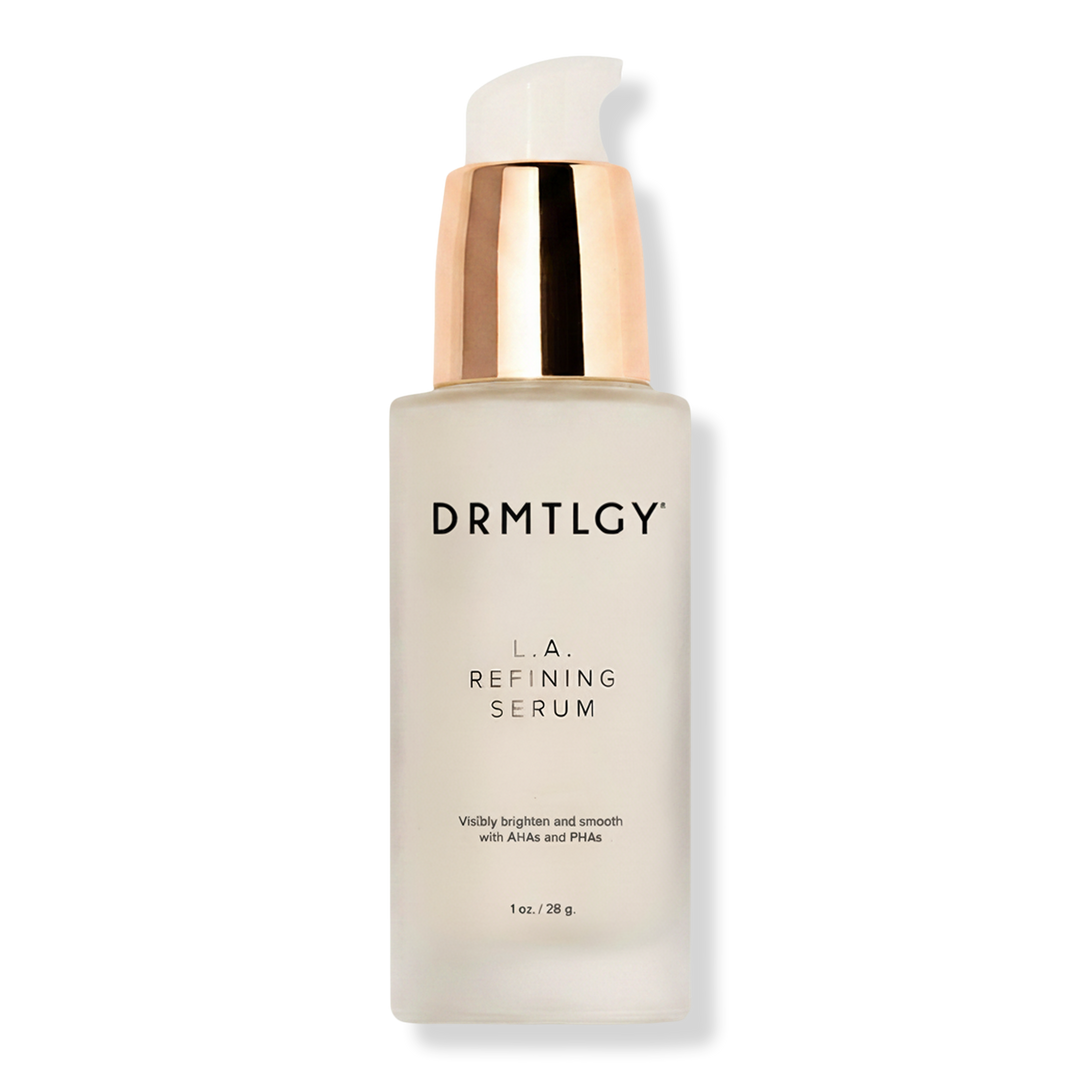
3 of 3: Best for post-acne dark spots and uneven skin tone
DRMTLGY L.A. Refining Serum with Lactic and Mandelic Acid
Brightening Refining Serum | $62.00
Shop DRMTLGY L.A. Refining Serum at Ulta Beauty →
DRMTLGY L.A. Refining Serum combines lactic acid (12%), mandelic acid, gluconolactone (a PHA), and licorice root extract to target discoloration through multiple exfoliating mechanisms. Lactic acid at 12% is a meaningful brightening concentration that helps improve surface texture and the look of dark spots by accelerating cell turnover. Mandelic acid adds a gentler exfoliating layer that is well suited to deeper skin tones and post-acne pigmentation. Gluconolactone completes the approach as a milder PHA that helps refine texture with less potential for irritation. Licorice root extract adds a plant-derived brightening element.
For sensitive skin, the brand recommends using it initially as a 15-minute mask to build tolerance before leaving it on.
Key specs: Lactic Acid (12%) · Mandelic Acid · Gluconolactone (PHA) · Licorice Root Extract · Brightening Refining Serum · Suitable for Multiple Skin Types · Cruelty Free · Vegan · Only at Ulta
Application tip: Apply 1 to 2 pumps to clean skin in the morning or evening. Allow to absorb before layering additional products, then follow with moisturizer. For sensitive skin, apply and rinse after 15 minutes to start. Wear SPF every morning, especially while using any brightening acid serum.
How to add mandelic acid to your skincare routine
Mandelic acid fits most naturally into an evening routine, since AHAs increase your skin's sensitivity to sunlight. Here is a practical sequence for working it in without disrupting what you already use.
Cleanse your face thoroughly and pat skin dry. Applying an acid to damp skin can accelerate absorption and increase the chance of irritation.
Apply mandelic acid to bare skin before any other serums, so the acid makes direct contact with the surface.
Wait one to two minutes, then layer any additional serums. Niacinamide and hyaluronic acid both work well alongside mandelic acid.
Finish with your moisturizer to support the skin barrier overnight.
Every morning, apply SPF as the final step of your routine. This step is not optional when you use any AHA.
How often: Start at two to three evenings per week. After two to four weeks, if your skin is responding well with no irritation or excess dryness, you can increase gradually. Some people work up to daily use, though that depends on the product concentration and your skin's tolerance.
What not to mix with mandelic acid
Some ingredient combinations increase irritation risk or reduce how well each active works.
Retinol or retinoids: Using mandelic acid and retinol on the same evening layers more actives than most skin barriers need at once. If you use both, alternate them on different evenings.
High-concentration vitamin C: L-ascorbic acid serums formulated at a low pH can conflict with AHAs when applied together. Move your vitamin C to the morning and reserve mandelic acid for the evening.
What works well alongside it: Niacinamide, hyaluronic acid, ceramides, and peptide serums all complement mandelic acid without creating conflict. They support hydration and barrier function, which helps offset any dryness from regular exfoliation.
Common mandelic acid mistakes to avoid
A few missteps come up often, especially for people new to AHAs.
Starting too frequently: Using mandelic acid every evening from day one is one of the most common reasons people experience sensitivity. Start slowly and give your skin time to adapt before increasing use.
Skipping SPF: Any AHA increases your skin's vulnerability to UV damage. Skipping sun protection while using mandelic acid can lead to more pigmentation rather than less.
Applying to damp skin.:Wet or damp skin accelerates absorption, which can intensify both results and irritation potential. Apply to fully dry skin.
Stacking multiple actives on the same evening: Introducing mandelic acid into a routine that already includes retinol, another AHA, a BHA, and a high-strength vitamin C all in the same evening can overwhelm the skin barrier. Add it one step at a time.
Expecting immediate results: Mandelic acid is a gradual ingredient. Changes in texture can become noticeable after a few weeks. Hyperpigmentation takes longer and typically requires two to three months of consistent use, depending on the depth and age of the marks.
Frequently asked questions
What is mandelic acid best for?
Mandelic acid is particularly useful for gentle exfoliation, acne-prone skin, and fading post-inflammatory hyperpigmentation. Its larger molecular size makes it one of the more tolerable AHAs, which is why it is often recommended for sensitive skin and deeper skin tones.
Can I use mandelic acid every day?
Some people do use mandelic acid daily, but that is not where to start. Begin with two to three evenings per week and build gradually based on how your skin responds. Daily use depends on your skin's tolerance and the product concentration.
Does mandelic acid help with acne scars?
Mandelic acid can help fade the dark marks left behind after acne (post-inflammatory hyperpigmentation) through consistent use over time. It does not address raised or indented scarring, which involves textural changes in the skin. For PIH, results typically take four to twelve weeks of regular use.
Can I use mandelic acid with retinol?
You can include both in your routine, but not on the same evening. Alternate them on separate nights to avoid over-exfoliating or compromising your skin barrier. If you are new to both ingredients, introduce one at a time.
Information provided is for educational purposes only and is not intended as medical advice or a guarantee of results. Consult a healthcare professional for personalized skin care guidance.
Related Content:
Best Pimple Patches, Summer Skin Care Sets, How to Use Retinol for Beginners, Microcurrent Facial Benefits, Post Workout Skin Care, Slugging in Skin Care, Best Micellar Water
Discover more: Skin Care Buying Guides and Beauty Education Articles