What causes makeup to oxidize on skin (and why your shade can look different later)
By Ulta Beauty Advisors · Published September 2026
All products featured are available at Ulta Beauty. Ulta Beauty Advisors select products independently. Prices and availability are subject to change.
Foundation can turn darker or more orange after application when the formula changes as it meets air, natural skin oils, sweat or the products layered underneath it. Some shade changes are true oxidation, while others come from the foundation drying down, mixing with excess oil or looking different as moisture evaporates.
Understanding what causes makeup to oxidize on skin can help you choose a closer shade match and adjust your prep without replacing your whole routine. Ulta Beauty is breaking down how to identify oxidation, test a foundation before committing to a shade and help your makeup color stay more consistent throughout the day.
What is makeup oxidation?
Oxidation is a chemical reaction that can happen when certain components in a makeup formula are exposed to oxygen. In complexion makeup, the term usually describes foundation, concealer or skin tint that looks darker, warmer or more orange after it has been sitting on your skin.
Here is the tricky part: not every color change is true oxidation. A wet formula may naturally deepen as it dries, and excess oil can change how pigment looks on your face. Beauty fans often group all of these shifts under the word "oxidation," even when several factors may be involved.
A small amount of dry-down is common in many liquid and cream formulas. The change becomes more noticeable when a shade that looked right at first turns visibly deeper or warmer later.
What causes makeup to oxidize on skin?
There is rarely one universal cause. Your foundation formula, skin prep, natural oils, application method and environment can all affect how the final shade looks.
Exposure to air
Once you apply makeup, the formula has more contact with oxygen. Certain formula components may react with that exposure over time, contributing to a color shift.
Air can also affect makeup inside packaging if the cap is loose, the pump is damaged or the product is stored open. Keeping packaging tightly closed helps limit unnecessary exposure and protects the texture from drying out.
Natural skin oils
Sebum can mix with foundation as the day goes on. That added oil may make pigments appear deeper, warmer or more saturated, especially through the center of the face.
If your makeup changes color mostly around the forehead, nose and chin, oil may be playing a bigger role than air alone. A shiny finish in those areas is another useful clue.
Skincare and sunscreen underneath makeup
Foundation does not sit on bare skin for most people. Moisturizer, sunscreen, facial oil and primer create a base that can affect how the makeup spreads, sets and reflects light.
A rich or still-damp layer may mix with foundation instead of staying underneath it. That does not mean the skincare product is bad. It may simply need more time to settle, a smaller amount or a different pairing with your complexion formula.
The foundation's natural dry-down
Liquid foundation often looks slightly different once water or other volatile ingredients evaporate. The finish may become more matte, and the color can appear a little deeper than it did when freshly blended.
This shift usually happens within the first several minutes. If the color continues getting much warmer over the next few hours, skin oils, formula interactions or oxidation may also be involved.
Formula and pigment concentration
Full-coverage and long-wear foundations often contain more pigment than sheer skin tints. As the formula sets, that pigment can look richer or more concentrated on the skin.
Finish matters too. Matte formulas absorb light differently from dewy formulas, so two products labeled as the same shade depth may not look identical after application.
Heat, sweat and humidity
Warm weather, exercise and humid conditions can increase oil and sweat on the skin. Moisture may mix with complexion products and change their finish, wear or visible shade.
If your foundation looks consistent indoors but deepens during a hot commute or outdoor event, the environment may be part of the pattern. Testing the same routine under different conditions can help you narrow it down.
How to test whether your foundation oxidizes
A controlled wear test can save you from guessing. Try this on a day when you can check your makeup in a few types of light.
Start with clean skin and apply your usual skincare in light layers.
Let sunscreen and moisturizer settle until the surface no longer feels wet or slippery.
Apply one foundation swatch along your jawline and blend the edges.
Place a second swatch of the same foundation on a clean, nonporous surface.
Take a photo right after application in indirect natural light. Avoid using a beauty filter.
Wait 15 minutes, then compare both swatches with the original photo.
Check again after two to three hours, noting whether your skin looks oily, sweaty or dry.
Repeat the test on another day with one routine change, such as using less moisturizer or adding primer.
If both swatches deepen quickly, the formula likely has a noticeable dry-down. If the jawline swatch changes much more than the surface swatch, your skin oils or base products may be affecting the color.
Change only one part of the routine at a time. Switching your moisturizer, primer, powder and application tool all at once makes it hard to tell what helped.
How to help keep foundation from turning darker or orange
You may not be able to stop every formula from shifting, but a few routine changes can make the color more predictable.
Let skincare settle
Give moisturizer and sunscreen time to form an even layer before applying makeup. Your skin should feel comfortable, not slick or wet.
If products tend to pill or slide, try using thinner layers rather than skipping skin prep. Sunscreen should still be applied according to its label directions.
Use less product at once
A thick layer takes longer to set and may mix more readily with oil or skincare. Start with a thin, even layer and add coverage only where you want it.
Using less foundation can also make a minor shade shift less visible. A damp sponge, brush or clean fingers can work, depending on the formula and finish you like.
Choose primer based on your skin and foundation
Primer can create a buffer between skincare, natural oils and foundation. For oily areas, a mattifying or oil-control primer may help manage shine. For dry areas, a hydrating primer may help prevent makeup from catching on texture.
You do not always need primer across your whole face. Try targeted application through the areas where your foundation changes most.
Set strategic areas
A light layer of setting powder can help absorb oil where it tends to appear first. Focus on the forehead, sides of the nose, chin or any area where the color deepens during wear.
Too much powder can make foundation look heavier or change the finish. Press on a small amount, then check the result in natural light.
Blot instead of adding more foundation
When shine appears, gently press a blotting sheet or a single layer of tissue onto the skin. Rubbing can lift pigment and leave uneven patches.
Adding foundation over oil may create a darker, thicker-looking area. Blot first, then touch up only if needed.
Test the set shade before choosing
Match foundation after it has had time to dry, not while it is still wet. Apply a jawline swatch, wait at least 15 minutes and view it in indirect daylight when possible.
Do not automatically buy a much lighter shade to offset suspected oxidation. That workaround can leave your makeup too light at first and may not address the real cause.
How to choose foundation when shades tend to shift on you
Start with the finish, coverage and wear style that fit your skin and routine. Then compare the shade only after each formula has set.
When browsing foundation at Ulta Beauty, consider these features:
Finish: Matte finishes can help manage visible shine, while natural and radiant finishes may suit skin that feels dry or tight.
Coverage: Sheer formulas allow more of your natural skin tone to show through, which can make a slight shift less obvious. Fuller coverage gives a more uniform result but can make a mismatch easier to see.
Wear claims: Long-wear does not automatically mean a formula will or will not change shade. Test the individual product with your routine.
Undertone: Look for cool, warm, neutral or olive descriptions when available. A correct depth with the wrong undertone can still look noticeably off. Discover our How to Find Your Foundation Undertone article for more tips.
Format: Liquid, cream, stick and powder foundations interact with skin in different ways. Your best match is the one that looks right after setting and wears comfortably for you.
If possible, compare two nearby shades along the jaw rather than on your hand. Your hand may have a different depth and undertone from your face, neck and chest.
Quick takeaways
Foundation may turn darker or more orange because of oxidation, normal dry-down, skin oil, sweat or interaction with base products.
A change within several minutes usually points toward dry-down, while a shift over several hours may involve oil or formula interaction.
An orange cast that appears immediately is more likely to be an undertone mismatch.
Test foundation along your jaw, let it set and check it again later in natural light.
Adjust one part of your routine at a time so you can identify what affects the shade.
Non oxidizing foundations, available at Ulta Beauty
All products featured are available at Ulta Beauty. Ulta Beauty Advisors select products independently.
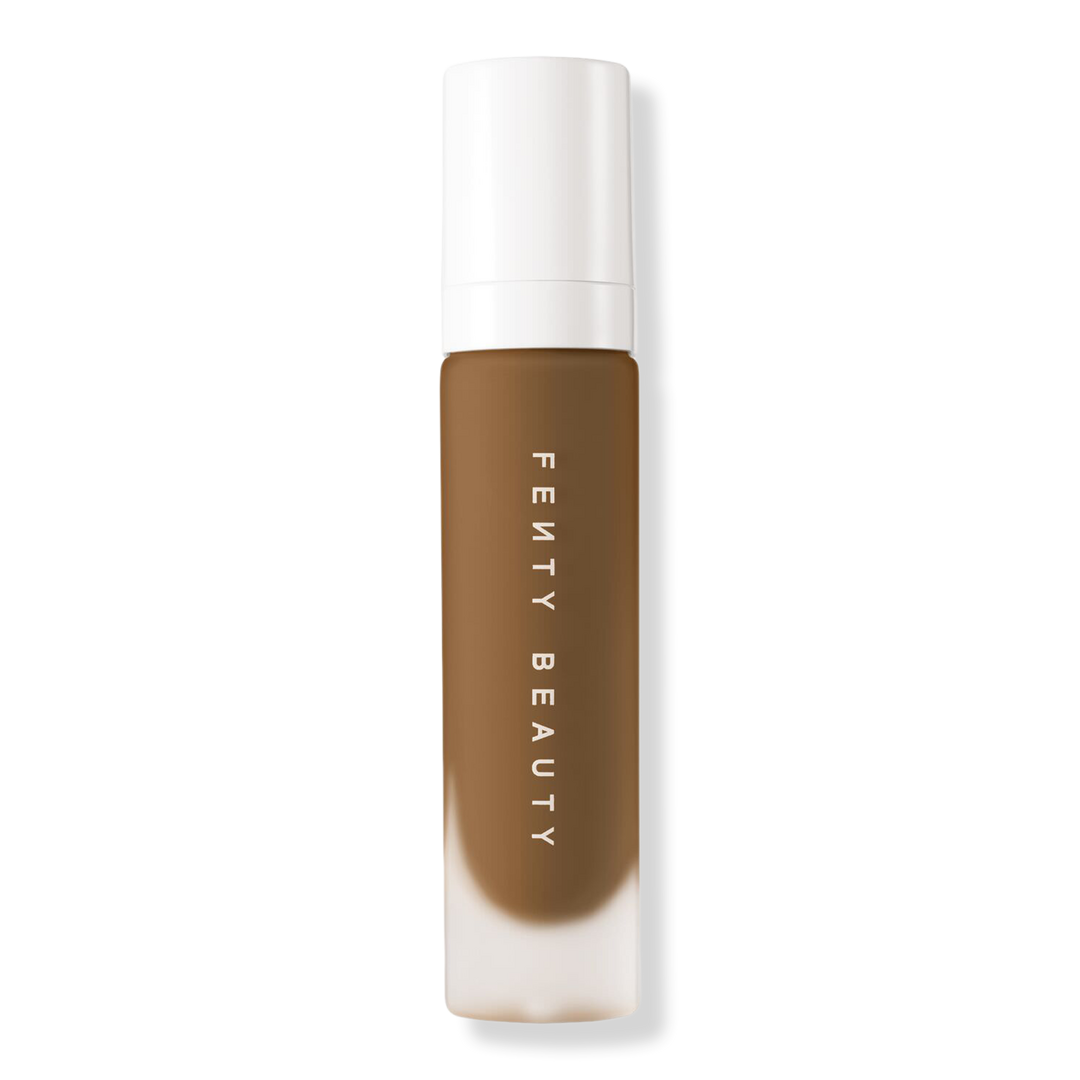
1 of 5: Best Overall Non-Oxidizing Foundation
Fenty Beauty Pro Filt'r Soft Matte Longwear Foundation
Soft Matte Liquid Foundation | $40.00
Shop Fenty Beauty Pro Filt'r Soft Matte Foundation at Ulta →
The Fenty Beauty Pro Filt'r Soft Matte Longwear Foundation is one of the most consistently recommended foundations for skin that oxidizes, and the formula explains why. The soft matte finish controls surface oil from the moment of application, which limits the sebum-and-pigment mixing that causes shade shift over time. The formula sets quickly to a true soft matte result, and the large shade range means the undertone selection is specific enough that finding a precise match is realistic across every complexion.
The pigment concentration is stable under a range of conditions, including heat and humidity, making it a strong choice for anyone who has noticed their foundation changing most during outdoor or high-activity days. It wears for up to 24 hours without requiring touch-ups in most conditions.
Key specs: Soft Matte Finish · Oil-Control Formula · Large Shade Range · Up to 24-Hour Wear · Fragrance-Free · Suitable for All Skin Types
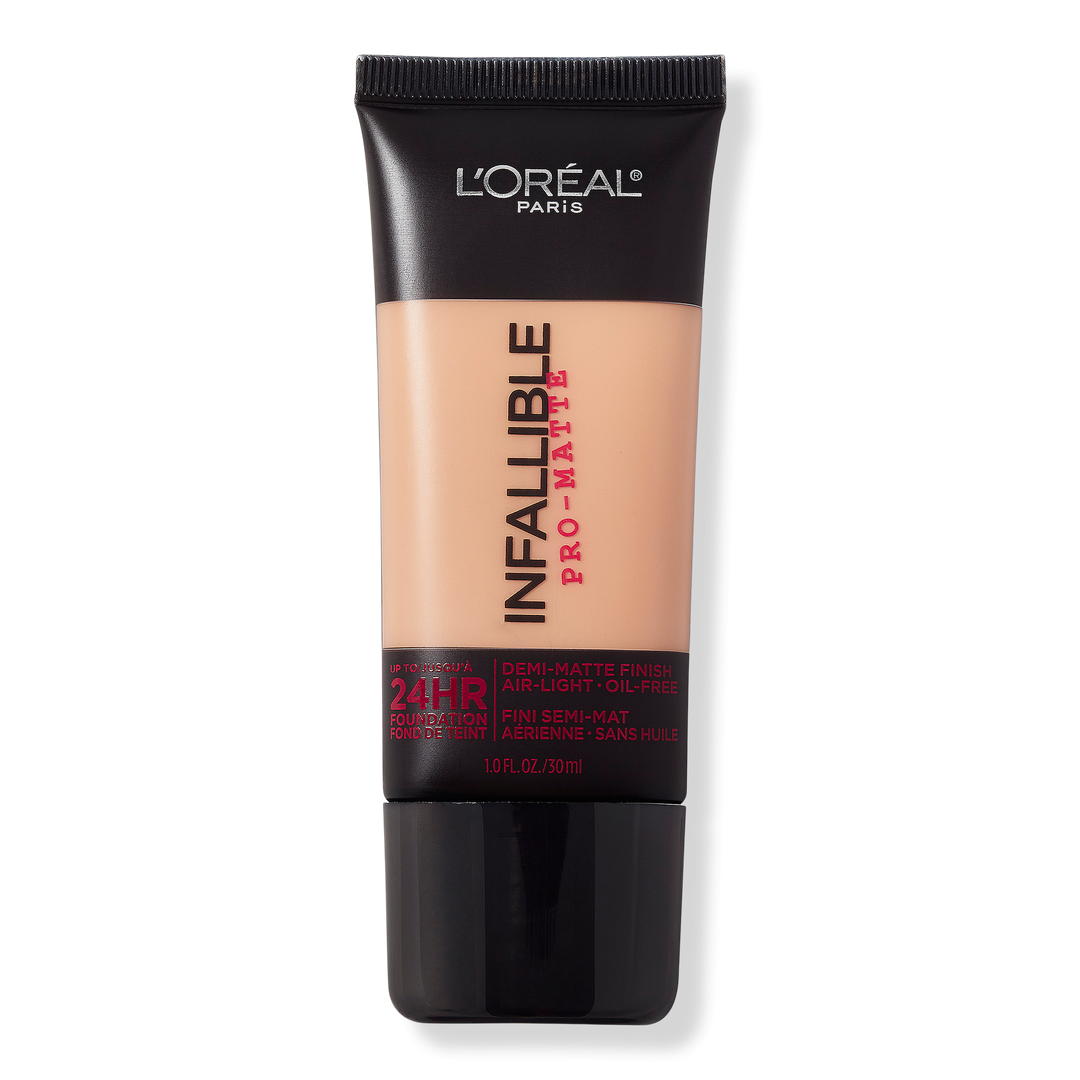
2 of 5: Best Affordable Non-Oxidizing Foundation
L'Oreal Paris Infallible Pro-Matte Liquid Longwear Foundation
Full Coverage Matte Liquid Foundation | $14.99
Shop L'Oreal Paris Infallible Pro-Matte Liquid Longwear Foundation at Ulta →
The L'Oreal Paris Infallible Pro-Matte Liquid Longwear Foundation earns its place here for a specific reason: the oil-free, air-light formula is built to resist sweat, heat, and transfer, which are the exact conditions under which sebum mixes with foundation pigment and causes visible shade shift. The matte finish sets quickly and stays consistent, and the formula does not separate or migrate throughout the day the way richer or dewier formulas can. Full coverage is achieved in a thin, even layer that does not feel heavy on the skin.
At the low price, this is one of the most accessible ways to test whether a pro-matte formula solves an oxidation problem before committing to a higher price point. The shade range covers a practical spread of depths and undertones, and it builds cleanly without caking.
Key specs: Full Coverage · Oil-Free Formula · Up to 24-Hour Wear Claim · Sweat and Heat Resistant · Matte Finish · Minimizes the Appearance of Pores
Ulta Beauty Advisor Tip: Apply with a damp sponge using a pressing rather than sweeping motion. The formula sets quickly, so blending needs to happen fast. Working in small sections across the face gives more even coverage than applying all at once.
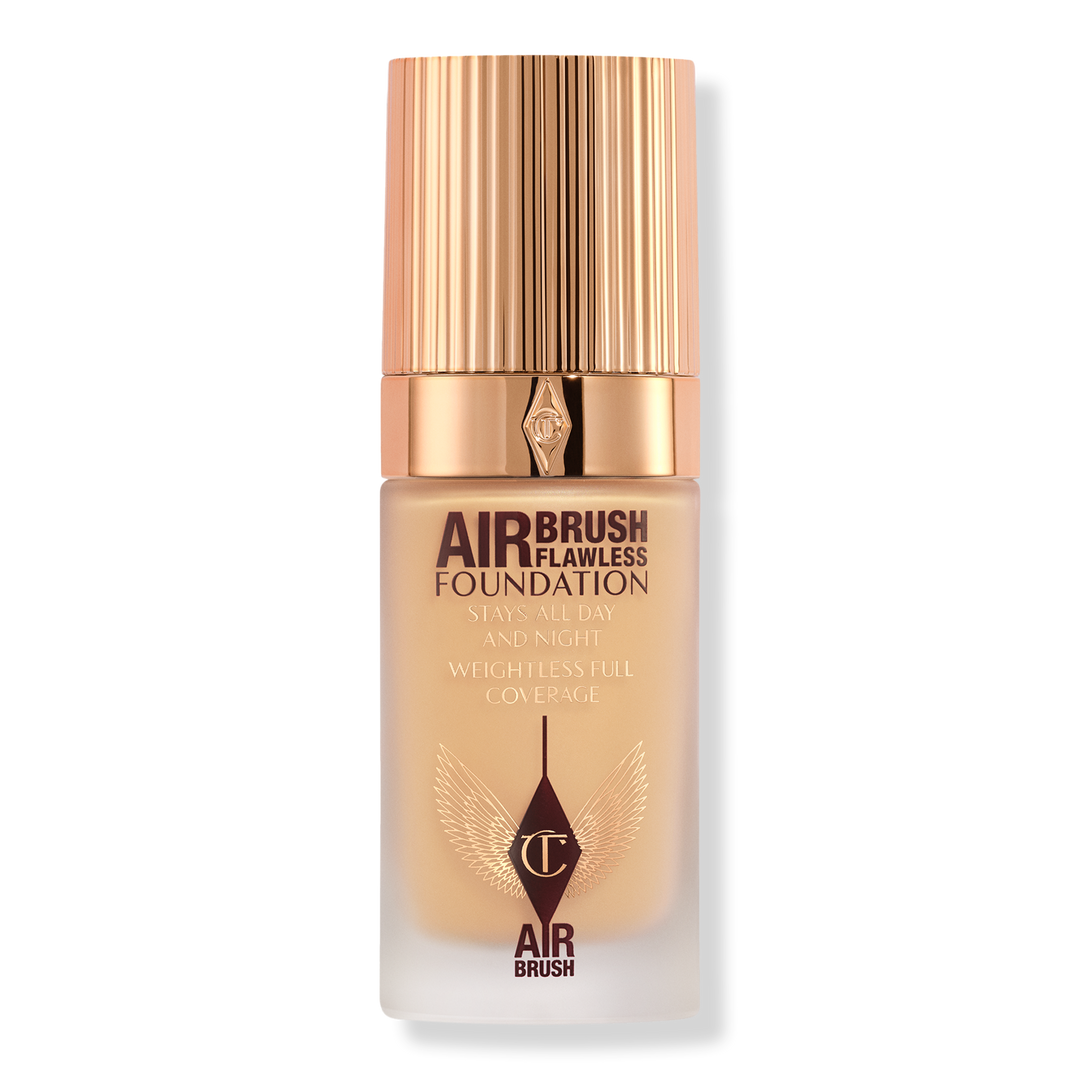
3 of 5: Best Luxury Non-Oxidizing Foundation
Charlotte Tilbury Airbrush Flawless Longwear Foundation
Weightless Matte Liquid Foundation | $52.00
Shop Charlotte Tilbury Airbrush Flawless Foundation at Ulta →
The Charlotte Tilbury Airbrush Flawless Longwear Foundation is formulated with a micro-powder technology that absorbs excess oil at the skin's surface throughout the day, which is directly relevant to oxidation caused by sebum mixing with foundation pigment. The result is a shade that stays closer to what you applied in the morning than most comparable formulas. The finish is described as airbrush-like: a soft focus, natural matte that does not look flat or powdery, even on drier areas.
It is also one of the better formulas for wearing confidently in both natural and artificial light, because the finish does not shift in a way that becomes obvious when lighting conditions change. For special occasions or long events where consistency matters, this is a reliable choice.
Key specs: Micro-Powder Oil Control · Weightless Formula · Natural Matte Finish · Large Shade Range · 24-Hour Wear Claim
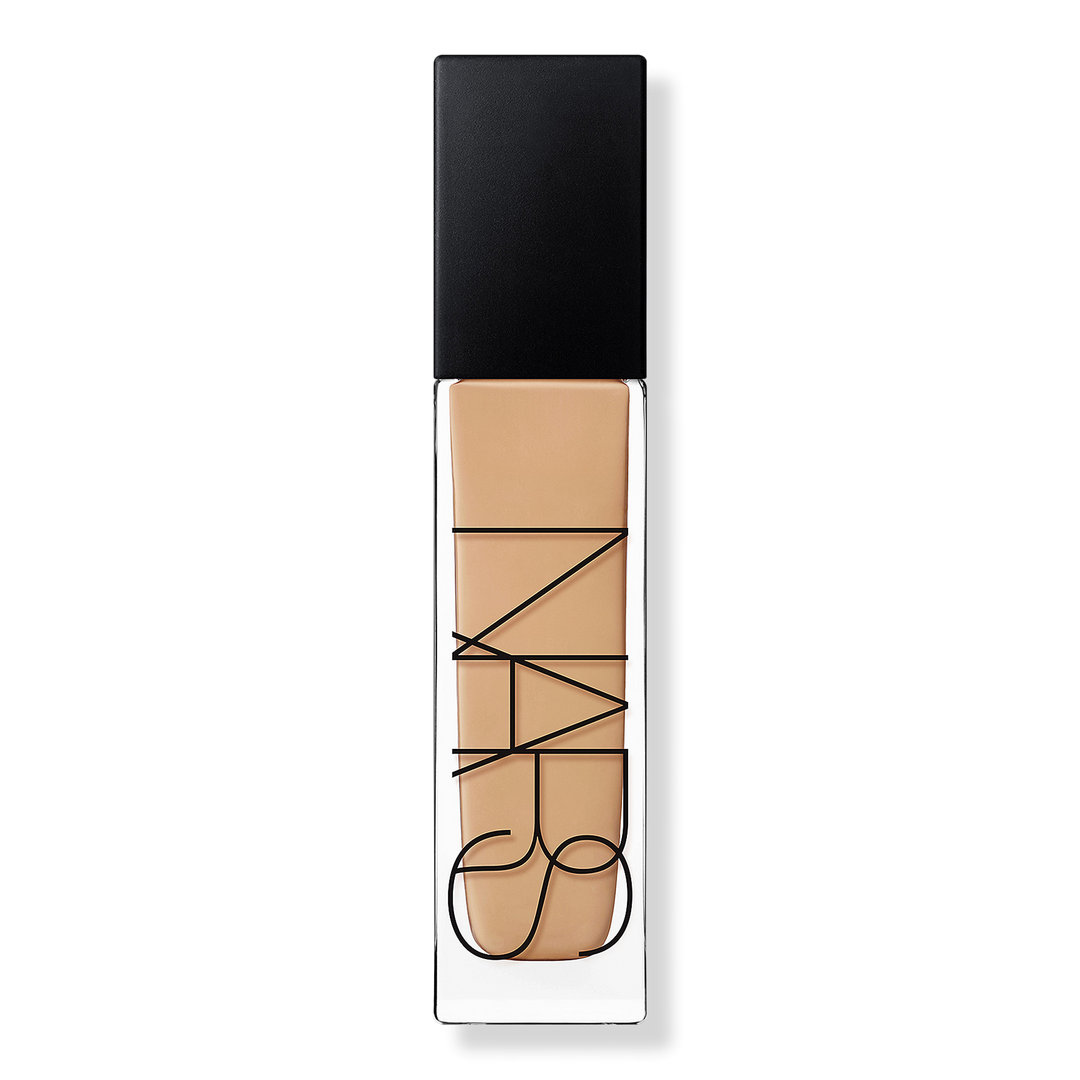
4 of 5: Best Non-Oxidizing Foundation for Medium-to-Full Coverage
NARS Natural Radiant Longwear Foundation
Longwear Liquid Foundation | $55.00
Shop NARS Natural Radiant Longwear Foundation at Ulta →
The NARS Natural Radiant Longwear Foundation is worth including in this guide because it demonstrates that a foundation does not have to be strictly matte to resist oxidation. The formula uses a skin-adaptive technology that responds to individual skin chemistry, meaning the finish adjusts to look natural rather than going warmer or deeper as oils build up. The undertone stays consistent from initial application through the end of the day, which is the clearest test of oxidation resistance.
Coverage is medium to full and fully buildable, and the formula blends smoothly without the patchiness that can make a shade shift more visible. The shade range spans 45 options with a detailed undertone system, including neutral, warm, neutral-warm, and cool-neutral options, making precise matching more achievable.
Key specs: Skin-Adaptive Formula · Medium-to-Full Coverage · Natural Finish · Large Shade Range· 24-Hour Wear Claim · Fragrance-Free
Shade Matching Tip: NARS undertone labels are more specific than most brands. If you have struggled with foundations reading too orange on your skin, look specifically for shades marked with a C (cool) or N (neutral) suffix to start.
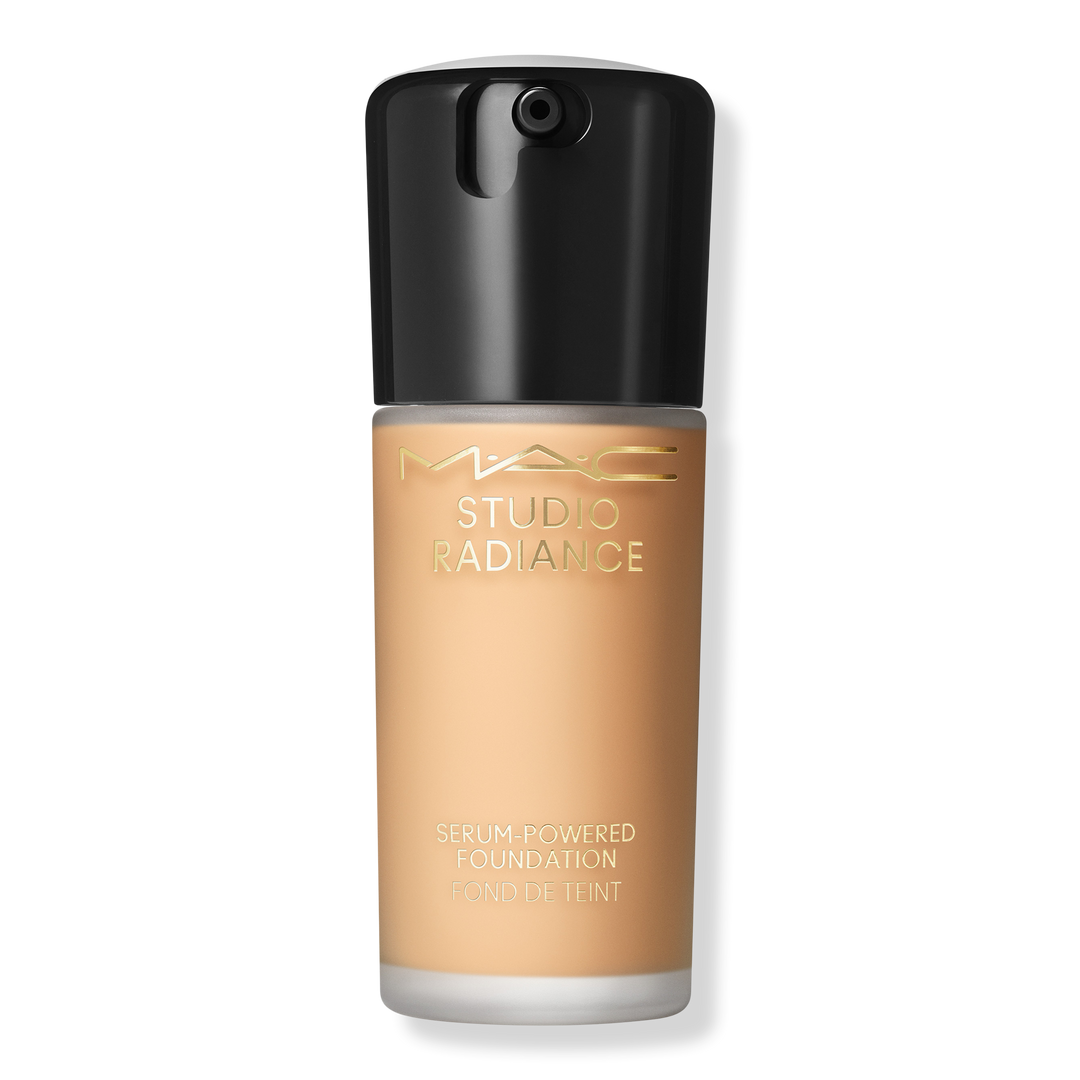
5 of 5: Best Non-Oxidizing Foundation for Dry Skin
MAC Studio Radiance Serum Powered Foundation
Serum-Infused Liquid Foundation | $46.00
Shop MAC Studio Radiance Serum Powered Foundation at Ulta →
Most oxidation guides focus on oily skin, but dry skin can experience shade shift too, particularly when a foundation settles unevenly over dry patches or when the formula clings to texture in a way that changes how the pigment reflects light. The MAC Studio Radiance Serum Powered Foundation addresses this from a different angle: it combines foundation coverage with serum-level skincare ingredients, keeping the skin surface hydrated and even in a way that helps the formula sit and wear true to its original shade.
The finish is naturally radiant rather than matte, which suits skin that does not produce excess oil and would not benefit from heavy oil-control ingredients. It covers evenly, blends smoothly over texture, and does not deepen or shift as the day progresses on skin that tends toward dryness. The shade range is very large and spans across MAC's NC and NW undertone system, one of the most precisely mapped systems in the industry for finding a true undertone match.
Key specs: Serum-Infused Formula · Natural Radiant Finish · Large Shade Range · NC and NW Undertone System · Buildable Coverage · Suitable for Dry to Normal Skin
Frequently asked questions
Does oxidized makeup mean I am having an allergic reaction?
A color change alone is not the same as an allergic reaction. If makeup causes burning, swelling, hives or persistent irritation, remove it and stop using it. Seek guidance from a qualified healthcare professional if symptoms are severe or do not settle.
Can concealer oxidize too?
Yes, concealer can appear darker or warmer after it sets, particularly in areas with oil, moisture or layered skincare. Test it on the area where you plan to wear it because under-eye skin may react differently from the center of your face.
Does old foundation oxidize more?
Age, air exposure and storage conditions can affect a foundation's color, scent and texture. Follow the product's period-after-opening symbol and label directions, and stop using it if the smell, consistency or appearance has changed unexpectedly.
Should I keep foundation out of the bathroom?
A cool, dry place away from direct sunlight and large temperature swings is generally a better storage spot. Bathroom heat and humidity can make storage conditions less consistent.
Can sunscreen make foundation look orange?
Sunscreen may affect how foundation sits or reflects light if the two layers mix, but that does not mean the sunscreen itself is changing the pigment. Let it settle before makeup, and test the pairing on a regular day before wearing it for a long event.
Related Content: Makeup for Mature Skin, Best Makeup for Oily Skin, Cream vs Powder Blush, How to Prevent Concealer From Creasing, Makeup Routine for Beginners, Cushion Foundations
Discover more Beauty Education guides and Makeup buying guides