Skin care routine for beginners: here's how to actually start one you can stick with
By Ulta Beauty Advisors · Published August 2026
All products featured are available at Ulta Beauty. Ulta Beauty Advisors select products independently. Prices and availability are subject to change.
A skin care routine for beginners needs three products: a gentle cleanser, a moisturizer, and daytime sunscreen. In the morning, cleanse if needed, moisturize, and apply sunscreen. At night, cleanse and moisturize.
That three-step framework is Ulta Beauty's starting point because it covers cleansing, hydration, and daily sun protection without requiring your skin to adjust to multiple new products at once. Once you have used that routine consistently for four to six weeks and your skin feels comfortable, you can consider adding one optional product for a specific goal.
This guide explains what each step does, how to choose formulas for your skin type, and when extras such as serums, toners, and exfoliants make sense to add.
What is a basic skin care routine?
A basic routine is a repeatable set of steps that helps you clean, moisturize, and protect your skin. It does not need to include every trending ingredient or require a full shelf of products.
Think of your first routine as a reliable base. You can use it as-is or build on it later, depending on your skin, budget, and goals.
The core products are:
- Cleanser to remove oil, sweat, makeup, sunscreen, and daily buildup
- Moisturizer to add hydration and support a comfortable skin barrier
- Sunscreen for daytime protection from ultraviolet rays
Some people also use an oil cleanser or micellar water for makeup removal. Toners, serums, eye creams, masks, exfoliants, and targeted treatments are optional rather than required starting steps.
Why a short routine works better for beginners
A short routine is easier to maintain daily. Starting with fewer products also makes it easier to notice how your skin responds to each formula, and easier to identify what caused a reaction if one occurs.
A basic routine helps you:
- Learn whether your skin prefers lightweight, rich, creamy or gel textures
- Identify products that leave your skin feeling comfortable
- Narrow down the cause when a formula does not agree with you
- Keep morning and night routines manageable
- Make thoughtful additions instead of buying overlapping products
- Stay within a budget that works for you
A short routine is not an incomplete one. Every product has a clear, specific job.
Best skin care routine for beginners
At Ulta Beauty, we suggest starting with the fewest steps you can realistically repeat every day. Shop the wider skin care selection by category, then choose formulas based on how your skin feels rather than how many steps you think you should have.
Your starter lineup should include:
- One facial cleanser
- One moisturizer
- One broad-spectrum sunscreen for daytime
- One makeup-removal product if your cleanser does not fully remove makeup or water-resistant sunscreen
Use product labels as your main instructions for amount, frequency, and placement. If a label differs from general routine advice, follow the label.
Cleanser
A cleanser removes buildup without requiring aggressive scrubbing. For a first routine, look for a face cleanser with a texture you enjoy using and a finish that does not leave your skin feeling tight or coated.
Common cleanser textures include:
- Cream or lotion cleansers, which often feel cushioned and gentle
- Gel cleansers, which rinse clean and can suit many skin types
- Foaming cleansers, which may appeal to people who prefer a fresh-rinsed feel
- Cleansing balms or oils, which help dissolve makeup and water-resistant sunscreen
- Micellar water, which offers a quick first cleanse or a no-sink option when used according to its label
Beginner Cleanser picks by skin type
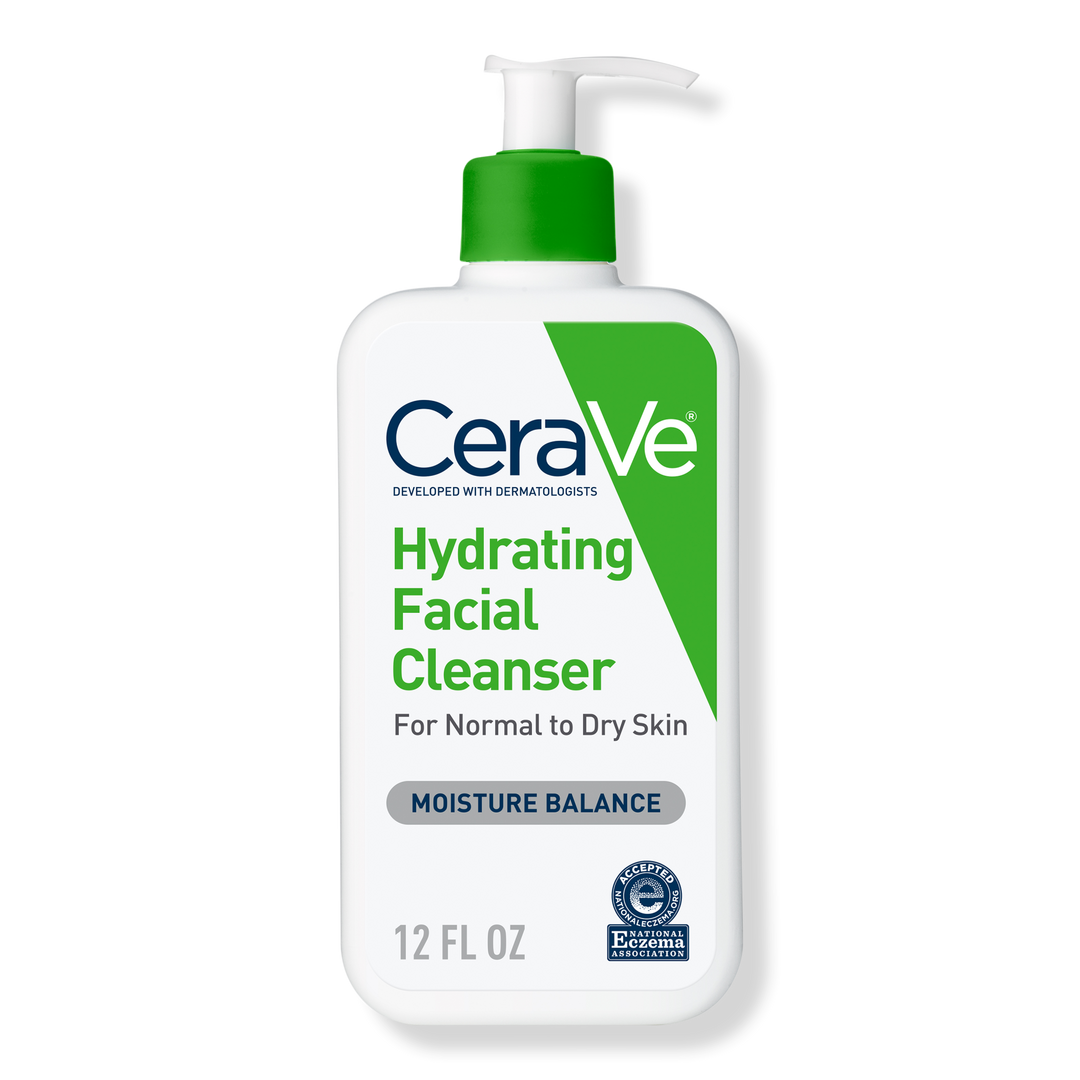
CeraVe Hydrating Facial Cleanser
Non-Foaming Cream Cleanser | $16.99
Shop CeraVe Hydrating Facial Cleanser at Ulta →
This gentle, non-foaming cream cleanser is formulated with three essential ceramides, hyaluronic acid, and glycerin to remove daily buildup without disrupting the skin barrier. It rinses clean and leaves no tight or stripped feeling behind, which makes it a reliable starting point for dry skin types. The texture is cushioned enough to feel comfortable during use and lightweight enough to avoid any coated or filmy finish after rinsing.
Key specs: Ceramides · Hyaluronic Acid · Non-Foaming · Fragrance-Free
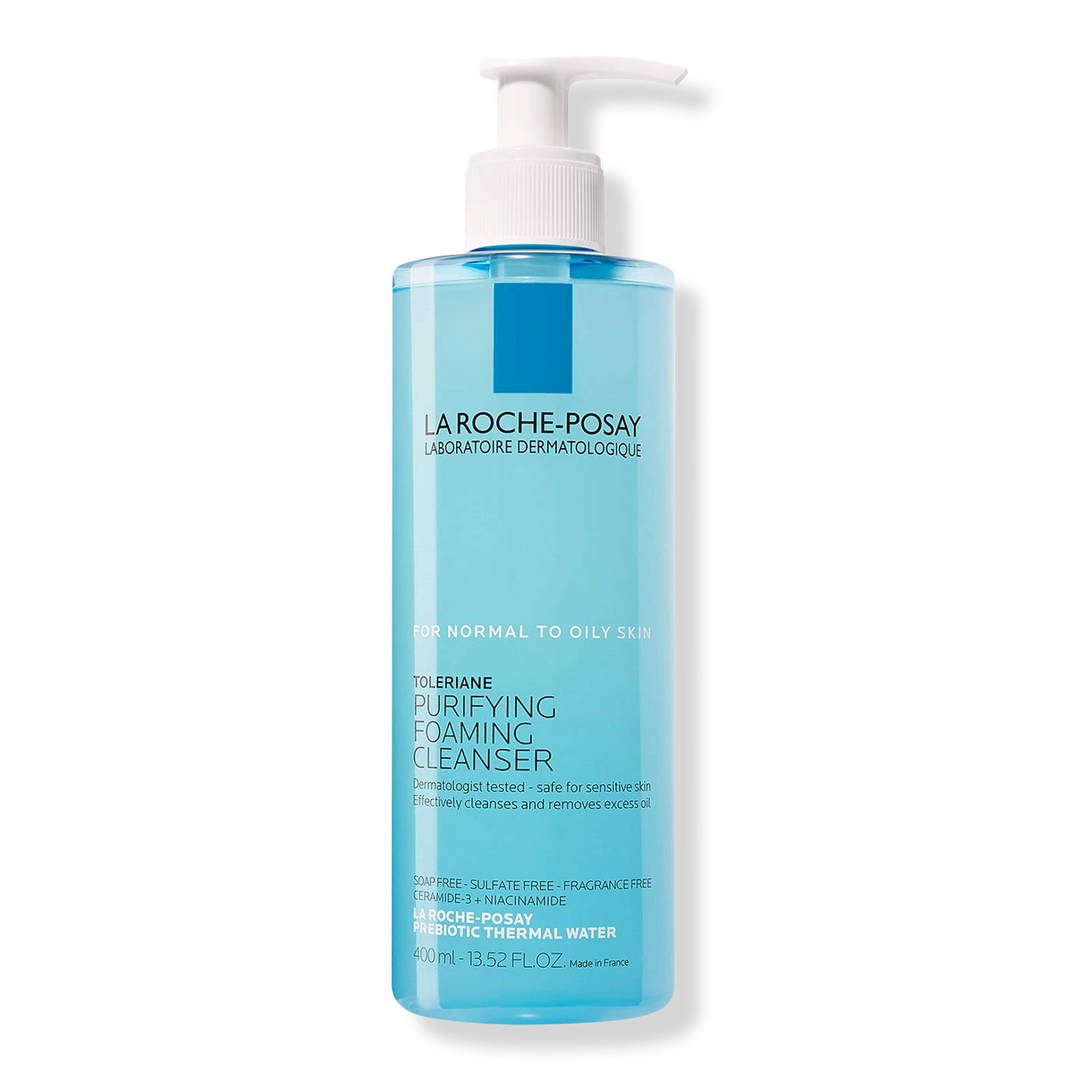
La Roche-Posay Toleriane Purifying Foaming Face Wash
Foaming Gel Cleanser for Oily Skin | $19.99
Shop La Roche-Posay Toleriane Purifying Foaming Face Wash at Ulta →
Formulated specifically for normal to oily sensitive skin, this foaming face wash removes dirt, oil, and makeup while keeping the skin barrier intact. Prebiotic thermal water, ceramide-3, niacinamide, and glycerin work together to maintain the skin's pH and barrier function, which means a thorough cleanse that does not leave oily skin feeling stripped or tight. The pump format dispenses an even, consistent amount and the refillable bottle reduces packaging waste.
Key specs: Prebiotic Thermal Water · Ceramide-3 · Niacinamide · Glycerin · Non-Comedogenic · Fragrance-Free · Soap-Free · Sulfate-Free · Vegan
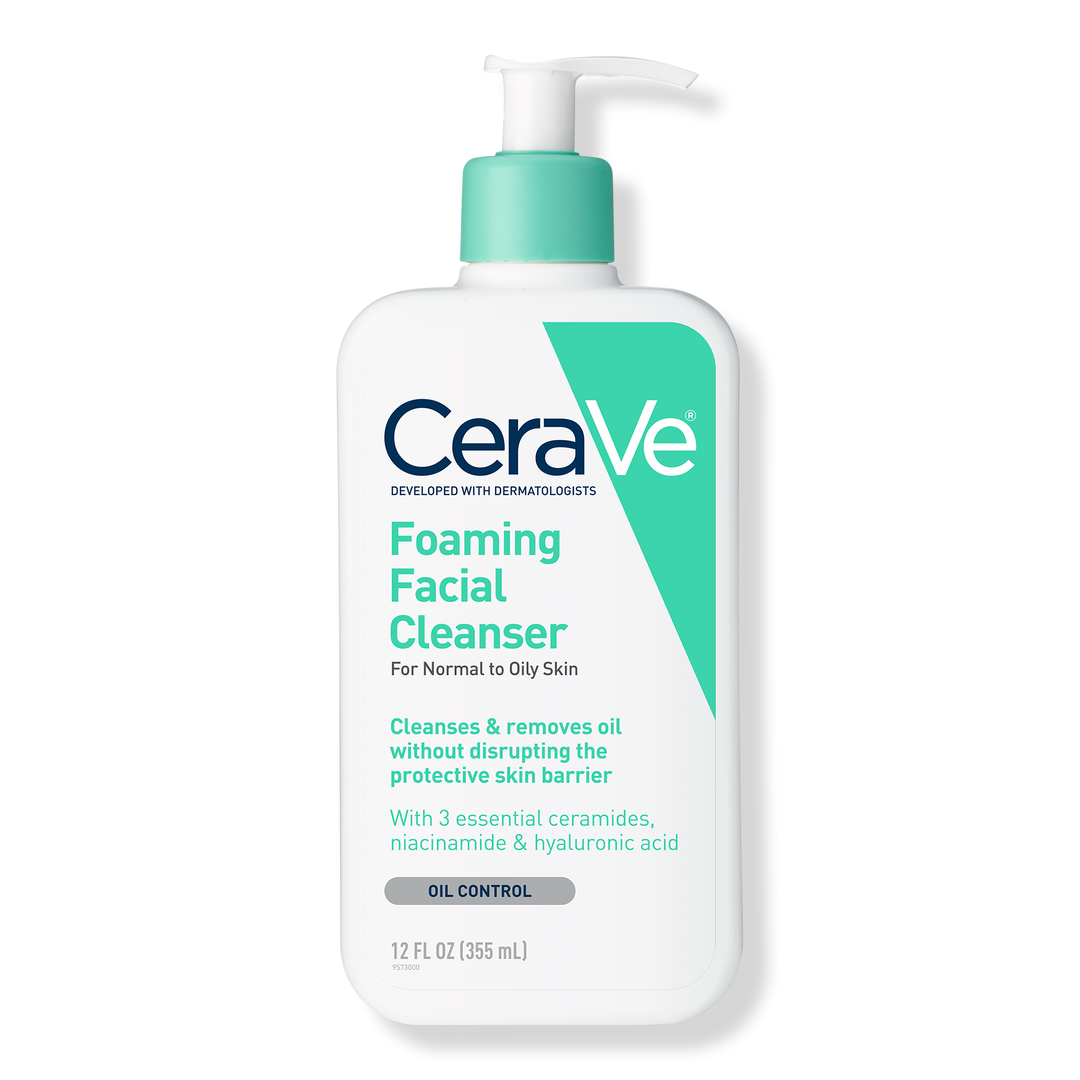
CeraVe Foaming Facial Cleanser
Gel-to-Foam Facial Cleanser | $16.99
Shop CeraVe Foaming Facial Cleanser at Ulta →
This gel-to-foam wash is formulated for normal, combination, and oily skin. Three essential ceramides (1, 3, 6-II) cleanse and remove excess oil without disrupting the protective skin barrier, while hyaluronic acid and niacinamide support hydration and skin comfort throughout. The rinse-clean formula leaves no residue and no tight or dried-out feeling, making it straightforward to use twice daily across both the oilier and drier zones of combination skin.
Key specs: Ceramides (1, 3, 6-II) · Hyaluronic Acid · Niacinamide · Gel-to-Foam · Fragrance-Free · Non-Comedogenic
Moisturizer
Moisturizer helps reduce water loss and keeps skin feeling soft and comfortable. The best texture is the one that gives you enough moisture without feeling unpleasant on your skin.
You might prefer:
- A gel or gel cream for a light, fresh feel
- A lotion for balanced, everyday moisture
- A cream for richer cushioning
- A fragrance-free formula if fragrance tends to irritate your skin
You do not need separate morning and night moisturizers. One formula can work for both routines if it feels comfortable during the day and provides enough moisture overnight.
Beginner moisturizer picks by skin type
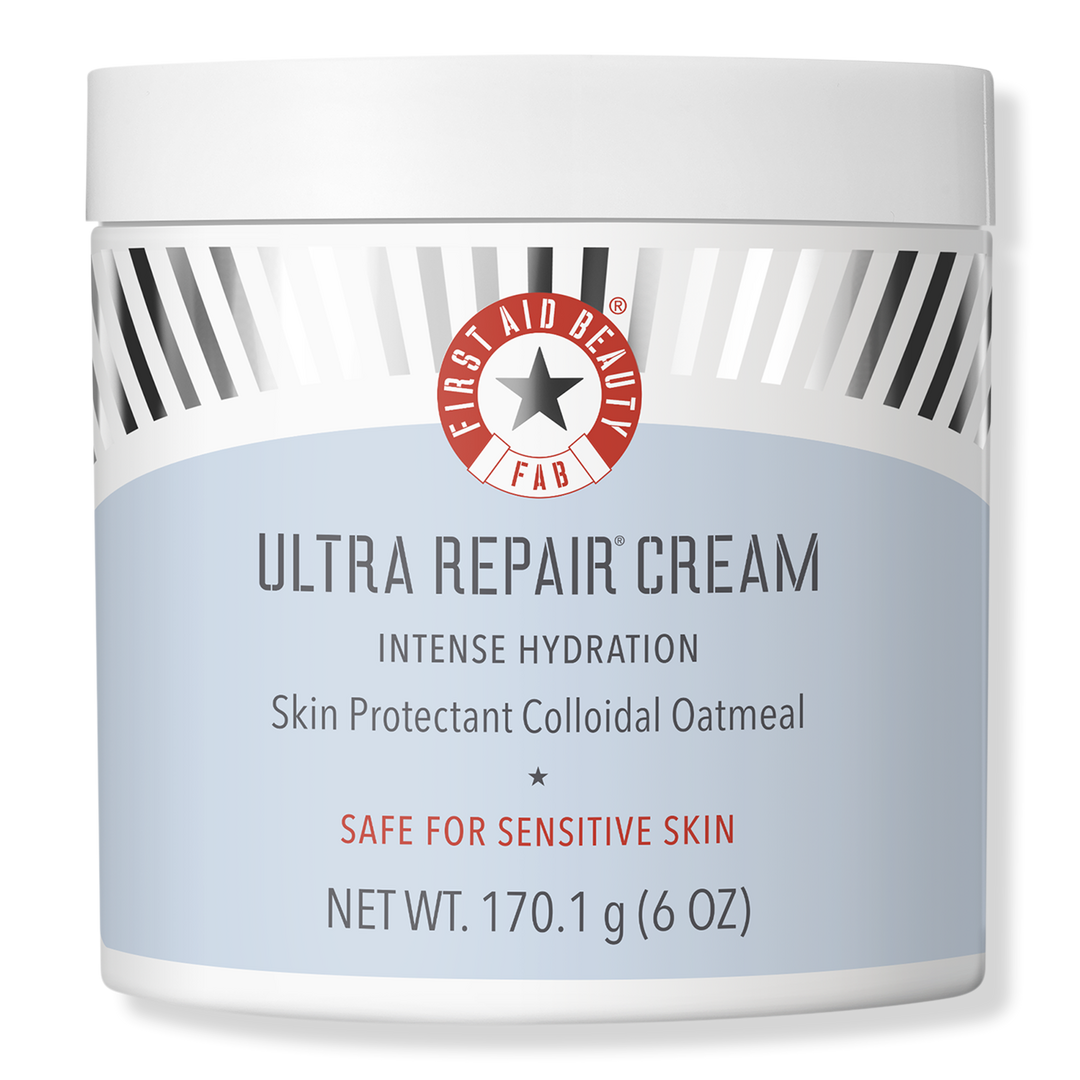
First Aid Beauty Ultra Repair Cream
Intense Hydration Moisturizer | $35.00
Shop First Aid Beauty Ultra Repair Cream at Ulta →
A trusted staple for dry and very dry skin, this thick yet fast-absorbing cream delivers intense moisture through shea butter, colloidal oat, and allantoin. It is rich enough to feel nourishing without leaving a greasy finish, and the fragrance-free formula is gentle enough for sensitive skin as well. It works as a daily face moisturizer on its own and can be applied as a targeted treatment for particularly dry patches around the nose, jaw, or cheeks.
Key specs: Shea Butter · Colloidal Oat · Allantoin · Fragrance-Free
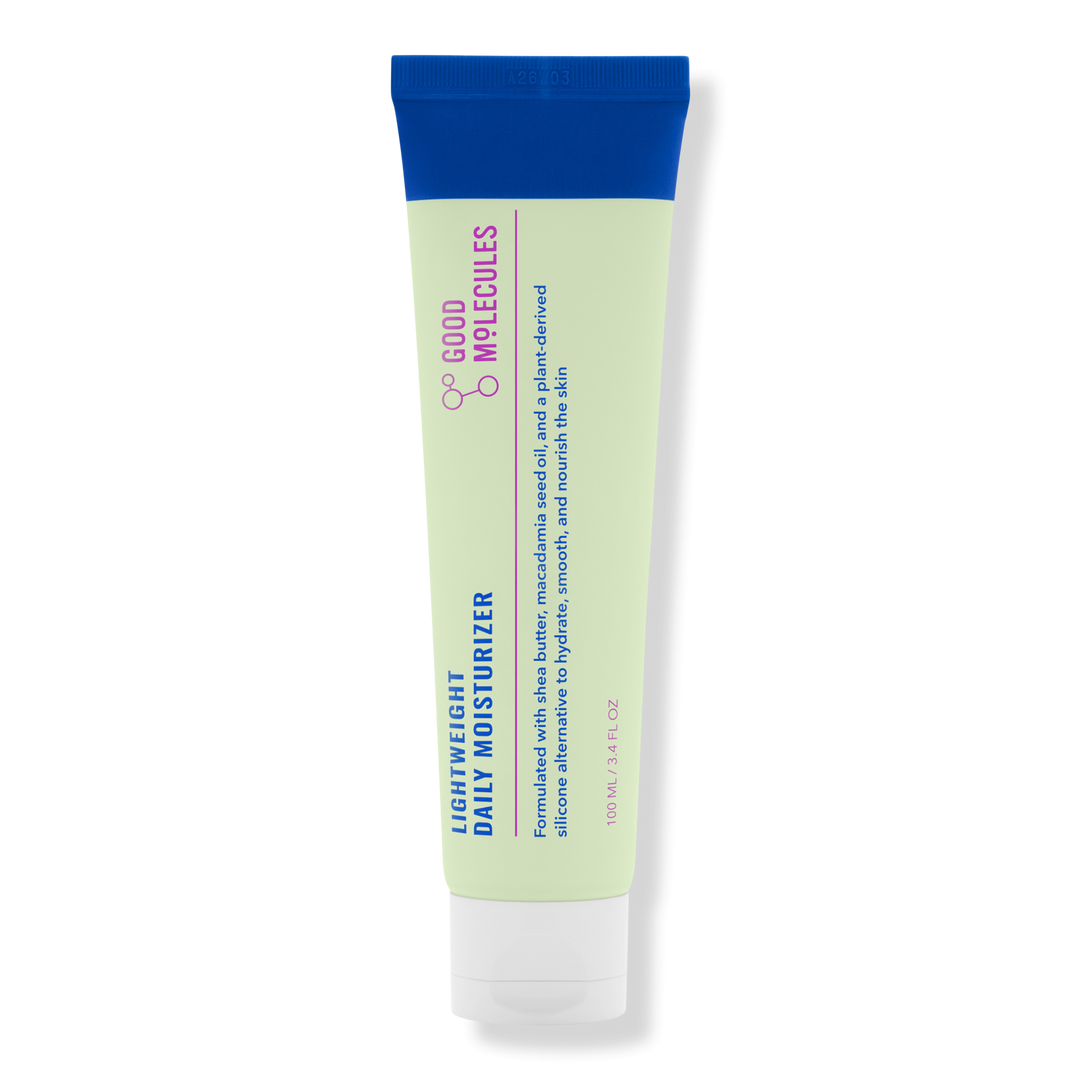
Good Molecules Lightweight Daily Moisturizer
Lightweight Gel-Cream Moisturizer | $12.00
Shop Good Molecules Lightweight Daily Moisturizer at Ulta →
This affordable moisturizer removes the cost barrier that often causes oily skin types to skip this step entirely. A plant-based, naturally derived alternative to silicone smooths skin texture and provides a lightweight, breathable finish without contributing shine or heaviness. Macadamia seed oil and shea butter nourish while sodium hyaluronate provides hydration, and the formula absorbs quickly enough to sit comfortably under sunscreen and makeup.
Key specs: Plant-Based Silicone Alternative · Macadamia Seed Oil · Shea Butter · Sodium Hyaluronate · Clean Ingredients · Vegan · Cruelty-Free
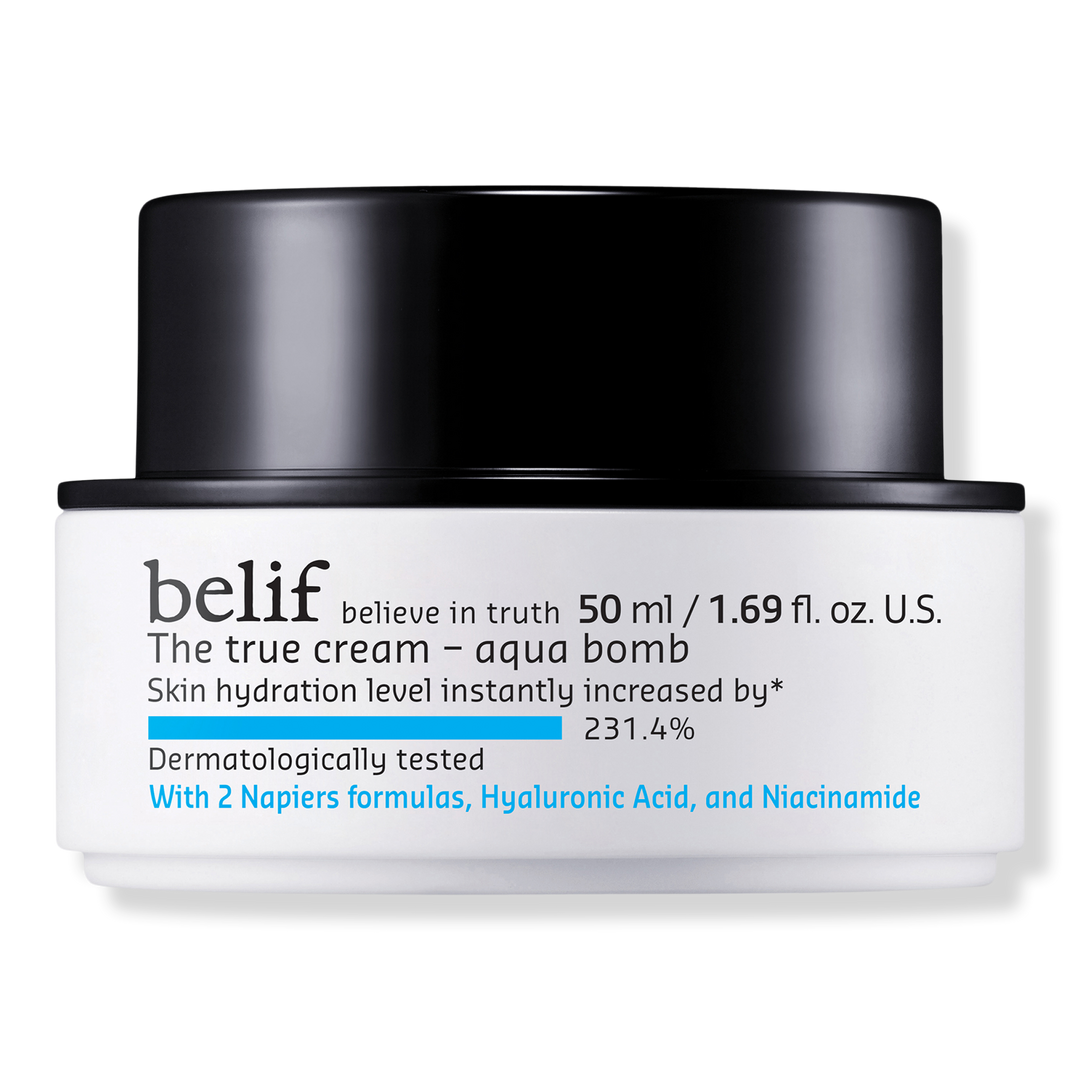
belif The True Cream Aqua Bomb
Gel-Cream Moisturizer | $40.00
Shop belif The True Cream Aqua Bomb at Ulta →
This gel-cream hits the balance that combination skin is looking for: enough moisture for drier areas without adding shine to oilier zones. Lady's mantle extract and a herbal ingredient blend provide lasting hydration, while the gel texture absorbs quickly and leaves a fresh, comfortable finish across the whole face. A slightly heavier layer over dry spots and a thinner layer over the T-zone means you can work with your skin without needing two separate products.
Key specs: Lady's Mantle Extract · Herbal Formula · Gel-Cream Texture · Lasting Hydration · Paraben-Free
Sunscreen
Sunscreen is the final morning skin care step before makeup.
Sunscreen comes in lotions, creams, gels, fluids, sticks, and sprays. Choose a face-friendly sunscreen you are willing to apply generously, and check the label for directions on application and reapplication.
Beginner sunscreen picks by skin type
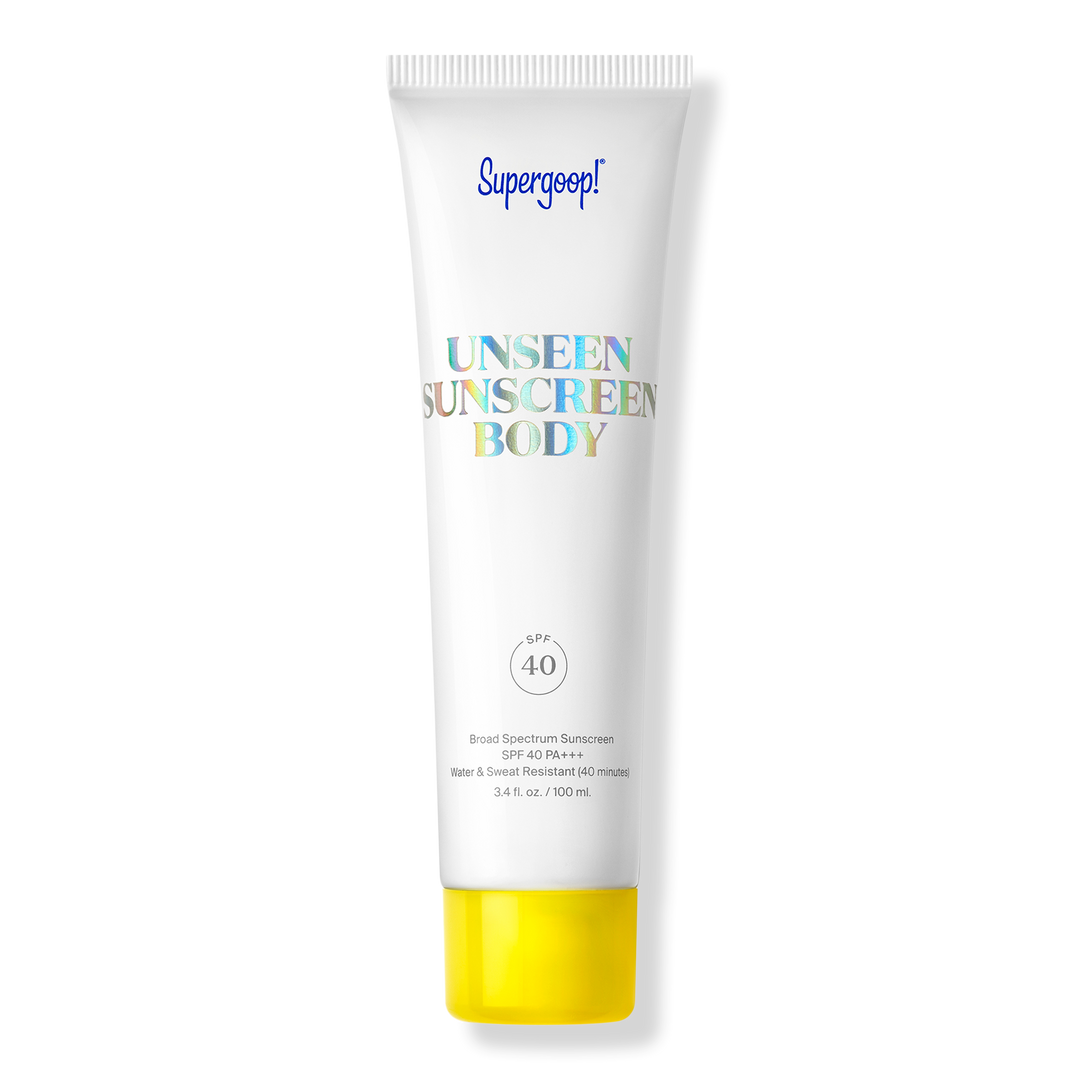
Supergoop! Unseen Sunscreen SPF 40
Weightless Invisible Sunscreen | $44.00
Shop Supergoop! Unseen Sunscreen SPF 40 at Ulta →
This broad-spectrum SPF 40 applies as a smooth, clear formula that provides a satin finish rather than a matte or greasy one, which makes it a practical pick for dry skin. Red algae, sea lavender, and meadowfoam seed oil give it a subtly nourishing quality that sits comfortably on skin that needs extra cushion. The completely transparent formula works across all skin tones and reads invisibly under foundation or worn alone. Many users find it works well as a smooth base beneath makeup.
Key specs: SPF 40 · Broad-Spectrum UVA/UVB · No White Cast · Fragrance-Free · Vegan · Reef-Friendly
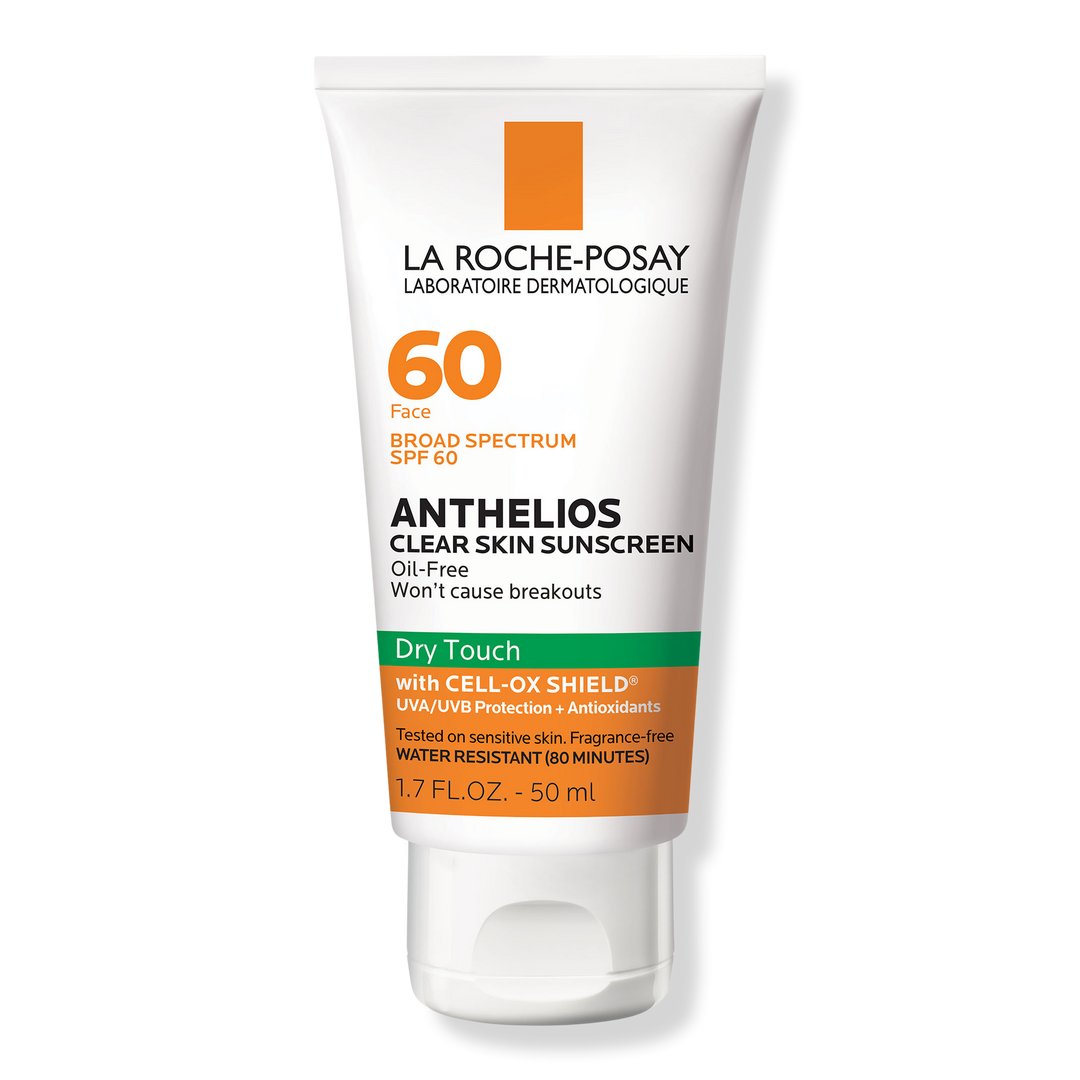
La Roche-Posay Anthelios Clear Skin Dry Touch Face Sunscreen SPF 60
Oil-Free Matte Finish Face Sunscreen | $20.99
Shop La Roche-Posay Anthelios Clear Skin SPF 60 at Ulta →
This SPF 60 was built for oily and acne-prone skin. Cell-Ox Shield technology delivers broad-spectrum UVA/UVB protection alongside an antioxidant complex that defends against free radical damage, while perlite and silica absorb excess oil and control shine even in heat and humidity. The dry-touch formula applies as a lightweight fluid and dries to a clean matte finish with no greasy residue. It is water-resistant for up to 80 minutes and non-comedogenic, recommended by the Skin Cancer Foundation and dermatologist-tested for sensitive skin.
Key specs: SPF 60 · Broad-Spectrum UVA/UVB · Perlite and Silica (Oil Absorption) · Dry-Touch Matte Finish · Oil-Free · Non-Comedogenic · Fragrance-Free
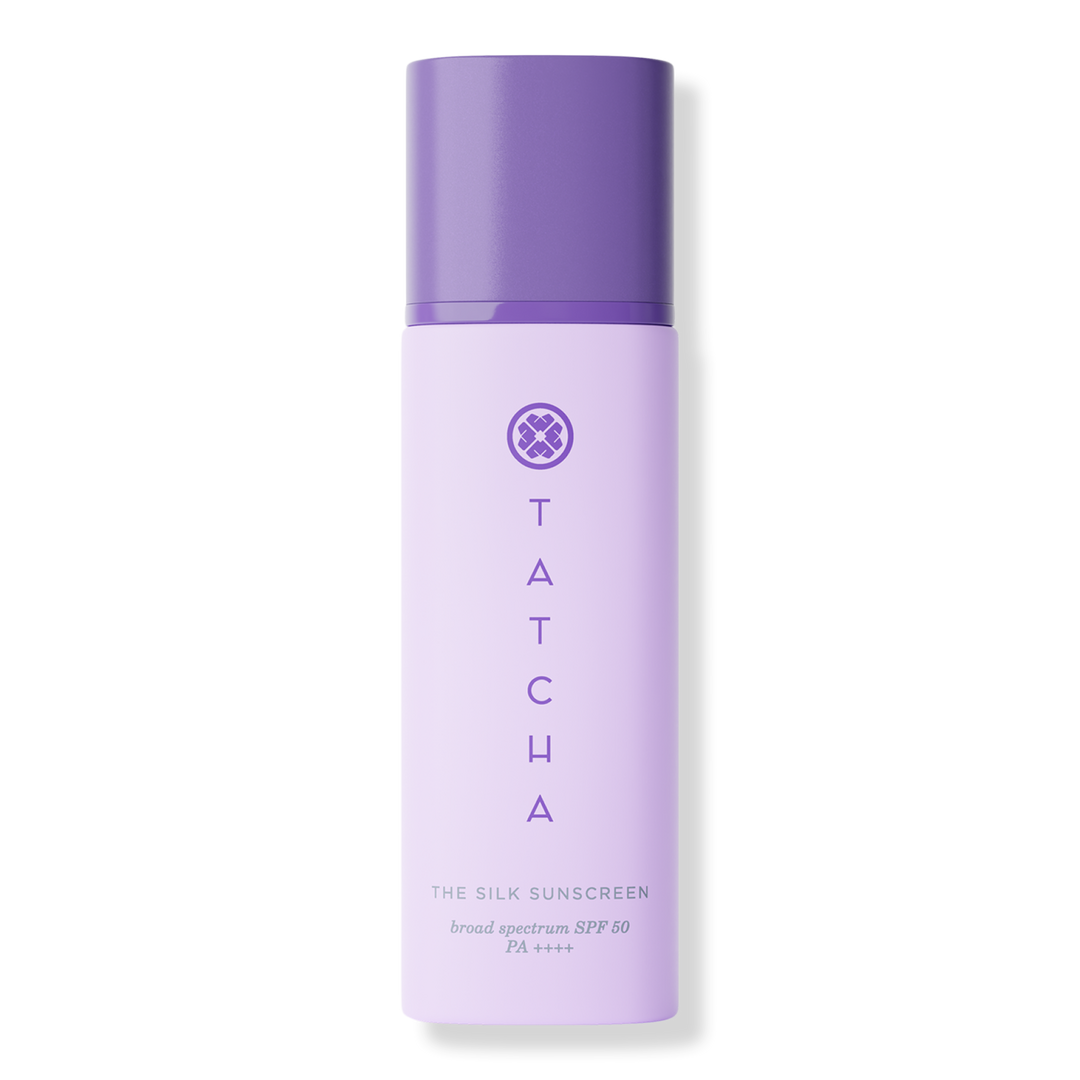
Tatcha The Silk Sunscreen Mineral SPF 50
Mineral Face Sunscreen with Satin Finish | $64.00
Shop Tatcha The Silk Sunscreen SPF 50 at Ulta →
Tatcha's mineral SPF 50 balances the finish that combination skin needs: enough comfort for drier areas and enough control for oilier zones. Japanese wild rose and hadasei-3 complex allow the formula to apply smoothly and develop a satin finish, not matte and not dewy, that stays consistent across the full face. For combination skin, this is a sunscreen that does not require adjusting application zone by zone.
Key specs: SPF 50 · 100% Mineral Protection · Hadasei-3 Complex · Satin Finish · Suitable for Sensitive Skin
Makeup remover, if needed
If you wear makeup or water-resistant sunscreen, one cleanse may not remove everything. A cleansing balm, cleansing oil or micellar water can be your first step, followed by your regular facial cleanser.
Double cleansing is optional. If one cleanser removes the day without leaving residue, you may not need a separate first cleanse.
Beginner makeup remover picks by skin type
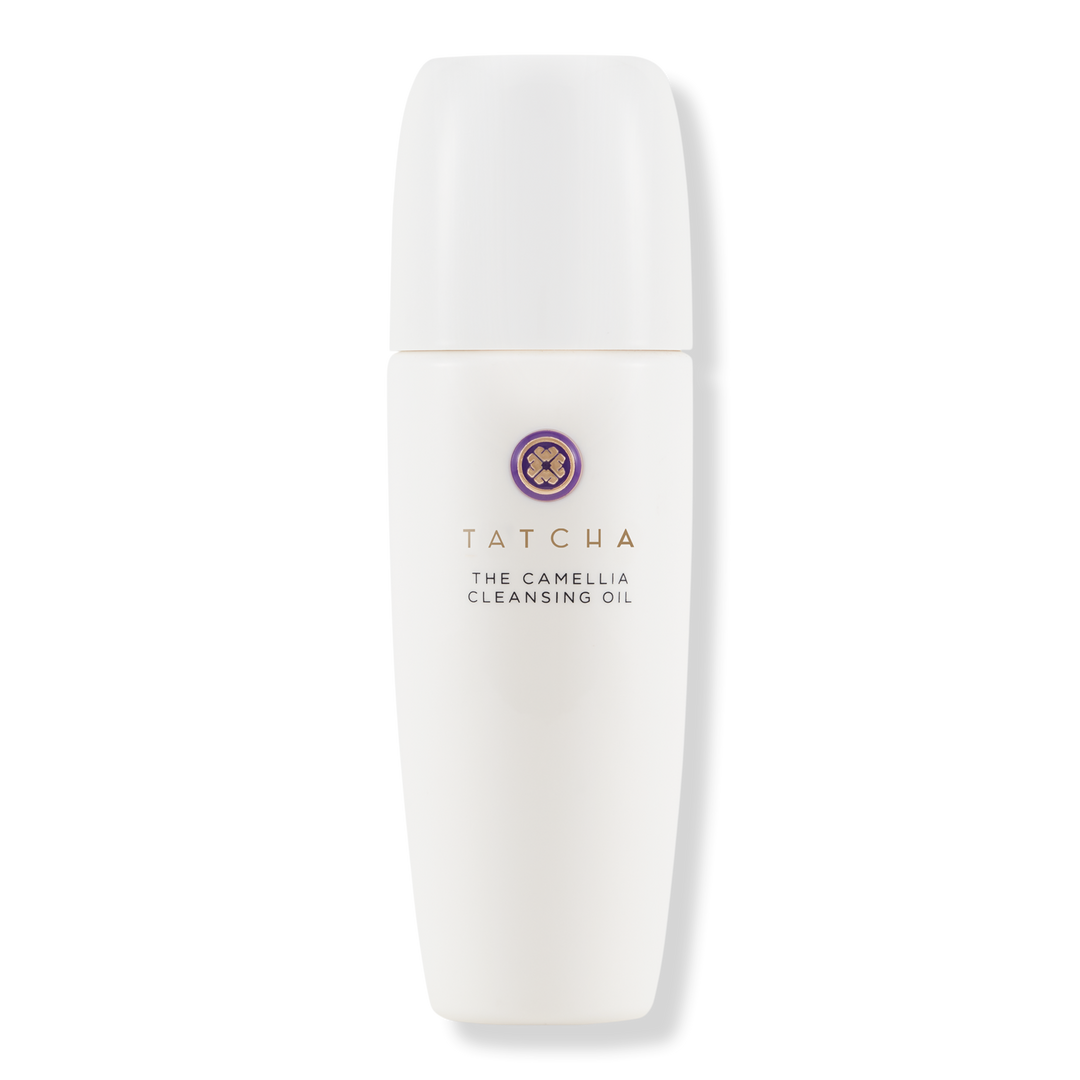
Tatcha Pure One Step Camellia Cleansing Oil
Makeup-Dissolving Cleansing Oil | $50.00
Shop Tatcha Pure One Step Camellia Cleansing Oil at Ulta →
This cleansing oil removes makeup, water-resistant sunscreen and daily buildup in one step, then rinses clean without leaving a greasy residue. Japanese camellia oil, rich in oleic acid, conditions dry skin during the cleansing process rather than stripping it. A small amount emulsifies on contact with water, lifting away product quickly and leaving skin soft and balanced rather than tight or depleted before the second cleanse.
Key specs: Camellia Oil · Oil-to-Milk Emulsification · Removes Water-Resistant Makeup · Cruelty-Free · Rinses Clean
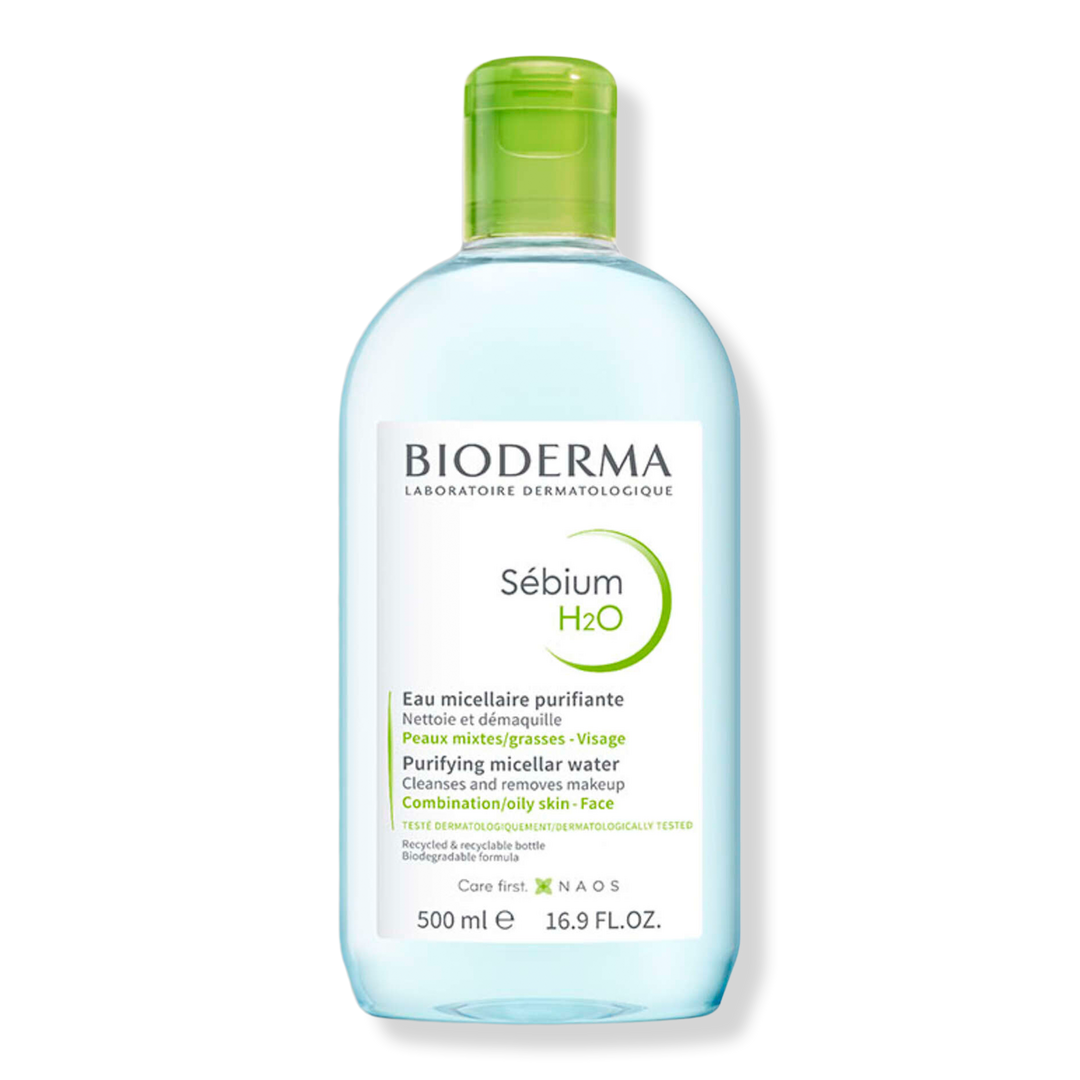
Bioderma Sébium H2O Micellar Water Face Cleanser
Micellar Cleansing Water for Combination to Oily Skin | $20.99
Shop Bioderma Sébium H2O Micellar Water at Ulta →
Bioderma's Sébium H2O is one of the few micellar waters formulated specifically with oily and combination skin in mind rather than adapted from a formula designed for other skin types. Zinc gluconate and copper sulfate work with the micelle technology to regulate sebum production over time, so it is removing today's makeup and also gently helping address the source of excess oil. No rinsing required — it removes makeup and cleanses in one cotton-pad step and leaves no residue that would interfere with the second cleanse.
Key specs: Micellar Technology · Zinc Gluconate · Copper Sulfate · Sebum-Regulating · No-Rinse Formula · Non-Comedogenic · Fragrance-Free
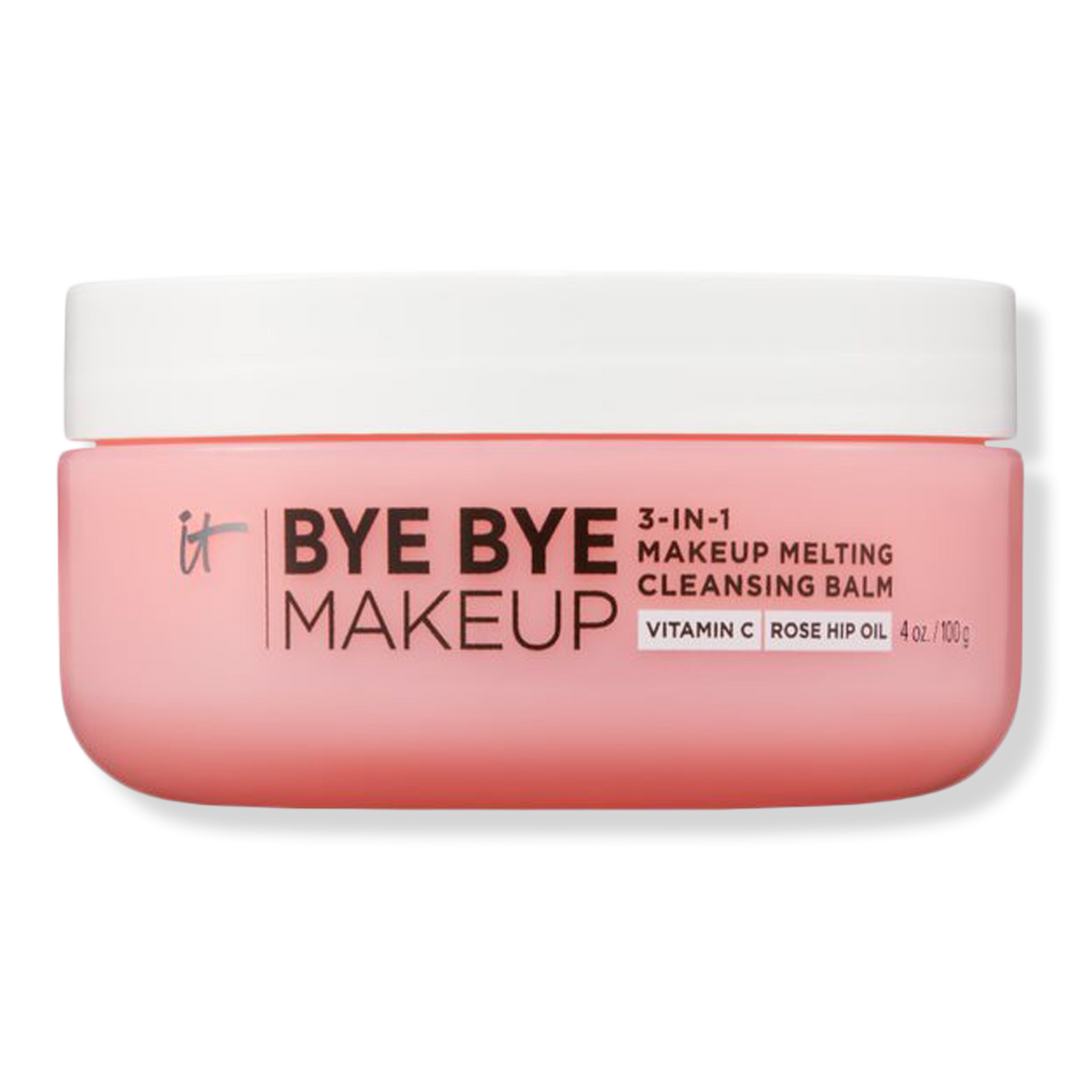
IT Cosmetics Bye Bye Makeup 3-in-1 Makeup Removing Cleansing Balm
3-in-1 Cleansing Balm | $47.00
Shop IT Cosmetics Bye Bye Makeup Cleansing Balm at Ulta →
This melting cleansing balm transforms from a solid to an oil on contact with skin, dissolving foundation, mascara and water-resistant sunscreen with minimal effort. For combination skin, the formula strikes a practical balance: it thoroughly removes product without over-saturating oilier areas or leaving dry zones feeling stripped. It's gentle enough to use around the eye area and rinses away completely without film or residue going into the second cleanse.
Key specs: Balm-to-Oil Texture · Removes Waterproof Makeup · Rinse-Clean Formula · Fragrance-Free
Your morning skin care routine
Your morning routine prepares your skin for the day and ends with sun protection. Keep the order consistent so you do not have to rethink it every morning.
1. Cleanse based on what your skin needs: Wash with a gentle cleanser and lukewarm water, then pat your skin dry with a clean towel. If your skin feels comfortable after waking and you do not need to remove an overnight product, a water rinse may be enough for you.
2. Apply an optional serum or treatment: Beginners can skip this step. If you already use a serum comfortably, apply it according to the label, usually before moisturizer.
3. Moisturize: Smooth moisturizer over your face while your skin is slightly damp or as directed on the package. Give dry-feeling areas a little more attention without piling on so much that the product feels heavy.
4. Apply sunscreen: Use broad-spectrum sunscreen as the last skin care step and follow the label for amount and reapplication. Let it settle before applying makeup if that helps your base sit more evenly.
Your nighttime skin care routine
Your nighttime routine removes the day and gives your skin moisture before bed. It can stay just as short as your morning routine.
1. Remove makeup and water-resistant sunscreen: Use a cleansing oil, balm or micellar water if needed. Work gently around the eyes and avoid tugging at the skin.
2. Wash with facial cleanser: Massage cleanser onto your skin using light pressure, then rinse as directed. Cleansing longer or scrubbing harder does not necessarily mean cleaner skin.
3. Apply an optional targeted product: Use only a product your skin already knows, or introduce one new formula at a time. Check its directions because some treatments are meant for nightly use while others are used less often.
4. Moisturize: Finish with moisturizer to help your skin feel comfortable overnight. If your usual lotion feels too light, you may prefer a richer cream at night, but a separate product is not required.
How to choose products for your skin
Skin type describes broad patterns such as oiliness or dryness. Skin concerns, including breakouts, dullness or temporary sensitivity, can change with weather, stress, hormones and product use.
Start with how your skin regularly feels after gentle cleansing and before applying other products. Then choose textures that make the routine pleasant enough to repeat.
If your skin feels dry
Dry skin may feel tight, rough or uncomfortable, especially after washing. Look for a gentle cream or lotion cleanser and a moisturizer with a richer texture.
Helpful starting points include:
- Fragrance-free options if fragrance seems irritating
- Creams or lotions rather than very light gels
- Lukewarm water instead of hot water
- Less frequent cleansing if twice-daily washing feels drying
If your skin feels oily
Oily skin can still benefit from moisturizer. Skipping it may leave your routine feeling incomplete, especially if you use a cleanser or treatment that feels drying.
Consider:
- Gel or foaming cleansers that rinse comfortably
- Lightweight lotions or gel creams
- Non-comedogenic products if clogged pores are a concern
- Blotting excess oil during the day instead of repeatedly washing
The term non-comedogenic generally means a product was designed with clogged pores in mind, but no label can predict every person's response.
If your skin is combination
Combination skin may feel oily in the center of the face and drier around the cheeks or jaw. You do not need an entirely separate routine for each area.
Try:
- A balanced gel or lotion cleanser
- A light moisturizer all over
- A second thin layer of moisturizer only where skin feels dry
- Targeted use of optional treatments rather than full-face application, when the label allows it
If your skin seems sensitive
Sensitive-feeling skin may react with stinging, itching, redness or discomfort. Keep the routine short and look for gentle, fragrance-free formulas when possible.
Patch testing can help you check a product on a small area before broader use, though it cannot rule out every reaction. Stop using a product if it causes persistent discomfort, and speak with a dermatologist or other qualified health professional about significant or ongoing symptoms.
If breakouts are your main concern
Begin with cleanser, moisturizer and sunscreen before stacking several breakout-focused treatments. Products for acne can have different instructions and may not belong in the same routine. Always consult with a dermatologist before starting a new skin care treatment.
When to add serums, toners and treatments
Add an extra only when you can name the job you want it to do. If you cannot explain why a product is in your routine, you probably do not need it yet.
Before adding something new, ask:
- Have I used my basic routine consistently for a few weeks?
- Does my skin feel comfortable with my current products?
- What specific concern am I trying to address?
- Does the new product overlap with anything I already use?
- Can I follow the label's frequency and sun-care directions?
Toner
Toner is an optional liquid step used after cleansing and before serums or moisturizer. Some toners focus on hydration, while others contain exfoliating ingredients, so the word toner alone does not tell you how the product behaves.
Read the ingredient list and directions before use. A hydrating toner and an exfoliating toner should not be treated as interchangeable.
Serum
Serums are usually lightweight formulas designed around a particular skin goal. A hydrating serum can add another layer of moisture, while other serums may target the look of uneven tone, texture or fine lines.
Choose one goal first. Adding several serums at once can make the routine harder to follow and make reactions harder to trace.
Exfoliant
Exfoliants help remove surface buildup through acids, enzymes or physical particles. They are optional, and more frequent use is not automatically better.
Start at the lowest frequency listed on the label. Avoid pairing multiple exfoliating products in one routine until you understand how your skin responds.
Retinoid or retinol product
Retinoid and retinol formulas vary in strength, format and directions. They can require a gradual introduction and careful daytime sun protection.
Follow the package directions, avoid combining them with other strong treatments without qualified guidance. Ask a health professional before use.
Eye cream
Eye cream is optional. You may enjoy one for its texture or targeted feel, but your regular moisturizer may be suitable around the orbital area if its label permits.
Apply with light pressure and keep the product out of your eyes. More product is not necessarily more helpful in this delicate area.
Tips for making your routine stick
The best routine is one that fits into your day without becoming a chore. Make it easy to remember, easy to access and easy to reset when life gets busy.
Try these practical habits:
- Keep morning products together and nighttime products together
- Place sunscreen near your morning essentials
- Introduce one new product at a time
- Take a quick photo of a product label so you can check directions later
- Use up a suitable product before replacing it just to follow a trend
- Keep a simple note of when you started a new treatment
- Build a travel version with the same basic steps
- Return to cleanser, moisturizer and sunscreen when your routine feels too complicated
A missed night does not erase your progress. Start again at the next routine instead of trying to compensate with extra cleansing or treatment.
A quick routine recap
If you want the shortest possible shopping list, start here:
- Morning: cleanse if needed, moisturize, apply sunscreen
- Night: remove makeup if needed, cleanse, moisturize
- Later: add one targeted product only if you have a clear skin goal
That is a complete beginner routine. Everything else is a personal add-on rather than an entry requirement.
Frequently asked questions
Do I need to wait between skin care steps?
Usually, you only need to wait until a product is comfortable enough to apply the next layer without excessive rubbing or pilling. If a treatment label gives a specific wait time, follow those directions.
Can I use the same moisturizer in the morning and at night?
Yes, if the texture feels comfortable and works well under your daytime sunscreen. You may choose a richer nighttime cream or lighter daytime lotion, but using two moisturizers is not required.
Should I wash my face after working out?
It can help to rinse or gently cleanse after heavy sweating, especially if sweat, sunscreen or makeup is sitting on your skin. Avoid repeated harsh washing, and apply moisturizer and daytime sunscreen again as needed.
Why does my skin care pill under makeup?
Pilling can happen when too much product is applied, layers are rubbed repeatedly or formulas do not sit well together. Try using thinner layers, allowing each one to settle and testing fewer products beneath makeup.
Should my routine change with the seasons?
It can. You may prefer a richer moisturizer in cold or dry weather and a lighter texture in warm, humid conditions, while keeping the same basic steps.
Information provided is for educational purposes only and is not intended as medical advice or a guarantee of results. Consult a dermatologist or healthcare professional for personalized skin care guidance.
Related Content:
Best Pimple Patches, Summer Skin Care Sets, Azelaic Acid Benefits, What is Double Cleansing, Best Ceramides For Skin, Slugging in Skin Care, What do Peptides do for Skin?
Discover more: Skin Care Buying Guides and Beauty Education Articles