How to protect hair from heat damage?
By Ulta Beauty Advisors · Published June 2026 · Updated October 2026
All products featured are available at Ulta Beauty. Ulta Beauty Advisors select products independently. Prices and availability are subject to change. This guide is for informational purposes and doesn't constitute professional styling or dermatological advice. If you have scalp concerns or persistent hair breakage, consult a licensed stylist or dermatologist.
The practical difference in how you protect hair from heat comes down to two things: the product you put on before styling and the settings you use on your tools. A heat protectant adds a buffer between your strands and your hot tool, while smart temperature choices lower how much stress your hair takes in the first place.
You might lean on one or both, depending on your hair type, your styling routine and how often you reach for heat. Products that pair protection with styling benefits, think a primer that also smooths or adds shine, are handy, but a multitasking formula isn't automatically the best match for everyone.
This guide breaks down what heat damage actually is, how products differ and what to weigh before adding either a protectant or a new tool to your routine.
What is heat damage?
Heat damage happens when high temperatures from styling tools weaken your hair's structure over time. Your strands have an outer layer called the cuticle, and repeated heat can lift or crack it. The result? Dryness, dullness, split ends and strands that feel rough instead of smooth.
Different hair types respond differently. Fine, color-treated or chemically processed hair tends to show stress sooner, while coarser or thicker hair may tolerate more, though no hair type is immune. Signs to watch for:
- Increased dryness or frizz
- Split or frayed ends
- Loss of shine or bounce
- Strands that feel stiff or straw-like
- Breakage during brushing or styling
The good news: a little prep goes a long way. Protection is less about avoiding heat entirely and more about styling smarter.
Types of heat styling tools
Not all tools run the same, and the heat they put out varies. Knowing your tool helps you pick the right protectant and temperature.
Flat irons
These clamp and press to straighten or smooth. Many reach high temperatures fast, so lower settings often work for fine hair while thicker textures may need more. Make sure you know the difference between Titanium vs Ceramic flat irons and how it affects different hair types.
Curling irons and wands
Used for curls, waves and bends. The barrel size shapes the look, and like flat irons, the temperature range matters based on your hair type.
Blow dryers
Dryers use airflow and heat together. A cooler setting or the cool-shot button can help you finish a style with less stress on wet, vulnerable strands.
Hot brushes and multi-stylers
These combine drying, smoothing or curling in one tool. Check the labeled temperature range, since all-in-one tools can still get plenty hot.
What do heat protectants do?
Heat protectants form a barrier on the hair that helps reduce damage from hot tools. Many also smooth the cuticle, cut frizz or add shine. They come in a few formats, and the right one often depends on your hair's thickness and your styling goal.
Common formats include:
- Sprays: Lightweight and easy to mist evenly. Great for fine to medium hair.
- Serums: Often silicone-based for smoothing and shine. A little goes a long way on thicker or frizz-prone hair.
- Creams and lotions: Offer more conditioning. Useful for coarse, dry or texture hair.
- Leave-in treatments: Pull double duty by hydrating while adding a heat buffer.
Labels may list a temperature up to which the product helps protect. A higher number doesn't automatically make a product better for you, your hair type, format preference and styling routine matter just as much.
Many protectants also lean into ingredient transparency. You'll spot conditioning agents like argan oil, hydrolyzed proteins, panthenol or silicones. If you watch ingredients closely for your skin and scalp, the same attention pays off here.
How to apply heat protectant
Application makes or breaks the payoff. Even the best formula underperforms if it misses half your hair.
- Start clean and detangled. Work on damp or dry hair, depending on the product's directions.
- Section your hair. This helps you coat strands evenly instead of overloading the top layer.
- Apply from mid-length to ends. These areas are oldest and most prone to damage. Go lighter near the roots.
- Comb through. A wide-tooth comb spreads product so no strand gets skipped.
- Let it set. If you're using heat on wet hair, let a spray absorb for a moment before you dry.
- Style with intention. Use the lowest effective temperature and avoid passing over the same section repeatedly.
Your hair's response is personal, so start with the labeled amount rather than assuming more is better. Too much serum can weigh fine hair down, while too little cream may leave coarse hair underprotected.
How to choose the right heat protectant
Start with your actual goal and hair type, not the highest temperature number on the bottle. Then compare labels with that in mind.
Choose a spray if you want lightweight coverage
Sprays suit fine to medium hair and daily styling. Look for an even mist and a formula that doesn't leave buildup. If you style often, a non-greasy pick keeps hair feeling fresh.
Choose a serum if you want smoothing and shine
Serums help with frizz and dullness, especially on thick or texture hair. Check the ingredient list for conditioning agents, and remember that a pea-sized amount often does the job.
Choose a cream if your hair runs dry
Creams add moisture alongside protection. If your strands feel parched or coarse, a richer formula may be your match.
Compare formats before you buy
The hair care selection includes sprays, serums, creams and leave-ins with different textures and ingredient blends. Compare the label details rather than treating every format as interchangeable.
Useful questions to ask:
- Does the format suit my hair type and thickness?
- What temperature does the product help protect up to?
- Are there ingredients I prefer to include or avoid?
- Does it add styling benefits like smoothing or shine?
- Is the packaging recyclable or refillable if that matters to me?
- Does the amount per use fit my routine and budget?
Heat protectants, available at Ulta Beauty
These five picks are listed at Ulta Beauty. Choose by format, hair type and ingredients rather than treating the list as a ranking. Prices and stock may change, review each product's current label before buying.
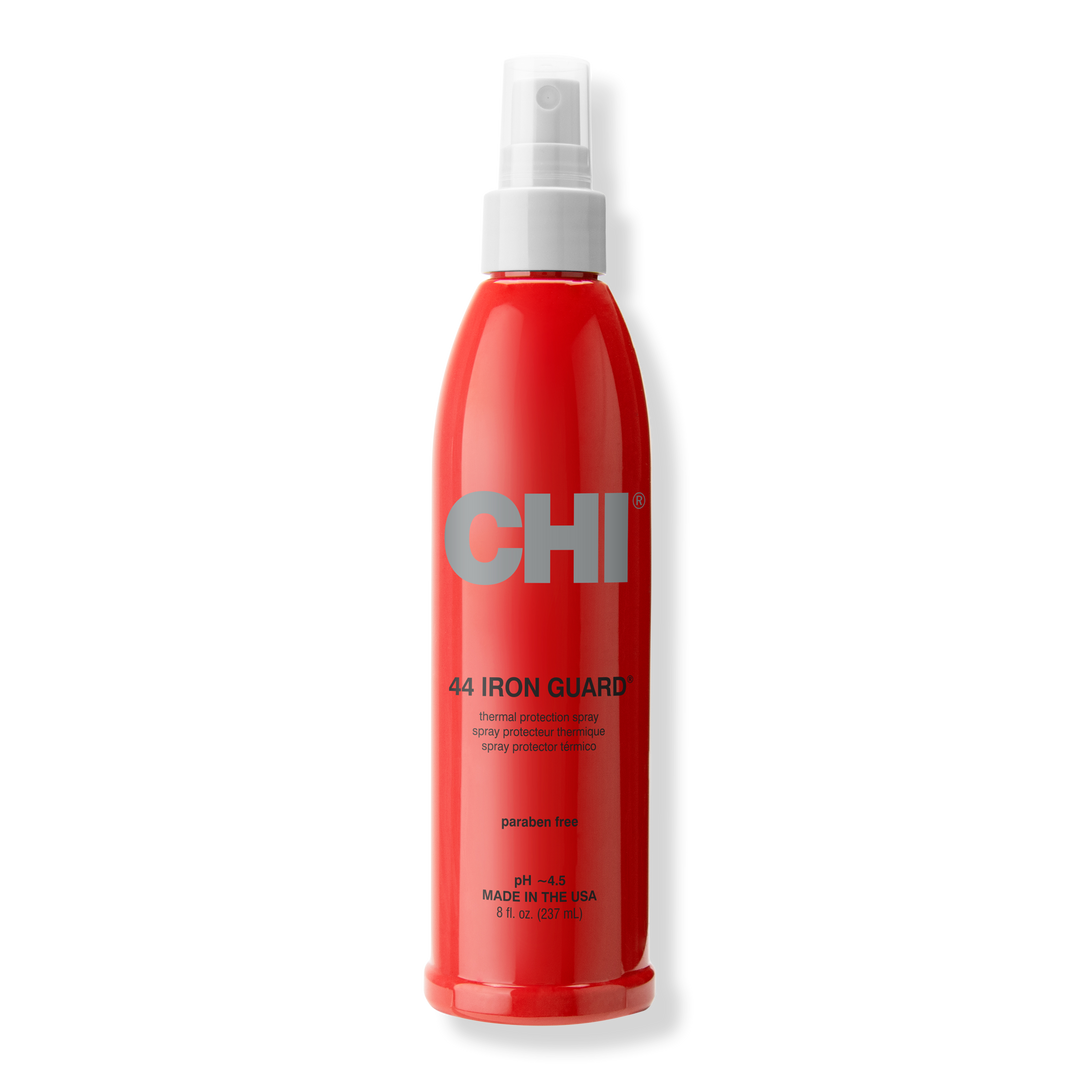
1 of 5: Best lightweight spray for everyday styling
CHI 44 Iron Guard Thermal Protection Spray
Heat protectant spray | $18.50
Shop CHI 44 Iron Guard Thermal Protection Spray at Ulta Beauty →
This mist is the pick for someone who wants quick, even coverage before a flat iron or blow dryer. It's a longtime favorite for fine to medium hair that needs protection without heaviness. Check the current label for the labeled heat range and full ingredient list before deciding whether it fits your routine.
Key specs: Spray · Lightweight finish · Designed for daily heat styling · Mist application
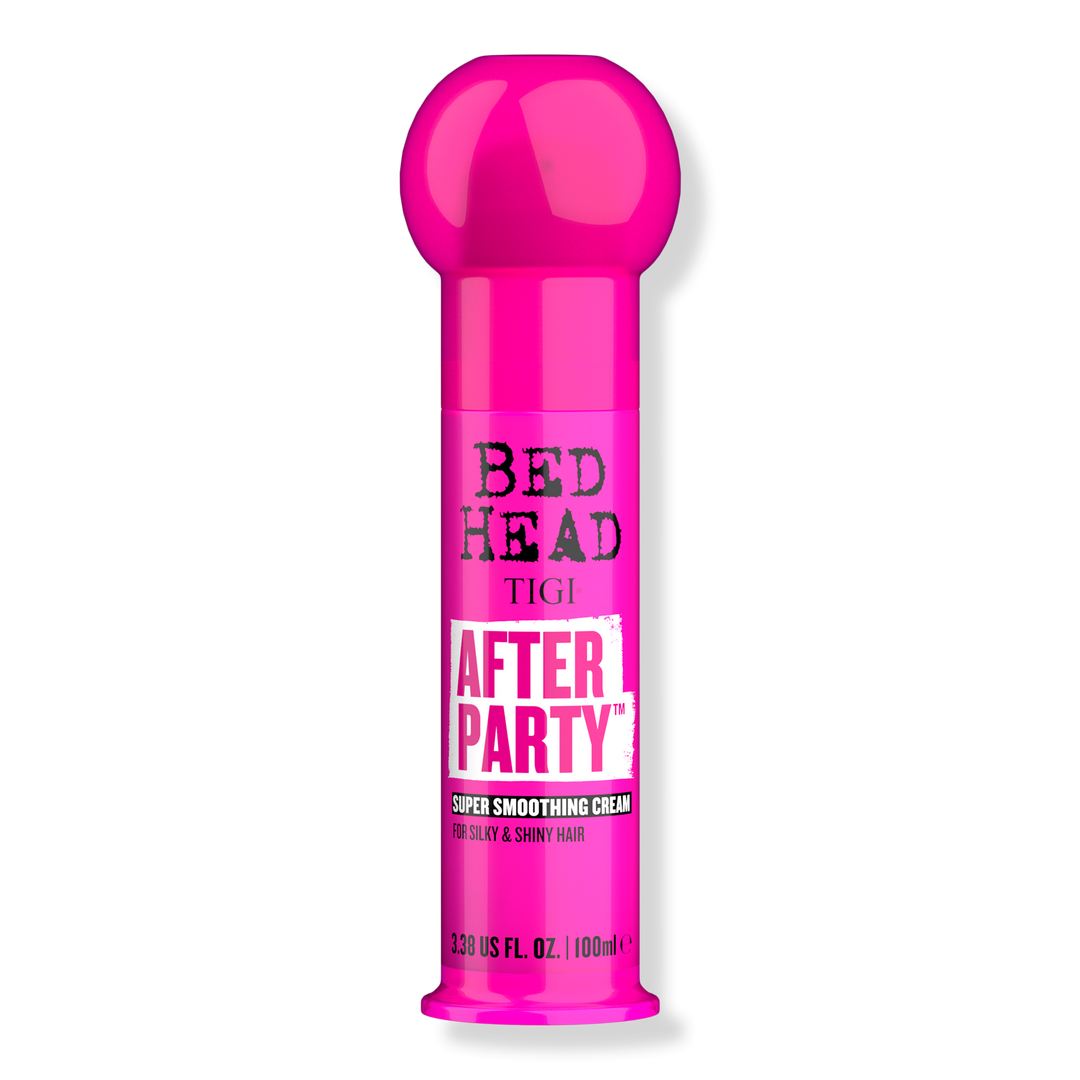
2 of 5: Best smoothing cream for soft, sleek results
Bed Head After Party Super Smoothing Cream
Smoothing cream | $21.00
Shop Bed Head After Party Super Smoothing Cream at Ulta Beauty →
This cream is the pick for someone who wants sleek, smooth results without crunch or buildup. It's built to tame frizz and add shine, which makes it a solid match for fine to medium hair that needs a little extra control after heat styling. Check the current label for the full ingredient list and directions before adding it to your routine.
Key specs: Cream · Smoothing and frizz control · Shine-enhancing · Fine to medium hair
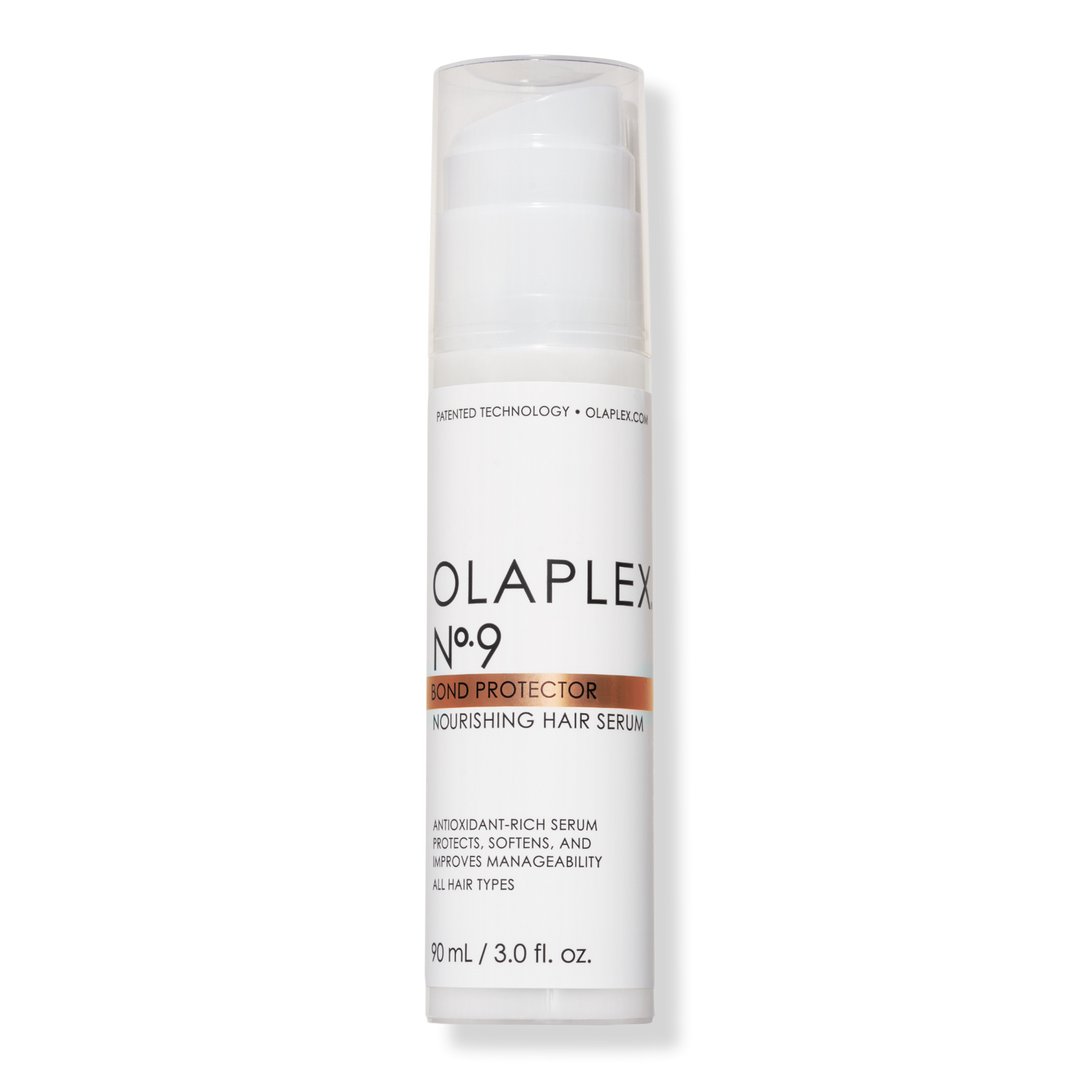
3 of 5: Best nourishing serum for heat protection and frizz reduction
OLAPLEX No.9 Bond Protector Heat Protection & Frizz Reduction Nourishing Hair Serum
Nourishing hair serum | $32.00
Shop OLAPLEX No.9 Bond Protector Heat Protection & Frizz Reduction Nourishing Hair Serum at Ulta Beauty →
This serum is built for anyone who wants heat protection and bond-supporting nourishment in one step. OLAPLEX's No.9 is formulated to shield strands from thermal stress while helping reduce frizz, making it a strong pick for color-treated, damaged or over-processed hair that needs a little extra care before hot tools. Check the current label for the full ingredient list and directions before adding it to your routine.
Key specs: Serum · Heat protection and frizz reduction · Bond-nourishing formula · Color-treated and damaged hair
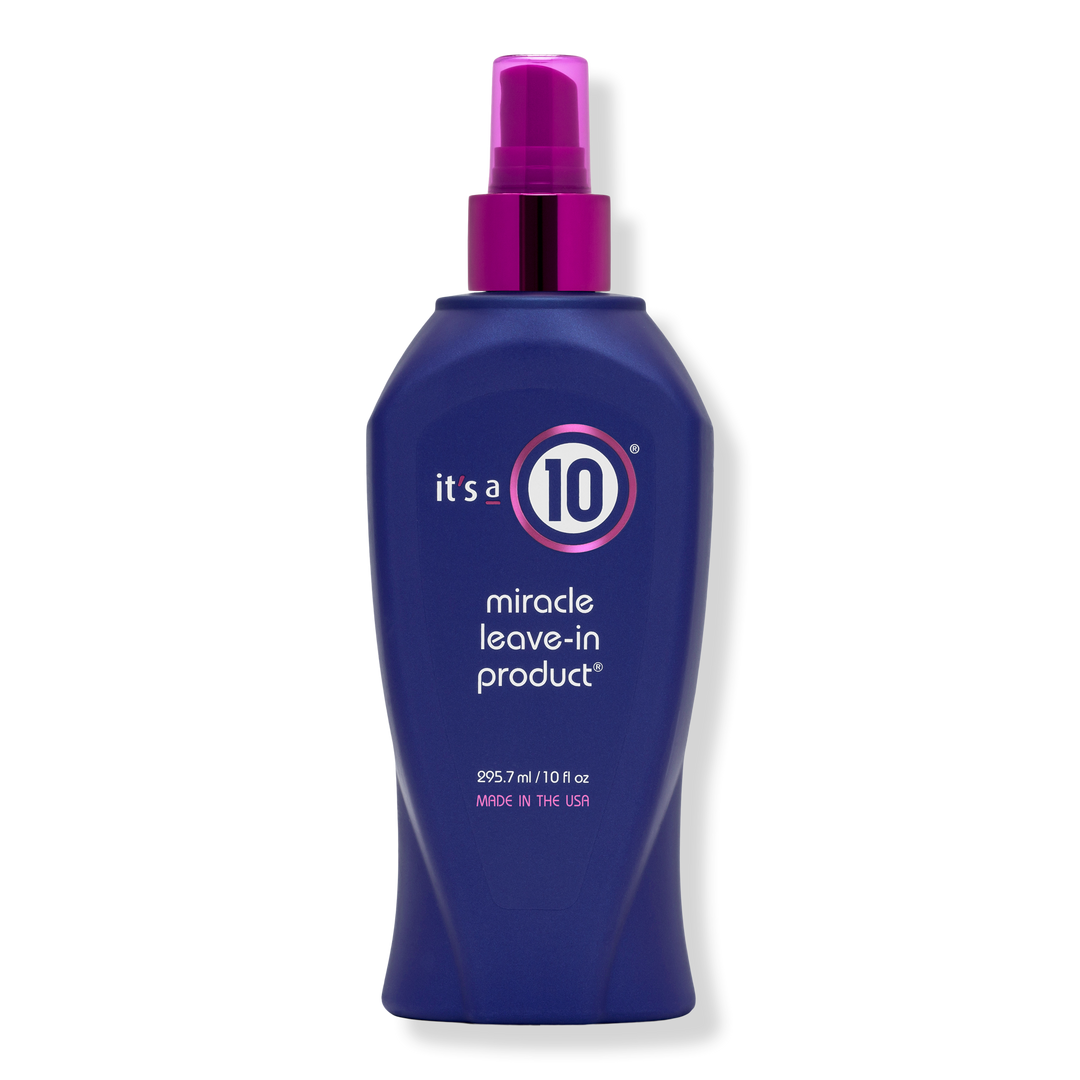
4 of 5: Best multitasking leave-in
It's a 10 Miracle Leave-In Product
Leave-in conditioner with thermal protection | $23.99
Shop It's a 10 Miracle Leave-In Product at Ulta Beauty →
Choose this to compare a leave-in that conditions, detangles and adds a heat buffer in one step. It lists multiple benefits, so read the full label to see which ones match your hair's needs rather than assuming it replaces a dedicated protectant for high-heat tools.
Key specs: Leave-in · Multi-benefit · Conditioning and detangling · Spray application
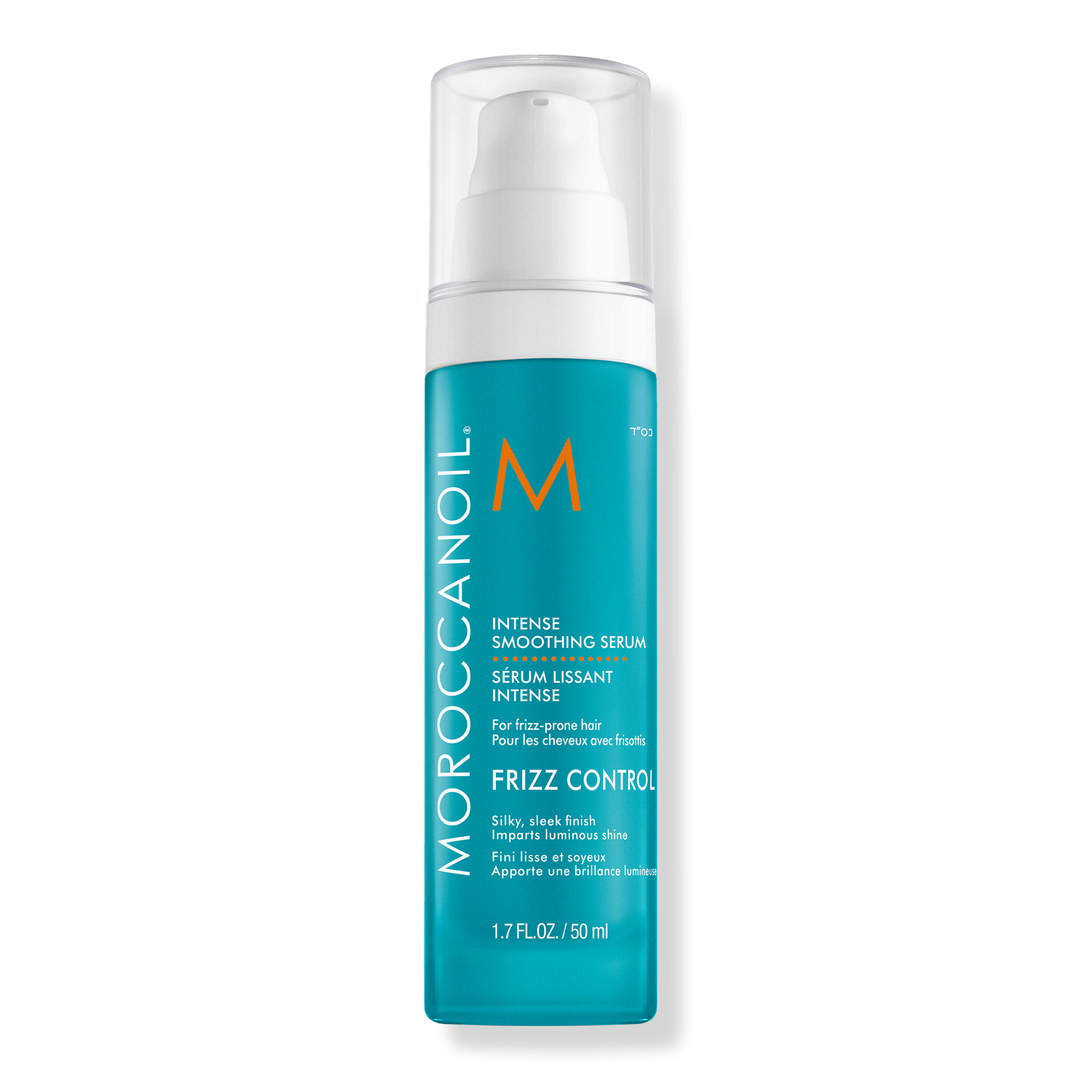
5 of 5: Best smoothing serum for frizz control
Moroccanoil Intense Smoothing Frizz Control Hair Serum
Frizz control hair serum | $32.00
Shop Moroccanoil Intense Smoothing Frizz Control Hair Serum at Ulta Beauty →
Moroccanoil's argan oil–infused serum is the one to reach for when frizz is your main concern. It's built to smooth and condition while shielding strands from heat, making it a strong match for thick, coarse or humidity-prone hair that needs serious control. Check the current label for the full ingredient list and labeled heat range before adding it to your routine.
Key specs: Serum · Smoothing and frizz control · Argan oil–infused · Thick, coarse or humidity-prone hair
A quick safety note
Styling tools get hot, so handle them with care and keep them away from skin, scalp and little hands.
Stop using a product and check with a stylist or dermatologist if you notice irritation, persistent breakage or scalp sensitivity. Patch-test new formulas if you have sensitive skin.
The practical takeaway
Heat protectants add a buffer between your strands and your hot tools. Smart temperature settings lower the stress before it starts, and pairing both gives your hair the best shot at staying healthy.
Your choice should come down to your hair type, your styling goal, a format you'll actually use and ingredients you feel good about. You can mix a protectant with lower heat settings, but building the habit one step at a time makes the routine easier to stick with.
Frequently asked questions
Do I need heat protectant if I only style occasionally?
It helps anytime you use hot tools, even now and then. Occasional heat still stresses the cuticle, so a quick mist adds a buffer whether you style daily or once a week.
Can I use heat protectant on wet hair?
It depends on the product. Some formulas are made for damp hair before blow-drying, while others work best on dry strands before a flat iron. Check the directions on your exact product.
Is a higher heat setting faster or just more damaging?
Higher heat can style quicker, but it also raises the risk of damage, especially for fine or color-treated hair. Start low and increase only if needed.
Will heat protectant make my hair greasy?
It shouldn't if you match the format to your hair type and use the labeled amount. Fine hair often does best with a light spray, while serums and creams suit thicker textures.
How can I tell if a product contains ingredients I want to avoid?
Read both the full ingredient list and any allergen notes on the package. Formulas can change, so check the current label each time you buy.
Related Content: What is Snail Mucin, Azelaic Acid Benefits, What is Double Cleansing?, What is Co-Wash?, What is Hair Porosity?, Best Wavy Hair Products, Best Protective Styles Products, Best Shampoo & Conditioner, Best Heat Protectant Sprays, DIY Lash Extensions
Discover more Hair Care Buying Guides and Beauty Education Articles
Get personalized recommendations with our Hair Quiz