Vitamin C vs. Tranexamic Acid: 2026’s Best ingredients for fading dark spots
By Ulta Beauty Advisors | Published March 2025 | Updated September 2026
Information provided is for educational purposes only and isn't intended as medical advice or a guarantee of results. Consult a dermatologist or healthcare professional for personalized skin care guidance.
Two of the most popular ingredients for fading dark spots? Vitamin C and tranexamic acid. But they work in different ways. Vitamin C is an antioxidant that brightens the look of skin and helps defend against environmental stressors, while tranexamic acid targets pigment linked to inflammation and hormones. Many routines use both for the best of both worlds.
Dark spots are a common skincare concern that may show up from sun exposure, hormonal changes or past breakouts. Learning about each ingredient's potential benefits, limitations and how they might play nicely together can help you decide which option fits your skin type and goals.
How does vitamin C help with dark spots?
Vitamin C may help fade the look of dark spots by interfering with melanin production pathways, neutralizing free radicals and supporting collagen. It's one of the most widely studied ingredients in skin care and a go-to for brightening.
Often formulated as L-ascorbic acid or stabilized derivatives, vitamin C is an antioxidant that may improve the appearance of dark spots, boost radiance and help protect against environmental stressors.
Here's what vitamin C is thought to do:
Interfere with melanin production pathways, which may reduce the look of pigmentation
Neutralize free radicals caused by UV exposure and pollution, both of which can contribute to uneven tone
Support collagen production, which may improve the look of firmness and texture over time
In short, vitamin C serums are often used to brighten the look of skin and support defense against environmental stressors. Explore Ulta Beauty's Best Vitamin C Serums guide to find stabilized formulas suited to different skin types and preferences.
How does tranexamic acid help with dark spots?
Tranexamic acid (TXA) may help fade dark spots by addressing pigment production pathways, including those influenced by inflammation. Because it doesn't exfoliate, it's often considered a gentler option for sensitive skin.
TXA was originally developed as an oral medication to reduce bleeding and has since become a popular skin care ingredient. Unlike exfoliating acids, it's believed to work by calming pigment pathways rather than resurfacing the skin.
That gentle approach makes tranexamic acid a common pick for anyone dealing with post-inflammatory hyperpigmentation or discoloration tied to irritation. Ulta Beauty offers a variety of TXA-based serums that fit into different skin care routines.
Vitamin C vs. tranexamic acid: what's the difference?
Vitamin C is best suited for broad brightening and antioxidant support. Because it doesn't exfoliate, it's often considered a gentler option for sensitive skin. Both are common in brightening routines, but they take different approaches and may vary in how skin tolerates them.
Vitamin C: Known for its potential to reduce discoloration and provide antioxidant support, vitamin C is often used for concerns like dullness, sun-related discoloration and uneven tone. Some people may notice more radiance within weeks, though pigmentation changes may take longer with consistent use. Certain formulas may cause irritation in sensitive skin, especially at higher strengths or lower pH levels. Vitamin C is frequently paired with sunscreen and other antioxidants to boost its benefits.
Tranexamic acid: This ingredient is thought to focus on pigment pathways influenced by inflammation. Improvements in skin tone may develop gradually with consistent use. TXA is often considered well-tolerated and barrier-friendly, making it a common choice for sensitive or reactive skin types. It's frequently combined with ingredients like niacinamide.
The takeaway: reach for vitamin C for broad brightening and antioxidant support, and tranexamic acid for discoloration linked to inflammation or hormonal factors.
Best vitamin C serums for brighter-looking skin
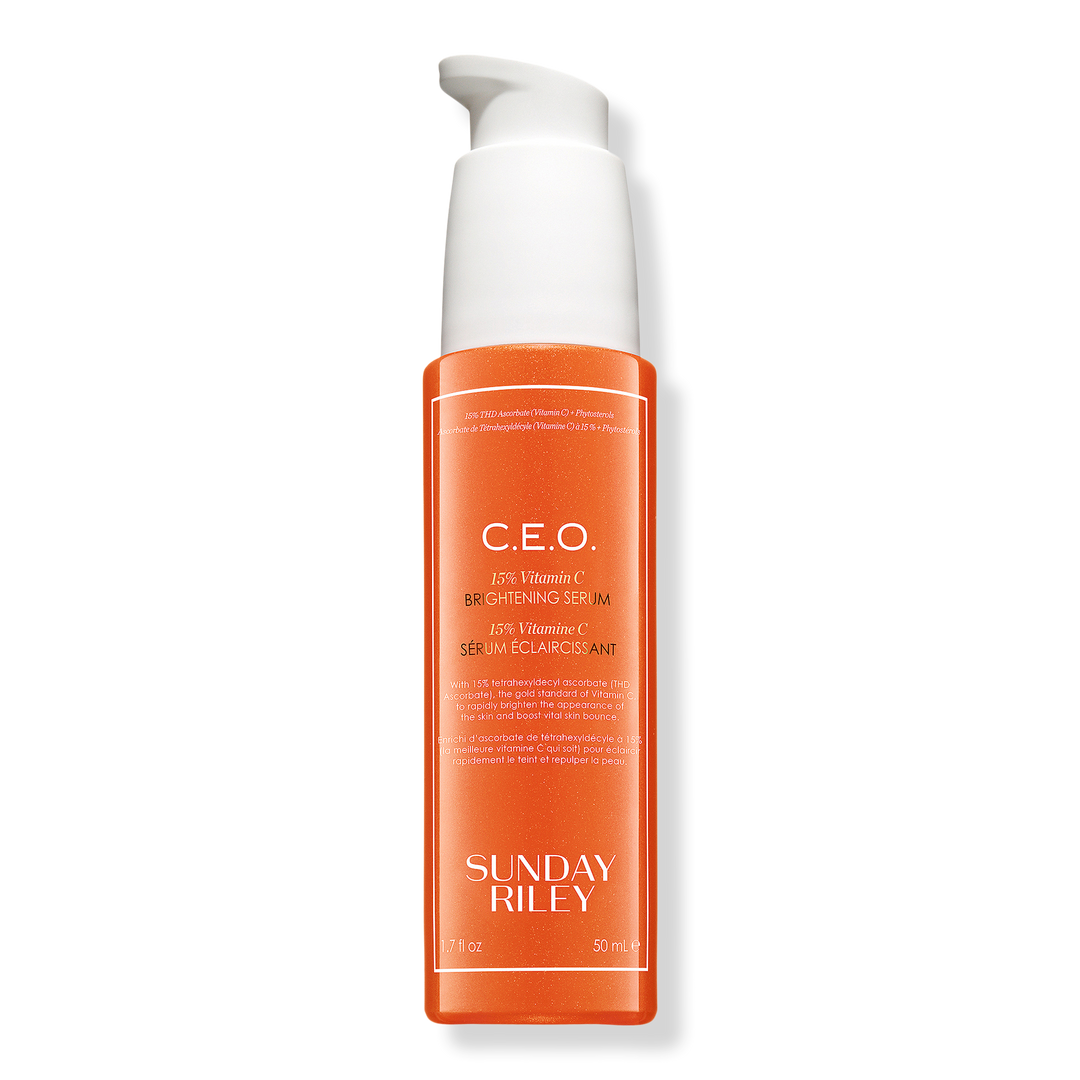
Best vitamin C serum for all-around brightening
SUNDAY RILEY C.E.O. 15% Vitamin C Brightening Serum
Serum | $50.00-$122.00
Shop SUNDAY RILEY C.E.O. 15% Vitamin C Brightening Serum at Ulta Beauty →
Glow-up in a gel. This lightweight serum packs 15% THD ascorbate, a stable, oil-soluble form of vitamin C, to brighten the look of dull, uneven tone while helping defend against everyday environmental stressors. It sinks in fast and leaves skin feeling smooth, never sticky.
Key specs: 15% THD ascorbate (stable vitamin C) · Antioxidant support · Lightweight, non-greasy gel · Good for most skin types
Ulta Beauty Advisor tip: Smooth 1-2 pumps onto clean skin each morning, then follow with moisturizer and SPF. Vitamin C and sunscreen are a brightening duo you'll want on repeat!
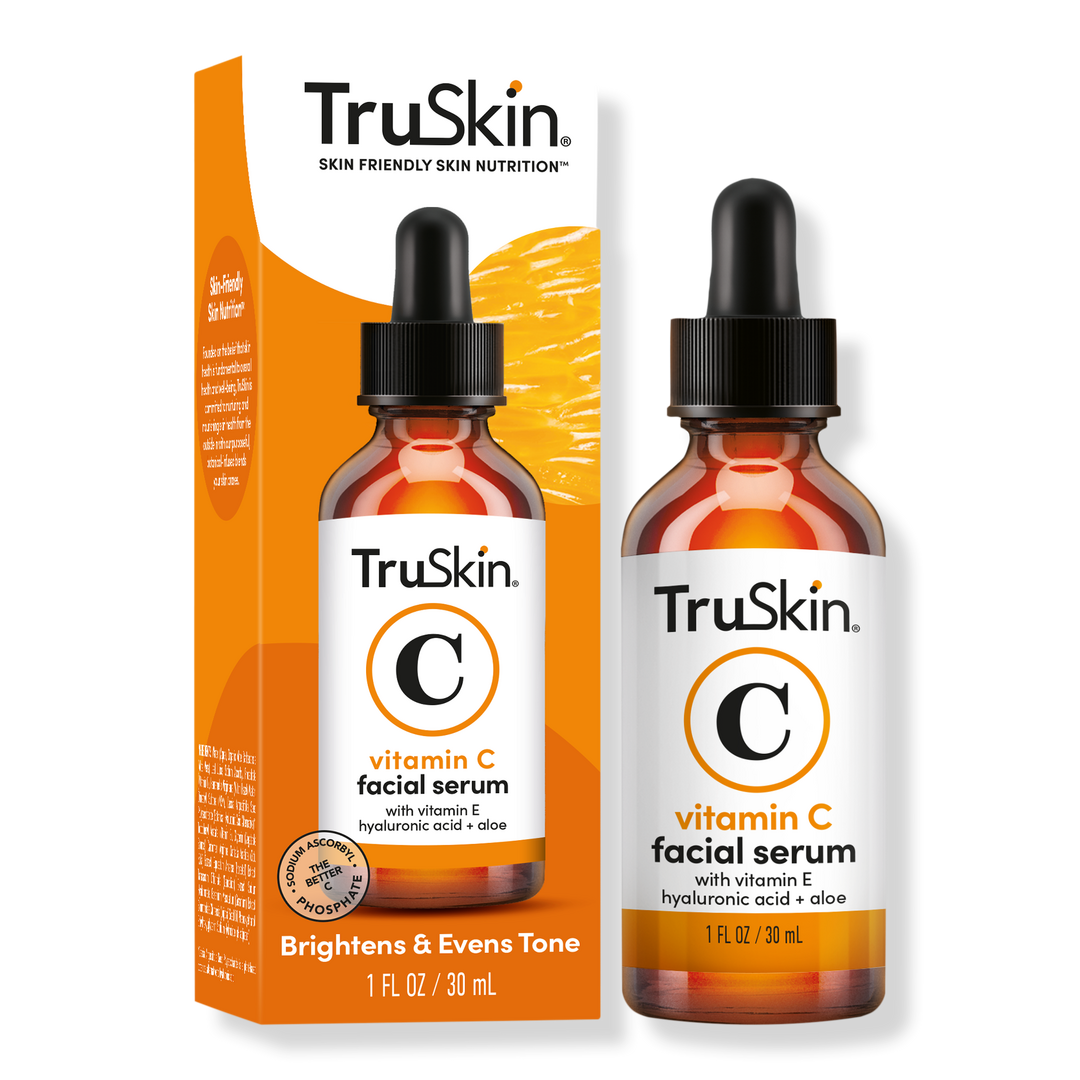
Best gentle vitamin C serum for sensitive skin
TruSkin Vitamin C Facial Serum
Serum | $29.99-$38.99
Shop TruSkin Vitamin C Facial Serum at Ulta Beauty →
Big brightening energy, small price tag. This blend pairs vitamin C with hyaluronic acid and vitamin E to help boost radiance and hydrate at the same time. A friendly starting point if you're new to vitamin C and want to ease in.
Key specs: Vitamin C with hyaluronic acid · Lightweight texture · Vegan and cruelty-free · Good for most skin types
Ulta Beauty Advisor tip: Patch test on your inner arm first, then work up to daily use. New actives love a slow-and-steady intro.
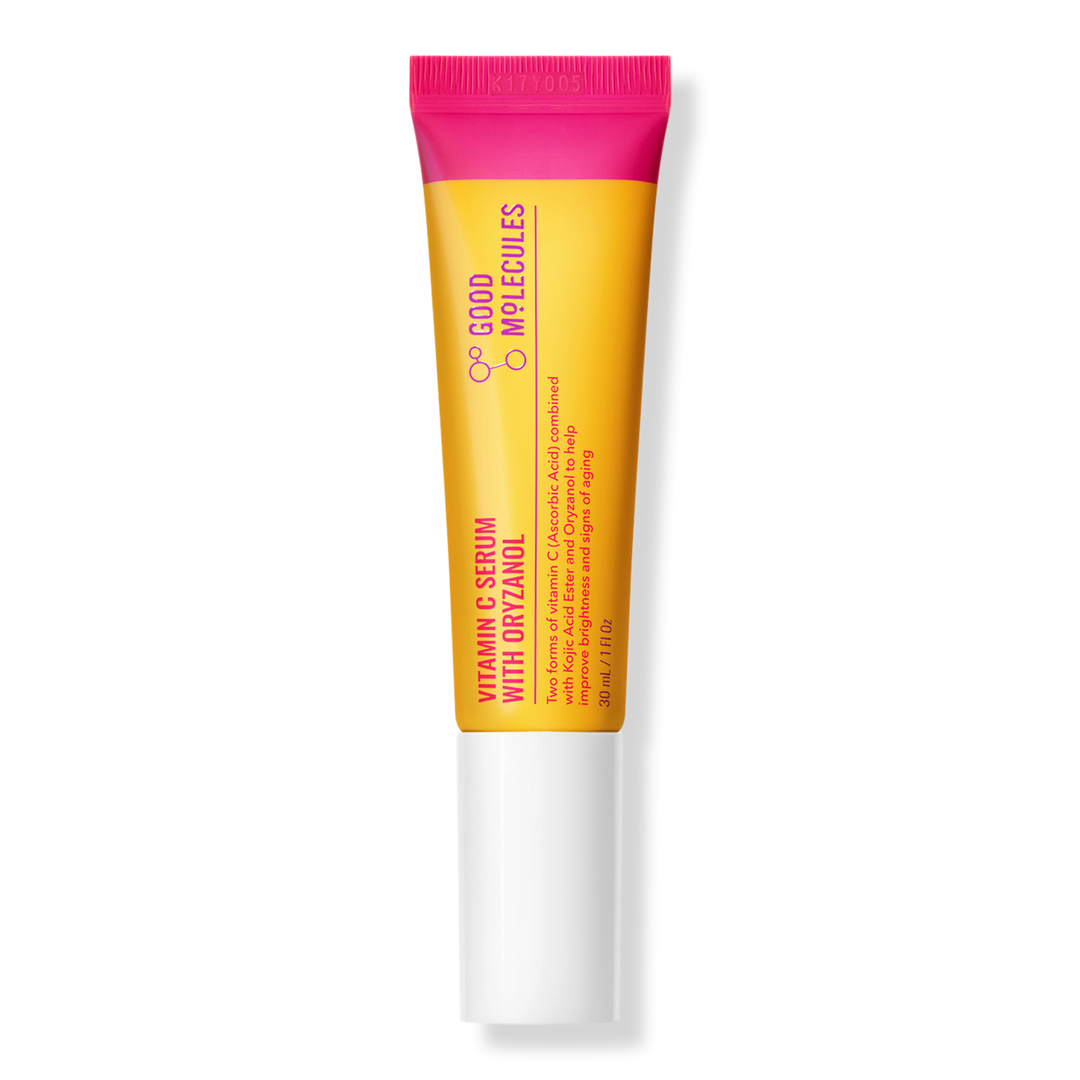
Best budget-friendly vitamin C serum
Vitamin C Serum with Oryzanol
Serum | $14.00
Shop Vitamin C Serum with Oryzanol at Ulta Beauty →
Gentle glow, meet your match. This affordable pick uses a stabilized form of vitamin C to brighten the look of skin without the sting some stronger formulas can bring. Lightweight and fuss-free, it layers under everything.
Key specs: Stabilized vitamin C · Non-greasy finish · Fragrance-free · Good for sensitive and reactive skin
Ulta Beauty Advisor tip: Layer it under moisturizer in the morning and follow with SPF. Vitamin C and sunscreen are a brightening duo you'll want on repeat.
Best tranexamic acid serums for fading discoloration
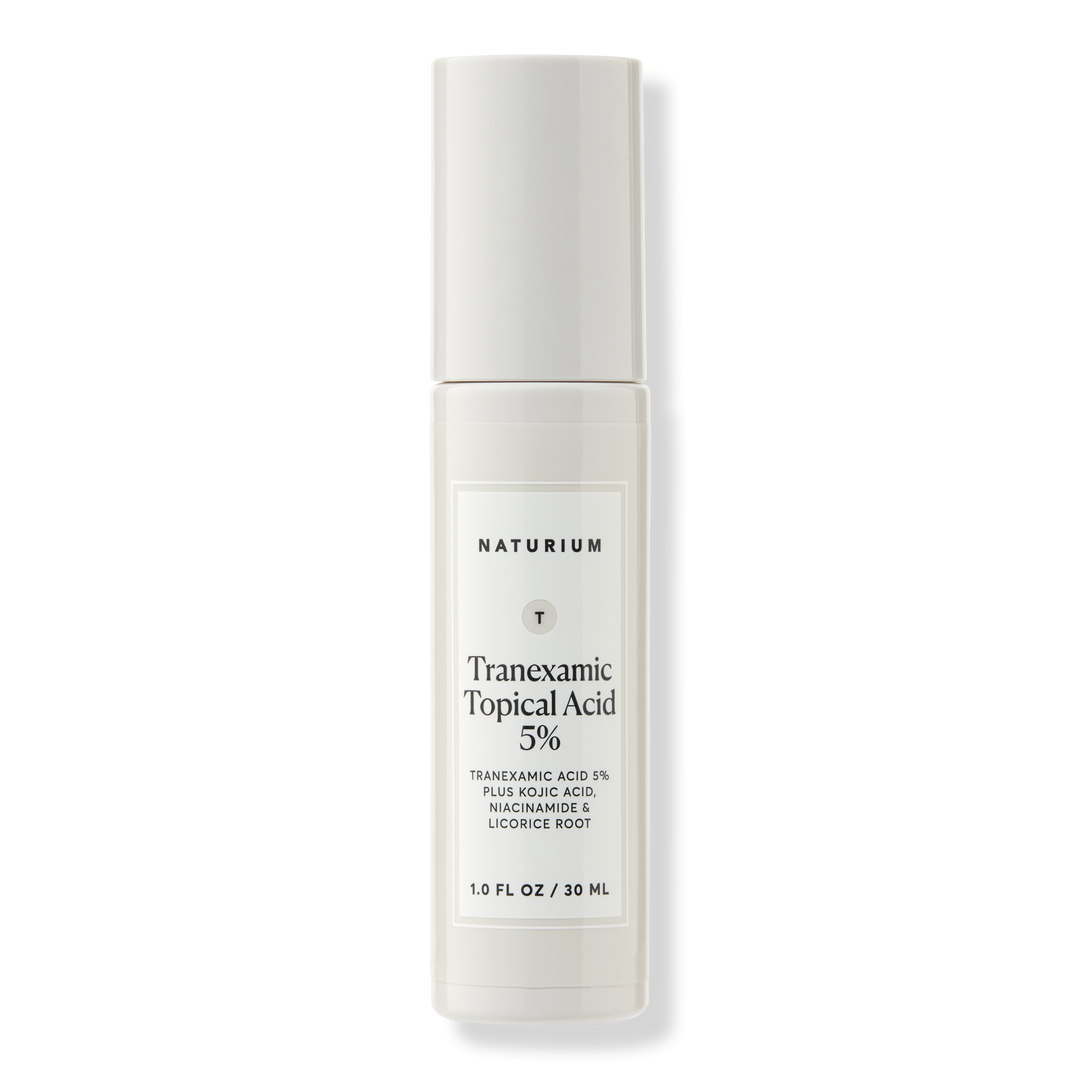
Best tranexamic acid serum for stubborn discoloration
Naturium Tranexamic Topical Acid 5%
Serum | $19.99
Shop Naturium Tranexamic Topical Acid 5% at Ulta Beauty →
Say hello to your discoloration's new rival. This 5% tranexamic acid blend teams up with kojic acid and niacinamide to help even the look of dark spots and post-breakout marks. The silky, non-sticky texture sinks in fast, so it plays nice with the rest of your routine.
Key specs: 5% tranexamic acid · With niacinamide and kojic acid · Fragrance-free · Good for most skin types
Ulta Beauty Advisor tip: Use it morning or night after cleansing and before moisturizer. Consistency is the real MVP here, so keep at it.
Best gentle tranexamic acid serum for sensitive skin
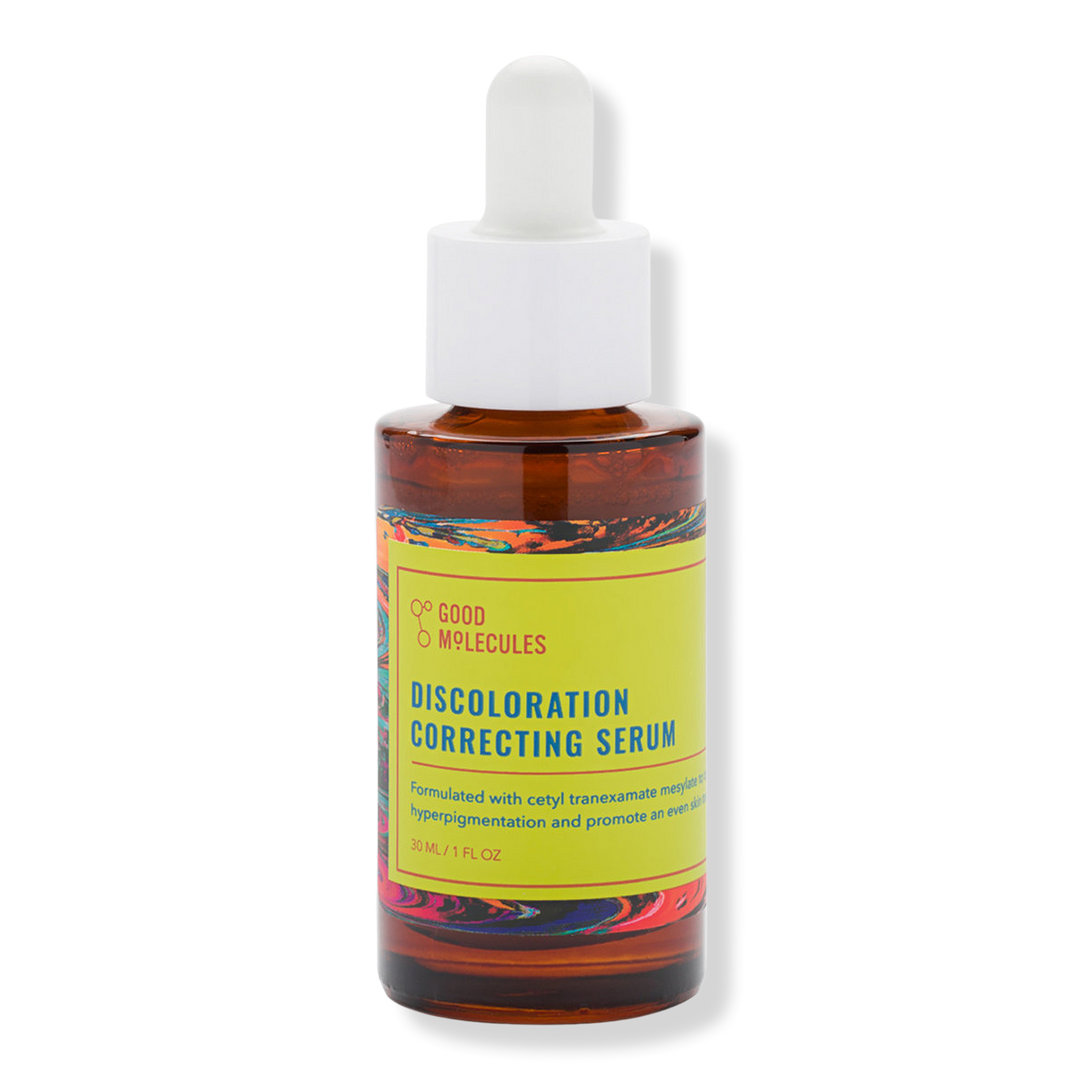
Good Molecules Discoloration Correcting Serum
Serum | $12.00-$25.00
Shop Good Molecules Discoloration Correcting Serum at Ulta Beauty →
Calm skin, brighter tone, tiny price. This lightweight formula pairs tranexamic acid with niacinamide to help fade the look of dark spots without exfoliating or irritating. A barrier-friendly choice if stronger actives tend to leave your skin cranky.
Key specs: Tranexamic acid and niacinamide · Non-exfoliating · Fragrance-free · Good for sensitive skin
Ulta Beauty Advisor tip: Apply a thin layer twice daily and always follow with SPF in the morning. Sun protection keeps your progress on track.
Best multi-acid peel for fading dark spots
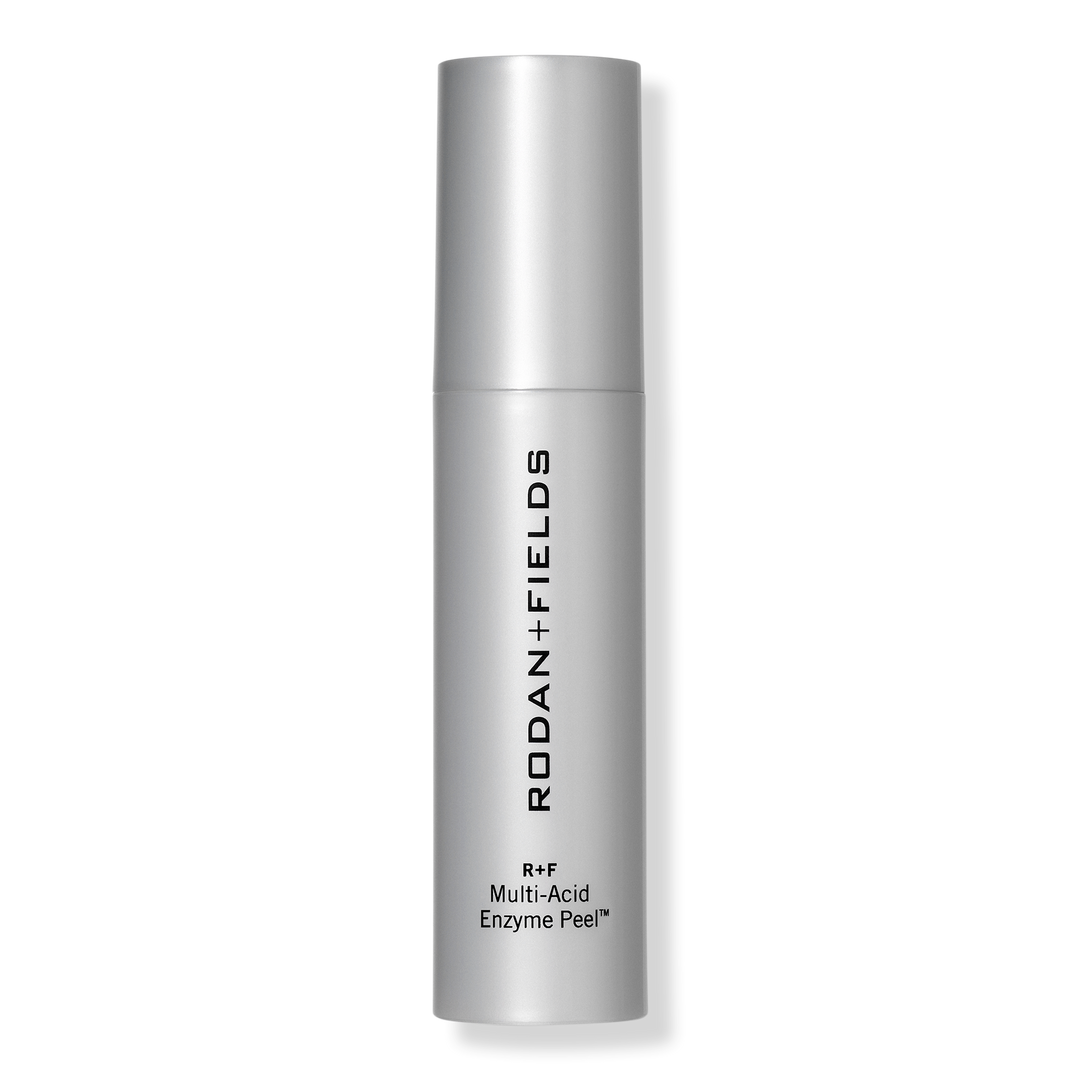
Rodan and Fields Multi-Acid Enzyme Peel Dark Spot Corrector and Exfoliator
Peel| $90.00
Shop Rodan and Fields Multi-Acid Enzyme Peel Dark Spot Corrector and Exfoliator at Ulta Beauty →
Dark spots, meet your match. This multitasking peel blends glycolic, lactic and phytic acids with fruit enzymes to slough away dull, dead skin while helping even the look of discoloration and post-breakout marks. The result? Smoother texture and brighter-looking tone in one quick step. A nice pick if you want exfoliation and dark spot support without juggling five products.
Key specs: Glycolic, lactic and phytic acids with fruit enzymes · Targets dark spots, dullness and uneven texture · Lightweight, fast-rinsing formula · Good for normal to combination skin
Ulta Beauty Advisor tip: Use it 2-3 nights a week to start, then adjust as your skin gets comfy. Go easy on other exfoliants those same nights, and always follow with SPF the next morning to protect your progress!
Potential benefits and limitations of vitamin C
Potential benefits include:
May brighten the look of skin tone and dark spots
Associated with supporting collagen production for smoother-looking skin
Provides antioxidant protection against environmental stressors
May help reduce the look of future discoloration when paired with SPF
Potential limitations include:
Can oxidize or lose potency when exposed to air and light
May cause irritation, stinging or redness in sensitive skin
May be less effective for deeper or hormonally influenced discoloration on its own
Potential benefits and limitations of tranexamic acid
Potential benefits include:
Commonly used for melasma and hormone-related discoloration
Often well-tolerated by sensitive or barrier-compromised skin
Non-exfoliating and generally easy to layer with other active ingredients
Potential limitations include:
Visible improvement may take time with consistent use
Formulations and concentrations can vary widely
How fast do vitamin C and tranexamic acid work?
Results from both ingredients depend on consistency, formulation and sun protection habits. Vitamin C serums may boost visible radiance within weeks, while discoloration-related benefits tend to develop gradually. Tranexamic acid may also need several weeks or longer of consistent use before you notice a difference.
Daily SPF is highly recommended, since UV exposure can contribute to ongoing pigmentation concerns. For more persistent discoloration, professional guidance may help.
How to choose between vitamin C and tranexamic acid
Your choice comes down to your skin care goals and sensitivity level:
Consider vitamin C if your goals include brighter-looking skin, antioxidant support and overall radiance.
Consider tranexamic acid if you have melasma-prone skin, post-inflammatory discoloration or sensitivity to stronger active ingredients.
Ulta Beauty carries products featuring both ingredients across a range of skin care brands.
Can you use vitamin C and tranexamic acid together?
Yes! You don't have to choose between them; many routines use both. An easy way to use both is vitamin C in the morning alongside sunscreen and tranexamic acid at night.
If you layer the two together, introduce them gradually and watch for irritation. Ingredients like niacinamide or gentle retinoids may also complement a brightening routine when used thoughtfully.
How to use vitamin C and tranexamic acid
To get the most out of both and keep irritation low, consistency and protection are key. Here's a simple step-by-step routine:
Morning:
Cleanser
Vitamin C serum
Broad-spectrum SPF 30+
Evening:
Tranexamic acid serum
Moisturizer
Keep skin hydrated, go easy on exfoliation and reapply sunscreen daily.
Frequently asked questions
Which is more effective: vitamin C or tranexamic acid?
It depends. Effectiveness may vary based on your skin type, the formulation and the underlying cause of your pigmentation. Vitamin C leans toward all-around brightening, while tranexamic acid tends to shine for inflammation- or hormone-related discoloration.
What's the ideal concentration for each ingredient?
Vitamin C products are often formulated between 10-20%, while topical tranexamic acid products commonly range from 2-5%.
Can I use both together?
Yes, plenty of people fold both into their routines. Try vitamin C in the morning and tranexamic acid at night and introduce them gradually to keep skin happy.
How long until I see results?
Visible improvements may take several weeks or longer depending on the product, how consistently you use it and your individual skin response.
Why does formulation matter?
Stability, pH and ingredient delivery systems can all affect how well a product performs and how comfortable it feels on skin.
What ingredients complement these brighteners?
Niacinamide, alpha-arbutin and retinoids are commonly paired with brightening ingredients.
Can I use vitamin C or tranexamic acid while pregnant?
Ingredient safety during pregnancy varies, and tranexamic acid is best discussed with a professional first. Always check with your dermatologist or healthcare provider before adding a new active to your routine while pregnant or breastfeeding.
What's the most important factor for success?
Consistent sunscreen use is one of the most important steps in helping maintain improvements in visible discoloration and supporting overall skin health.
Related content: Best Anti-Wrinkle Serums & Creams, Best Face Masks, Best Skin Care for Sensitive Skin, Best Skin Care Routine for Dry Skin, Best Toners for Face, Using Hypochlorous Acid Spray for Face
Discover more: Skincare Buying Guides and Beauty Education Articles