What does toning your hair after bleaching do?
By the Ulta Beauty Editorial Team · Published August 2026
All products featured are available at Ulta Beauty. Ulta Beauty Editorial Team selects products independently. Prices and availability are subject to change.
Bleaching lifts color out of your hair, but it rarely leaves you with the shade you actually want. What it leaves behind is a result that ranges from pale yellow to vivid orange depending on how light the bleach took your hair. Toning is the step that converts that raw bleach result into an intentional, finished color.
This guide explains what toning does, how to choose the right toner for your situation, and which products at Ulta to use.
What toning actually does
A hair toner is a color-depositing product applied to bleached hair to neutralize unwanted warmth and shift the overall shade toward your target color. It does not lighten hair further. It works by depositing pigment onto the hair strand to cancel out or adjust the tone that bleach left behind.
There are two things happening when you tone:
Neutralization: Toners use color-wheel logic to cancel unwanted tones. Color wheel opposites neutralize each other. Purple cancels yellow. Blue cancels orange. Green cancels red. If your bleached hair looks yellow, a violet-based toner deposits purple pigment that visually cancels the yellow, shifting the result toward a cooler, ashier blonde. If your hair looks orange, a blue-based toner works to cancel that warmth.
Shade customization: Once the unwanted warmth is neutralized, the remaining pigment in the toner defines your final shade. A violet toner applied to very pale yellow hair produces icy platinum. The same violet toner applied to deeper yellow hair produces ash blonde. A beige or neutral toner applied to yellow hair produces a warm, creamy blonde. The toner is not just correcting; it is finishing the color.
Why bleach leaves warmth behind
Understanding why bleach creates brassiness makes it easier to choose the right toner. Hair contains two types of natural pigment: eumelanin (dark brown and black) and pheomelanin (red, orange, and yellow). Bleach breaks down eumelanin first. Pheomelanin is harder to lift and stays in the hair longer.
This is why hair that is partially lifted looks orange or red, and hair that is more fully lifted still shows yellow. The warmth is not a bleach failure; it is the natural underlying pigment of every hair strand, revealed as the darker pigment is removed. Toning addresses the warmth that bleach cannot eliminate on its own.
What your hair looks like after bleaching, and what that means for toning
Your hair's color after bleaching tells you which toner you need. Here is a practical guide to the most common post-bleach results.
Pale yellow or very light yellow: Hair is well-lifted and close to platinum level. A violet or purple toner will shift this toward icy blonde, silver, or platinum. A beige or neutral toner will produce a soft, creamy blonde.
Medium yellow or golden yellow: Hair is lifted to a mid-blonde level. A violet toner will produce ash blonde. A pearl or beige toner will produce a natural warm blonde. A medium yellow result is a typical starting point for first-time home bleaching.
Orange or copper: Hair is lifted to a mid-range level where red and orange pheomelanin is the dominant remaining tone. A blue-based toner is the right choice here. Violet toners are formulated to cancel yellow, not orange. Blue cancels orange directly.
Red or warm brown: Hair has not lifted enough for a toner to produce a blonde result. Toner does not lighten. Attempting to tone red or warm brown hair will not produce the desired shade; a second bleach session may be needed before toning.
Types of toners
Permanent toners: Contain a small amount of developer (typically 10 or 20 volume) and deposit color that lasts until it grows out or is removed with a clarifying treatment. Give the most durable, precise result. Best for a specific target shade you want to hold for several weeks.
Semi-permanent toners and glosses: Deposit color without developer. Fade gradually over four to six weeks. More forgiving than permanent toners because the result softens as it fades rather than growing out with a sharp line. Good for a first toning attempt or for refreshing tone between salon visits.
Toning shampoos and conditioners: Deposit a small amount of pigment on every wash. Not a substitute for a full toner application when significant brassiness correction is needed. Work well for maintaining a toned result after a full toner application. Purple shampoos and blue conditioners fall into this category.
Hair Toners for After Bleach at Ulta
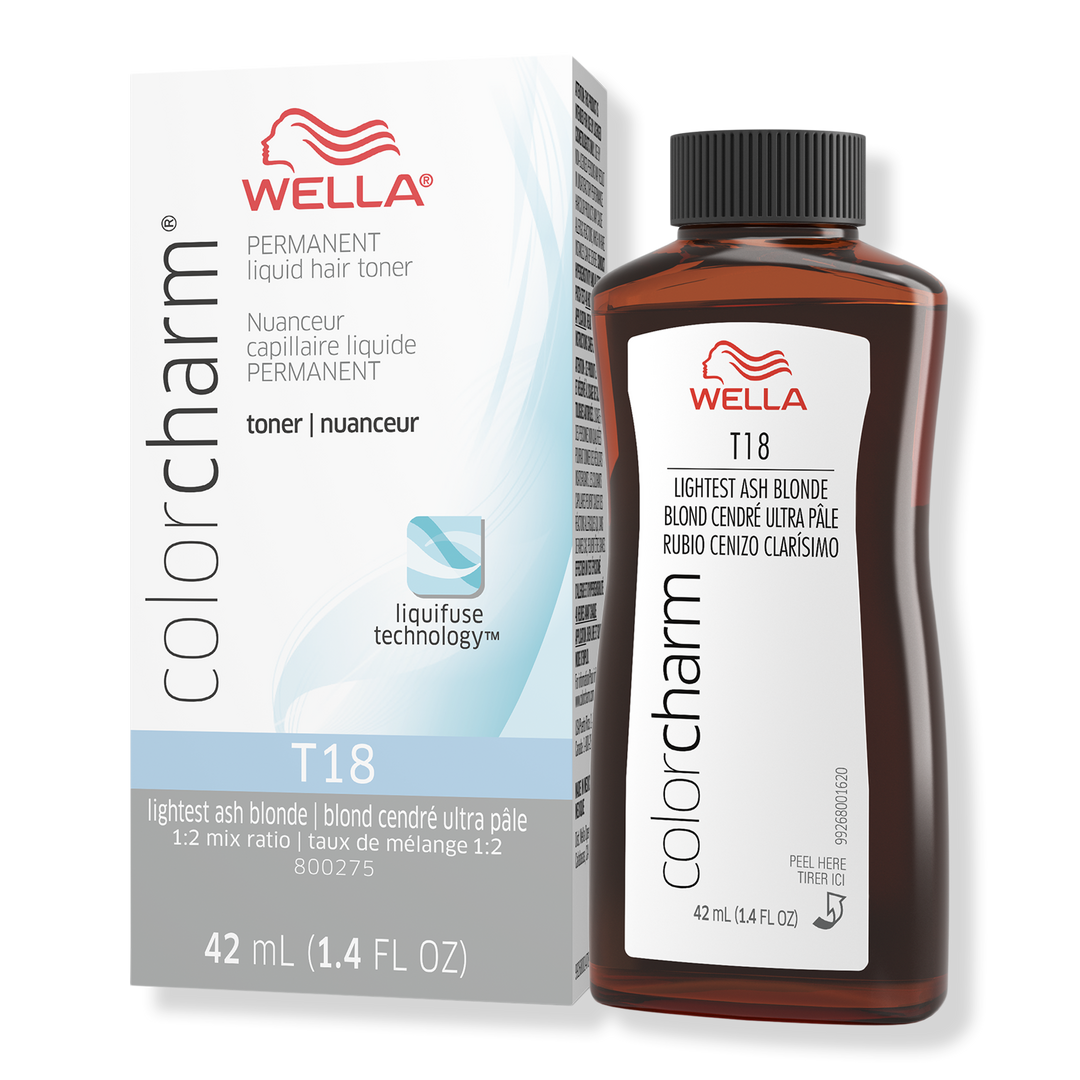
Wella Color Charm Permanent Liquid Toner
Permanent Liquid Hair Toner | $7.99
Wella - Colorcharm Permanent Liquid Hair Toner | Ulta Beauty
Wella Color Charm is a permanent liquid toner available for both at-home and professional use. The formula is mixed with 20 volume developer and applied to pre-bleached hair for 20 to 30 minutes. Available in a wide shade range including T18 (lightest ash blonde, used for platinum results), T14 (pale ash blonde), T11 (lightest blonde), T28 (natural blonde), and T35 (beige blonde), among others.
T18 requires hair to be lifted to a very pale yellow before application. On deeper yellow or orange hair, it will not produce a platinum result and may deposit an uneven or greenish tone. T35 and T28 are more appropriate for golden and warm blonde goals on medium-yellow starting points.
Key specs: Permanent · Requires 20 Volume Developer · 20-30 Min Processing · Wide Shade Range · T18 / T14 / T28 / T35 Available
Tip: Match the toner shade to your post-bleach result, not your target shade. T18 only works on pale yellow hair. If your hair is orange or deep yellow, a blue-based toner or additional bleaching is the right next step before using T18.
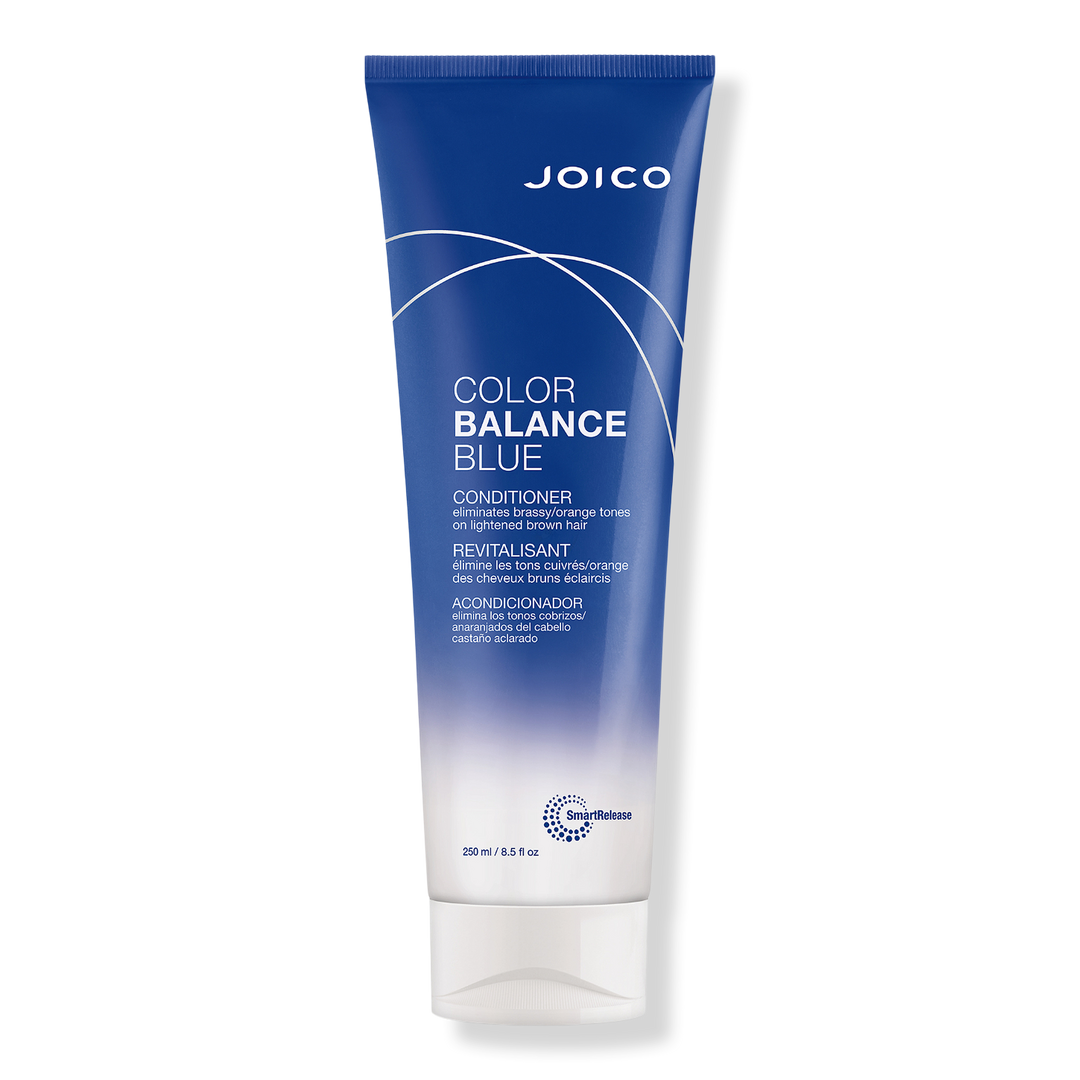
Joico Color Balance Blue Conditioner
Toning Conditioner | $24.50
Shop Joico Color Balance Blue at Ulta →
Joico Color Balance Blue is a conditioning toner designed for orange and brassy warm tones in bleached, brunette, or highlighted hair. The blue pigment neutralizes orange warmth on the color wheel, which purple-toning products do not address effectively. Used in place of conditioner, left on for three to five minutes, and rinsed.
A practical option for hair that has been bleached to an orange or copper result and needs brassiness correction before additional lightening, or for maintaining cool tones in bleached brunette hair between full toning sessions.
Key specs: Blue Pigment Formula · Targets Orange and Warm Brassy Tones · Conditioning Base · 3-5 Min Processing · No Developer Required
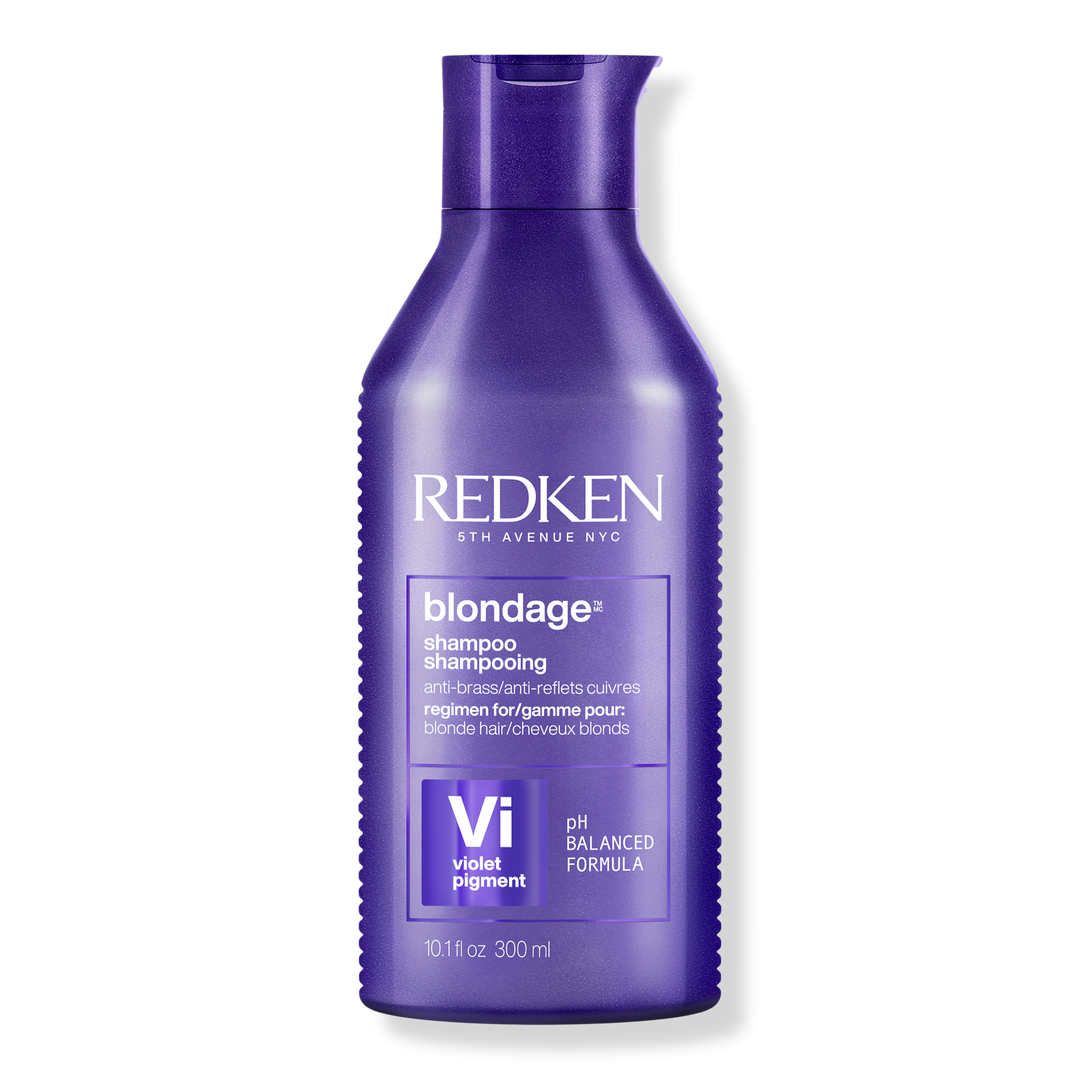
Redken Color Extend Blondage Purple Shampoo
Color-Depositing Purple Shampoo | $29.00
Shop Redken Color Extend Blondage Purple Shampoo at Ulta →
Redken Color Extend Blondage uses an acid-based formula alongside violet pigment to cleanse and deposit toning pigment in a single wash step. It is designed for maintaining ash, platinum, and cool blonde results after a full toner application rather than for replacing a toner on significantly brassy hair.
Leave on for one to three minutes before rinsing for a stronger deposit; rinse immediately for a lighter result. Using it every wash or leaving it on for extended periods can result in a violet or grey cast on very pale hair.
Key specs: Purple Pigment · Acid-Based Formula · Shampoo Format · Maintains Ash and Platinum Results · 1-3 Min for Stronger Deposit
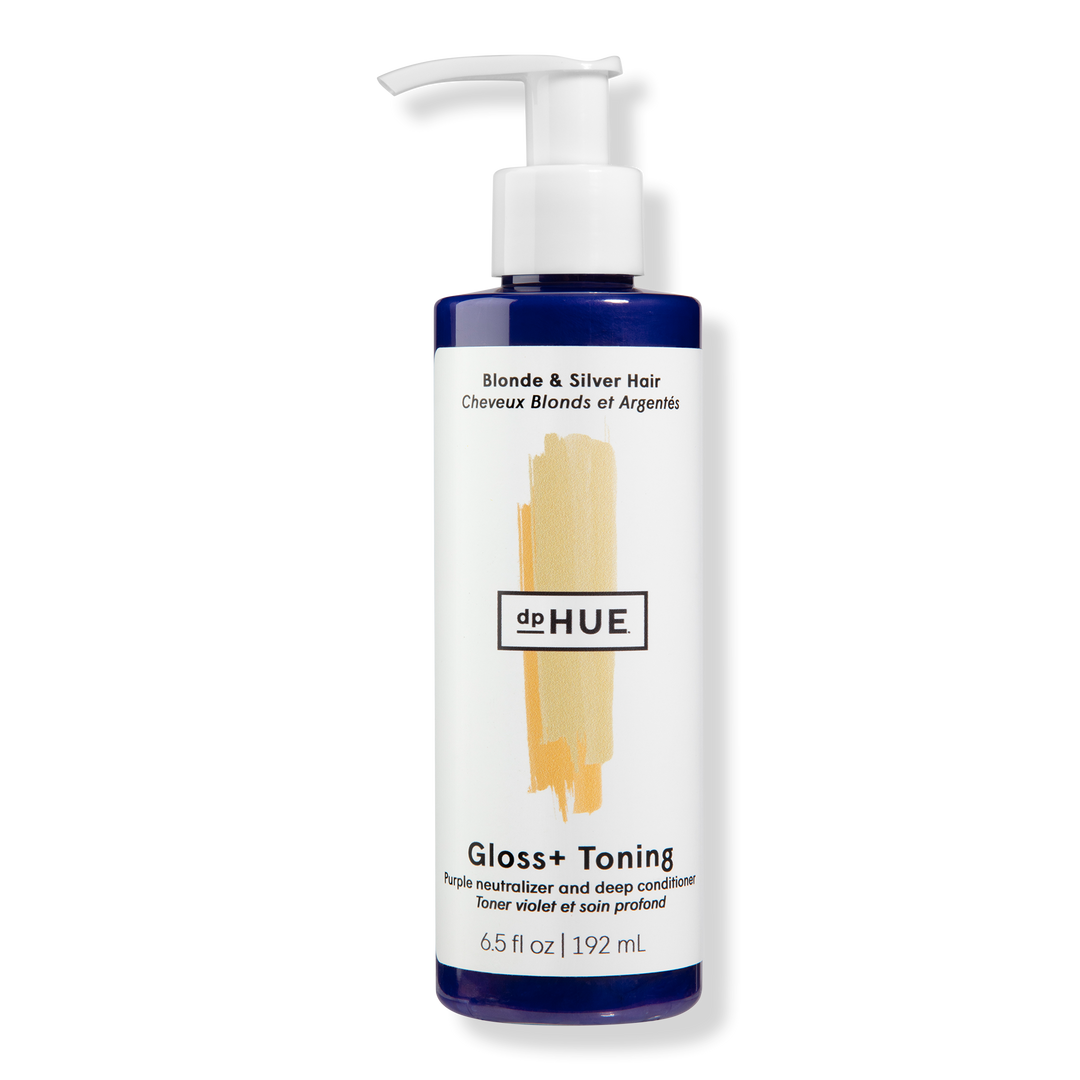
dpHUE Gloss+ Toning
Toning Gloss Treatment | $39.00
Shop dpHUE Gloss+ Toning at Ulta →
dpHUE Gloss+ Toning is an Ulta-exclusive toning treatment that neutralizes brassiness and adds conditioning in a single 3 to 5 minute step. No developer and no mixing are required. The formula is ammonia-free, vegan, and cruelty-free, with no sulfates, no alcohol, and no phthalates.
Available in two shades: Purple (for blonde, highlighted, or silver hair, which neutralizes yellow and brassy tones) and Green (for dark brunette hair, which neutralizes red and warm tones). Do not use the Green shade on blonde or lightened hair; it is formulated for dark brunette bases only.
Apply evenly through clean, damp hair, leave on for 3 to 5 minutes, then rinse. Check results at 3 minutes on first use, particularly on porous or fragile hair. Gloves are recommended as the pigmented formula can stain hands.
Key specs: No Developer Required · No Ammonia · 3-5 Min Processing · Ulta Exclusive · Purple (Blonde/Silver) and Green (Dark Brunette) Shades · Vegan · Cruelty-Free · Sulfate-Free
Tip: If you have recently had a salon service, allow 6 to 10 washes before using Gloss+ Toning. On first use, test on a few strands before applying all over.
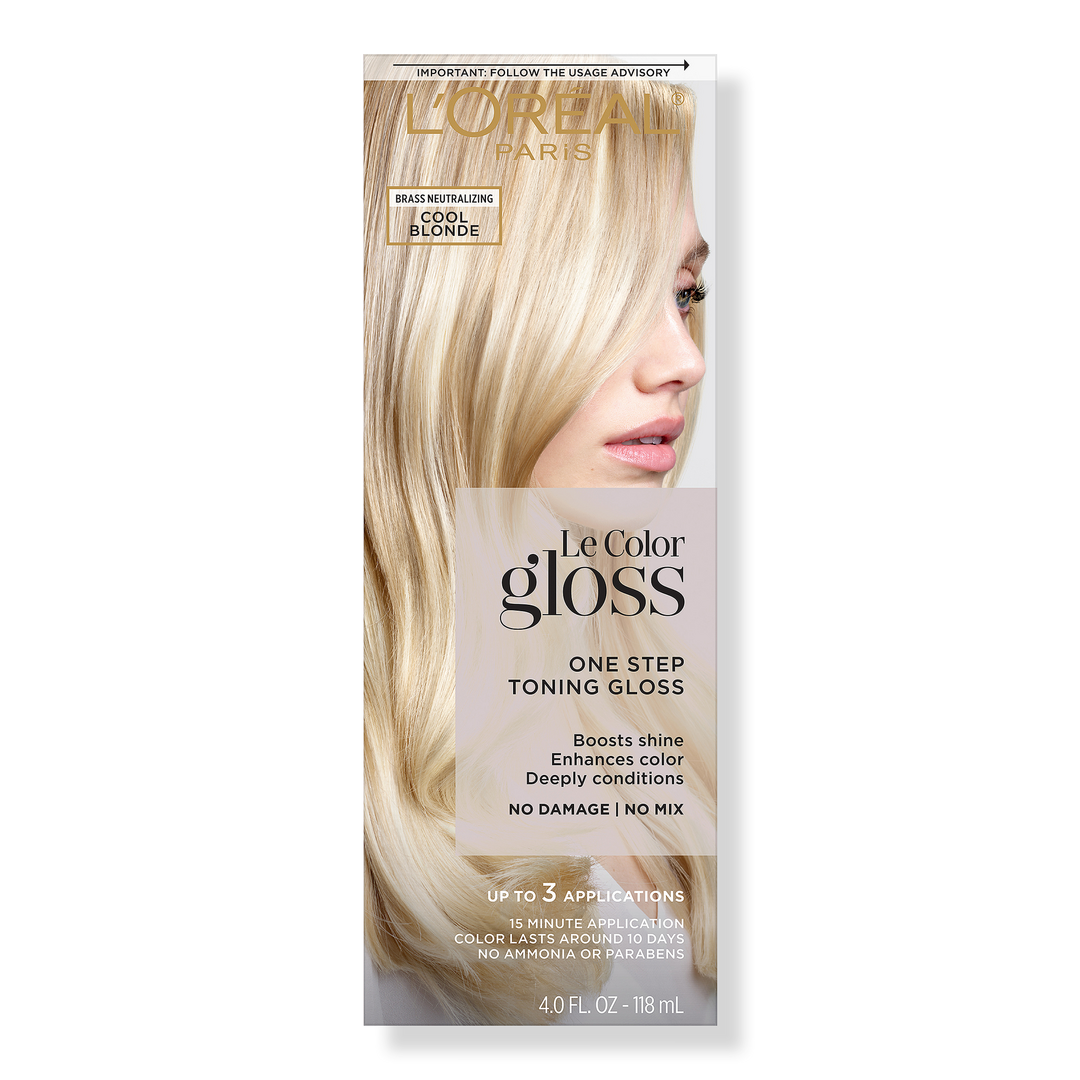
L'Oréal Paris Le Color Gloss One Step Toning Gloss
One-Step Toning Gloss | $15.99
Shop L'Oréal Paris Le Color Gloss at Ulta →
Le Color Gloss is a one-step toning gloss that deposits tone, adds shine, and deep conditions in a single treatment with no developer and no mixing required.
Available in Cool Blonde (neutralizes yellow and brassy tones for a cooler blonde result), Smoky Bronde (a muted, smoky brunette-blonde tone for medium blondes and light brunettes), and Platinum Pearl (deposits a pearl and silver tone for very light or platinum hair). Apply to clean, damp hair, leave on for the recommended time, then rinse. No additional products required.
A practical starting point for anyone toning at home for the first time who wants a low-commitment, easy-to-use option before progressing to a permanent toner.
Key specs: No Developer Required · No Mixing · One-Step Application · Tones and Conditions
How to apply a toner at home
Step 1: Confirm your starting point. Toner cannot fix a starting point it is not formulated for. Check your hair against the color descriptions before choosing a toner. If your hair is still orange after bleaching, use a blue-based product before attempting a permanent ash or platinum toner.
Step 2: Mix correctly. Permanent toners such as Wella Color Charm require developer. Follow the ratio on the product instructions, typically 1 part toner to 2 parts 20 volume developer. Semi-permanent toners such as dpHUE Gloss+ Toning and L'Oréal Le Color Gloss require no developer or additional products.
Step 3: Apply to damp, towel-dried hair. Toners penetrate more evenly on damp hair than on soaking wet hair. Section the hair and apply evenly from root to ends, working quickly to avoid uneven processing.
Step 4: Process for the recommended time. Check every five minutes after the first 10 minutes by wiping a section clean and examining the color in good light. Permanent toners can deposit more than intended if left on too long, particularly on porous or previously bleached hair.
Step 5: Rinse with cool water and condition. Do not shampoo immediately after toning. Rinse thoroughly with cool water and apply a conditioner or hair mask. Shampooing within the first 24 hours after toning can accelerate fade.
Step 6: Maintain with a toning shampoo or conditioner. Use a purple or blue toning shampoo or conditioner to extend the result between full toning sessions.
Quick-reference guide: which product is right for you?
By goal
Permanent platinum or icy ash blonde: Wella Color Charm Toner in T18 (requires pale yellow starting point)
Neutralize orange or copper tones: Joico Color Balance Blue Conditioner
Maintain an existing ash or platinum result: Redken Color Extend Blondage Purple Shampoo
Quick at-home toning with no developer: dpHUE Gloss+ Toning (Purple for blonde/silver, Green for dark brunette)
Budget one-step toning gloss: L'Oréal Paris Le Color Gloss
By hair situation after bleaching
Pale yellow hair, targeting platinum or silver: Wella Color Charm T18
Medium yellow hair, targeting ash blonde: Wella Color Charm T14 or T28
Orange or warm copper hair: Joico Color Balance Blue Conditioner
Already toned, maintaining coolness wash to wash: Redken Color Extend Blondage Purple Shampoo
First time toning, want a no-developer option: dpHUE Gloss+ Toning in Purple or L'Oréal Paris Le Color Gloss in Cool Blonde or Platinum Pearl
Frequently asked questions
Do you have to tone your hair after bleaching?
No, but most bleach results on their own show yellow, orange, or uneven warmth that does not match a specific target shade. Toning is what converts the raw bleach result into a controlled, finished color. If your hair after bleaching is already at or close to your target shade and is not showing unwanted warmth, you can skip toning. Most people cannot skip it and achieve the result they want.
How long do you wait to tone after bleaching?
You can tone immediately after bleaching in the same session if the hair is not significantly compromised. The hair is porous after bleaching and absorbs toner efficiently. If the bleach session was long or the hair shows signs of damage (extreme dryness, gummy texture, breakage), waiting 24 to 48 hours and doing a deep conditioning treatment first is a better approach.
Can you tone hair that is not bleached?
Toners work on pre-lightened hair. They deposit pigment over an existing base but do not lift. On natural unbleached hair, a toner will have little to no visible effect because the underlying dark pigment is too dense for the small amount of toner pigment to register. Semi-permanent glosses and clear glosses can add shine to any hair color without visible tonal change.
Why did my toner turn my hair purple or grey?
This typically happens when the toner was applied to hair that was too pale (very white or platinum), when the toner was left on too long, or when a purple toning shampoo was used on very porous hair that absorbed more pigment than expected. A clarifying shampoo will fade the excess pigment. To avoid this, check the result every five minutes during processing and rinse as soon as the desired tone is reached.
How long does toner last?
Permanent toners last until the hair grows out, though the color will fade in vibrancy over four to six weeks due to washing and heat styling. Semi-permanent toners fade over four to six weeks. Toning shampoos and conditioners deposit a small amount of pigment each use and maintain the result rather than delivering a single lasting application.
Can you tone over previously toned hair?
Yes. If the previous toner has faded and brassiness has returned, you can re-tone without issue. Toning over a permanent toner that has not yet faded is less predictable and can result in uneven deposit or a result that is darker or cooler than intended. A clarifying shampoo to fade the existing toner before re-toning gives a more controlled result.
What is the difference between a toner and a purple shampoo?
A toner is applied in a single session and deposits a defined amount of pigment that lasts for weeks. A purple shampoo deposits a small amount of pigment on every wash to gradually maintain coolness and slow brassiness. Purple shampoo is a maintenance product, not a corrective toner. On significantly brassy or yellow hair, purple shampoo alone will not produce the same correction as a full toner application.
Related Content: K Beauty Hair Care, Best Volumizing Hair Products, Best Hair Dye for Gray Hair, Best Sea Salt Sprays , Best Blow Dry Brushes, Best Hair Oils, Best Shampoo Products for Oily Hair, Protein vs Moisture Treatment for Hair, How to Protect Hair From Heat Damage, Hair Care Ingredients for Color Treated Hair
Explore more Hair Care Buying Guides and Beauty Education Articles