What do LED face masks do for your skin? LED facial mask benefits
By the Ulta Beauty Advisors · Published August 2026
All products featured are available at Ulta Beauty. Ulta Beauty Editorial Team selects products independently. Prices and availability are subject to change.
LED face masks use specific wavelengths of light to interact with the skin. Depending on the device and the light color used, regular sessions may support smoother-looking skin, softer fine lines, or a clearer complexion over time. Results are gradual and vary depending on the device, how consistently you use it, and your individual skin.
This guide from Ulta Beauty covers how LED light therapy works, which wavelengths do what, what results are realistic, and how to choose the right mask for your routine.
What do LED face masks do for your skin?
LED stands for light-emitting diode. An LED face mask delivers specific wavelengths of light to the skin's surface without needles, heat, or surface exfoliation. Different wavelengths are designed for different skin goals.
Red and near-infrared light are most commonly used in devices intended to support firmer, smoother-looking skin over time. Blue light is used in devices designed for blemish-prone skin. Some masks include multiple light settings to address more than one concern in a single device.
Possible cosmetic benefits include:
- Smoother-looking skin texture with consistent use
- Gradual softening of the appearance of fine lines
- A less dull, more rested-looking complexion
- Calmer-looking skin, depending on the device and setting
- Fewer visible blemishes when a blue-light setting is part of an appropriate routine
- A consistent, hands-free addition to your skin care routine
Results depend on the device's wavelength output, the total light dose delivered per session, your skin, and how consistently you use the mask. An LED mask is not a replacement for sunscreen, professional skin care, or medical treatment.
How LED light therapy works
Each LED light color corresponds to a specific wavelength, measured in nanometers (nm). Wavelength determines how light interacts with the skin. The device's power output and session length determine the total light dose delivered per treatment.
A higher bulb count does not automatically mean better results. The mask needs to deliver the right wavelength at an adequate dose, and its fit should allow even light contact across the face.
Red light
Red LED light, typically in the 620 to 660nm range, is the most widely used wavelength in at-home anti-aging devices. Masks using red light are generally intended to support the look of firmness and soften the visible appearance of fine lines. Consistent use over several weeks is typically required before visible changes become noticeable.
Red light does not exfoliate or remove skin. Sessions are generally not felt strongly, and the absence of tingling or heat does not indicate that the device is inactive.
Near-infrared light
Near-infrared light, which falls beyond the visible spectrum at around 830nm, is invisible to the eye. You will not see it even when the setting is active. Some masks combine near-infrared with red light in programs designed to support firmer-looking skin and overall skin quality.
Always use the device controls and display to confirm that the near-infrared setting is active. Do not look directly at the mask or test the LEDs with your eyes.
Blue light
Blue LED light, typically around 415nm, is used in devices designed for blemish-prone skin. At this wavelength, blue light targets Cutibacterium acnes, the bacteria at the skin's surface most associated with acne breakouts. Masks with blue-light settings are best suited to mild surface breakouts rather than deep cystic acne.
Blue light is not a substitute for a complete acne care routine or dermatologist guidance when breakouts are painful, persistent, or leaving marks. Follow device instructions carefully, particularly if your skin is sensitive or prone to visible discoloration.
Other light colors
Some devices include amber, green, yellow, cyan, purple, or white settings. Intended uses differ by device, and the clinical research base for these additional wavelengths is less established than for red or blue light.
Treat the manufacturer's stated use as your guide for any color beyond red and blue. If product information does not clearly explain what a setting addresses, do not assume a specific color will target a particular concern.
What changes can you realistically expect?
Consistent use over time matters more than session intensity. Most manufacturers suggest evaluating results after 8 to 12 weeks of regular use.
Your starting point also affects what is achievable. Fine lines caused primarily by dryness may respond to moisturizer alone, while deeper lines, active acne scarring, or significant discoloration often require a broader routine or professional care alongside any home device.
Changes you may notice with consistent use
Depending on the device and its intended purpose, regular use may produce:
- Skin that looks smoother or more rested
- Gradual softening of the visible appearance of fine lines
- Reduced dullness
- A calmer-looking complexion
- Fewer visible surface blemishes when blue light is part of a suitable routine
Changes are typically modest. Lighting, hydration, makeup, and natural skin variation all affect how skin looks day to day. Judge progress over 8 to 12 weeks rather than session by session.
What an LED mask is unlikely to provide
A home LED mask is not designed to:
- Reshape facial features
- Remove deep wrinkles
- Clear every type of acne, including cystic breakouts
- Replace daily sunscreen
- Remove scars or dark spots in a few sessions
- Replicate every treatment available in a dermatologist's office
Professional LED devices operate at different wavelengths, power levels, and treatment durations than home masks. That gap does not make a home device worthless, but the two should not be treated as interchangeable.
Are at-home LED face masks worth it?
An LED mask is likely a good fit if you enjoy device-based skin care, can follow a consistent session schedule, and are looking for gradual cosmetic support. The value depends on whether you will use the mask regularly, not on how advanced it looks.
It may be less worthwhile if you want fast visible change, struggle to maintain your existing skin care routine, or have a concern that falls outside what LED therapy is designed to address.
Cleanser, moisturizer, and daily broad-spectrum sunscreen should already be established parts of your routine before adding an optional device.
A mask may be a good fit if you:
- Want a noninvasive, hands-free skin care step
- Can commit to the manufacturer's recommended session schedule
- Have a skin concern that matches the device's stated intended use
- Are comfortable cleaning and storing a device correctly
- Understand that results vary and take time
Always consult with a dermatologist or qualified health professional before use. Bring the mask's wavelength specifications and instruction manual so they can advise based on the actual device.
What to look for in an LED face mask
The best LED face mask has clear directions, transparent safety information, and an intended use that matches your goal. A longer list of light colors matters less than clearly documented wavelength and dose information.
When browsing at-home light-therapy and skin care tools, look for:
- Intended use: A clear description of the skin concern the device is designed to address
- Wavelength details: Specific nanometer values for each light setting, where available
- Session length: A treatment time that fits your schedule realistically
- Treatment frequency: How often the manufacturer recommends using the device
- Eye guidance: Whether built-in shielding, protective eyewear, or closed eyes are required
- Fit and coverage: A mask that sits evenly without large gaps or uncomfortable pressure
- Cleaning instructions: A design you can clean without damaging the lights or surface
- Power source: Corded, battery-powered, or rechargeable, depending on your preference
- Warranty and support: Clear contact information in case the device has an issue
Do not select a mask based on bulb count alone. Wavelength accuracy, fit, treatment time, and light output all affect the outcome, and no single number tells the full story.
Best LED face masks to shop at Ulta Beauty
All products featured are available at Ulta Beauty. Ulta Beauty Advisors select products independently.
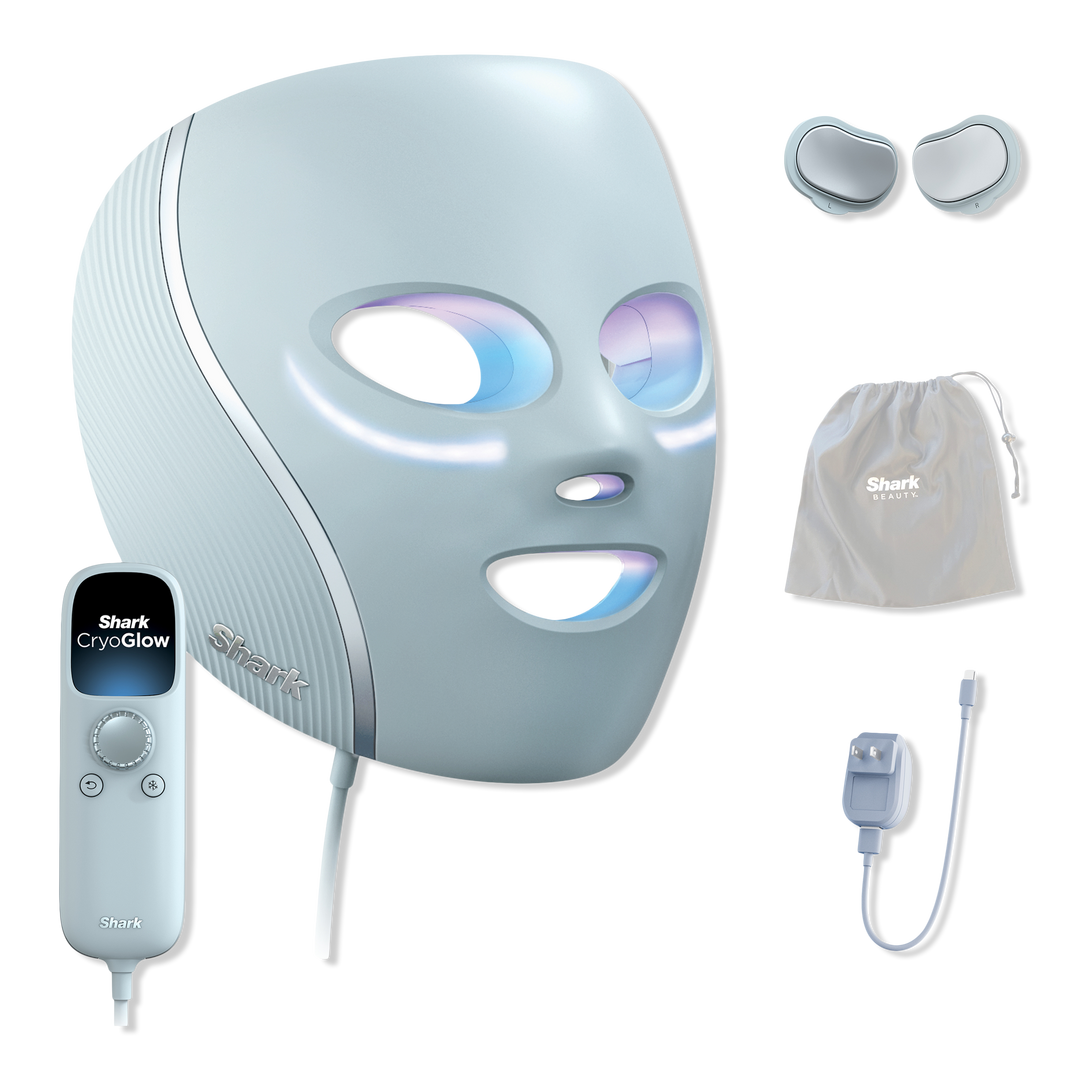
Shark Beauty CryoGlow Red, Blue and Infrared iQLED Face Mask and Under Eye Cooling
Multi-Mode LED + Cryo Mask | $349.99
Shop Shark Beauty CryoGlow at Ulta →
The CryoGlow is the only device in this list that pairs LED light therapy with integrated cryotherapy cooling. It uses Shark's proprietary iQLED Technology, which sequences tri-wick LEDs to deliver even light coverage without gaps or concentrated hot spots. Four distinct treatment programs address more skin goals in a single device than any other mask in this roundup.
The Better Aging mode runs six minutes of red and infrared LEDs to support the look of firmer, smoother skin. The Skin Clearing mode runs eight minutes of blue, infrared, and red light for a clearer-looking complexion. A four-minute Skin Sustain mode uses all three wavelengths to support overall radiance. The Under-Eye Revive mode delivers five to fifteen minutes of InstaChill cryotherapy cooling at three temperature-controlled levels. HSA/FSA eligible.
Key specs: Red, Blue, and Infrared iQLED | InstaChill Under-Eye Cooling (3 Chill Levels) | HSA/FSA Eligible | 4 Treatment Modes
Ulta Beauty Advisor's Pick: "The fact that it handles anti-aging, acne, and under-eye cooling in one device is genuinely useful for anyone who wants one tool instead of three. The cryo cooling makes the session feel distinctly different from any standard LED mask."
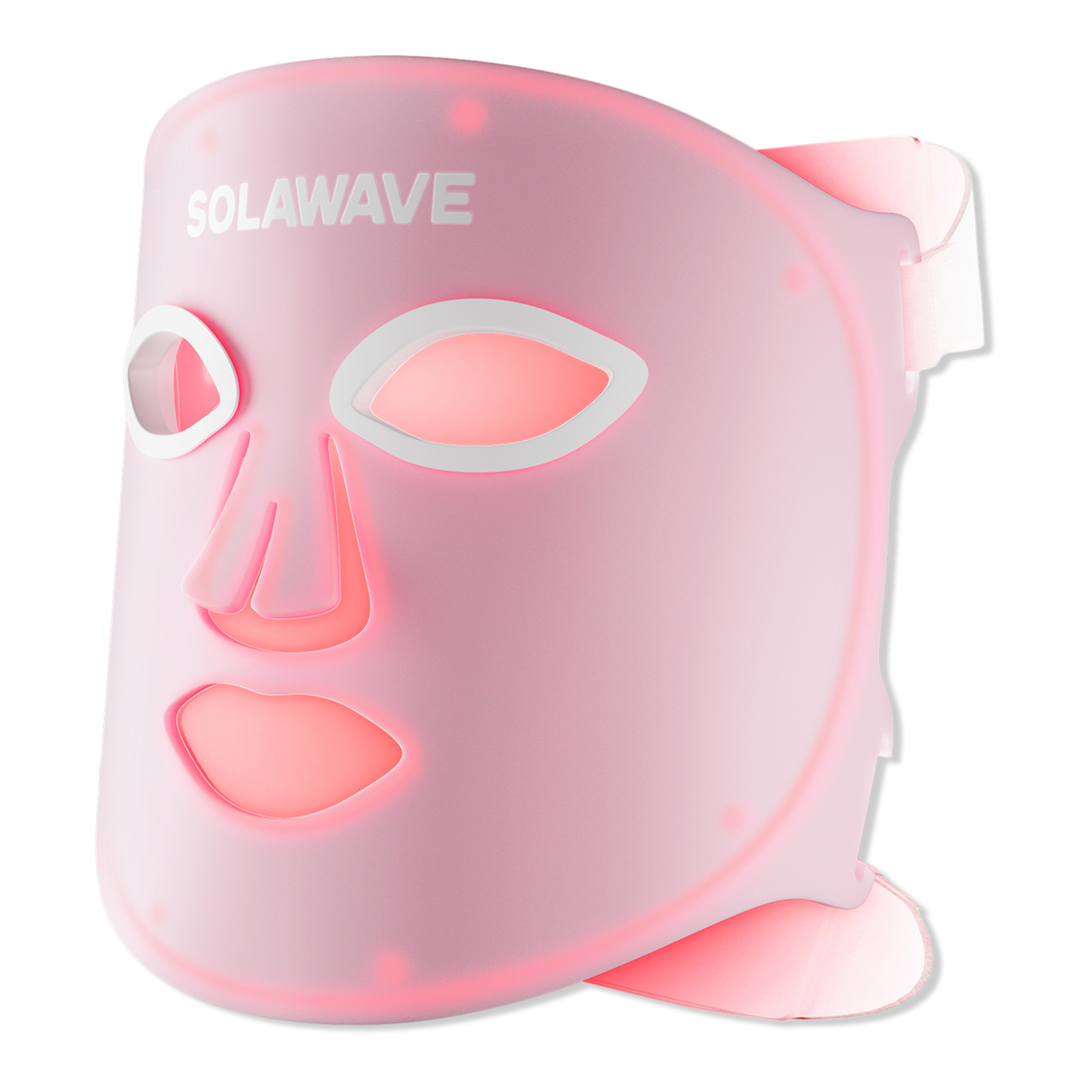
Solawave Wrinkle Retreat Pro Light Therapy Face Mask
4-Wavelength Anti-Aging LED Mask | $399.00
Shop Solawave Wrinkle Retreat Pro at Ulta →
The Wrinkle Retreat Pro is built around Solawave's WrinkleBoost Technology, simultaneously delivering four wavelengths in a single three-minute session: 605nm amber, 630nm red, 660nm deep red, and 830nm near-infrared. It features medical-grade silicone that flexes to contour directly to the face for even light contact across the full surface.
Amber targets surface clarity and immediate glow. Red supports the visible appearance of fine lines. Deep red addresses firmness and elasticity. Near-infrared supports longer-term skin rejuvenation at a deeper level, per the manufacturer. The cordless, single-button design eliminates settings management: press once, and the mask shuts off automatically at three minutes.
Key specs: 605nm Amber | 630nm Red | 660nm Deep Red | 830nm Near-Infrared | Medical-Grade Silicone | 3-Minute Sessions | Cordless | Single-Button Interface
Ulta Beauty Advisor's Tip: "Three minutes is realistic for a daily routine. Clients who have struggled with longer sessions tend to stay consistent with this one because there is nothing to configure or remember."
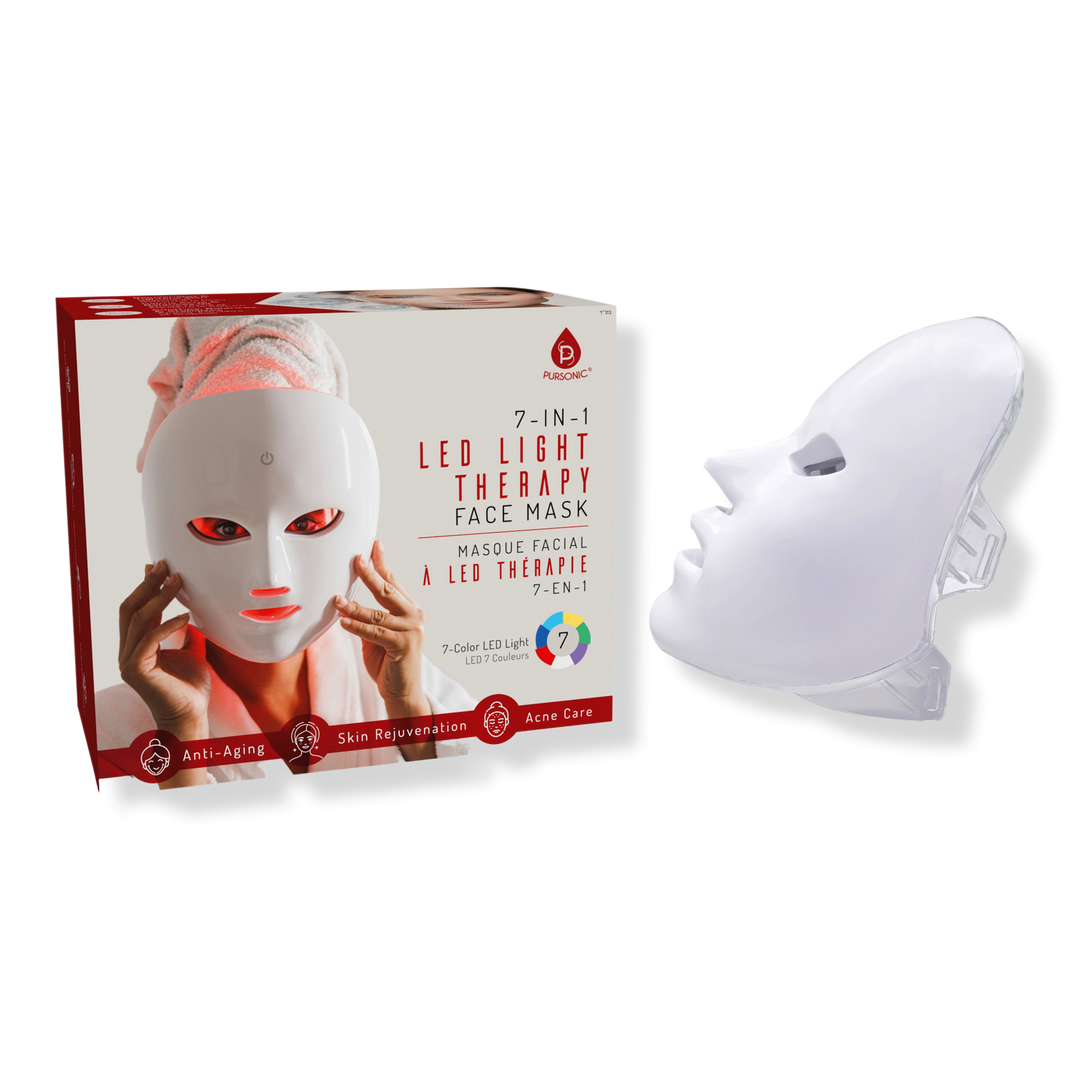
PURSONIC LED Light Therapy Face Mask 7 Color Skin Care Mask
7-Mode Flexible LED Mask | $69.99
Shop PURSONIC 7 Color LED Mask at Ulta →
The PURSONIC 7 Color mask is the most accessible entry point for LED light therapy in this list. The seven light modes cover a range of skin goals: red for anti-aging and wrinkle reduction, blue for blemish-prone skin, green for uneven skin tone, yellow for soothing sensitive-looking skin, cyan for calming irritated skin, purple (a red and blue combination) for combined anti-aging and acne goals, and white for general skin renewal.
The mask uses medical-grade silicone and fits a wide range of face shapes. Sessions run 10 to 20 minutes depending on the mode. This device is not FDA-cleared and does not publish specific wavelength data in nanometers, so the descriptions above reflect the manufacturer's stated intended uses rather than independently verified clinical outcomes. It is a practical starting point before committing to a higher-priced device.
Key specs: 7 LED Modes (Red, Blue, Green, Yellow, Purple, Cyan, White) | Medical-Grade Silicone | Flexible Fit | Hands-Free | 10 to 20 Minute Sessions | USB-Powered
Ulta Beauty Advisor's Tip: "This is the one I recommend when someone wants to try LED therapy before committing to a $300-plus device. Use the red setting for anti-aging and the blue setting for breakouts, and give it a consistent 8 to 12 weeks before deciding."
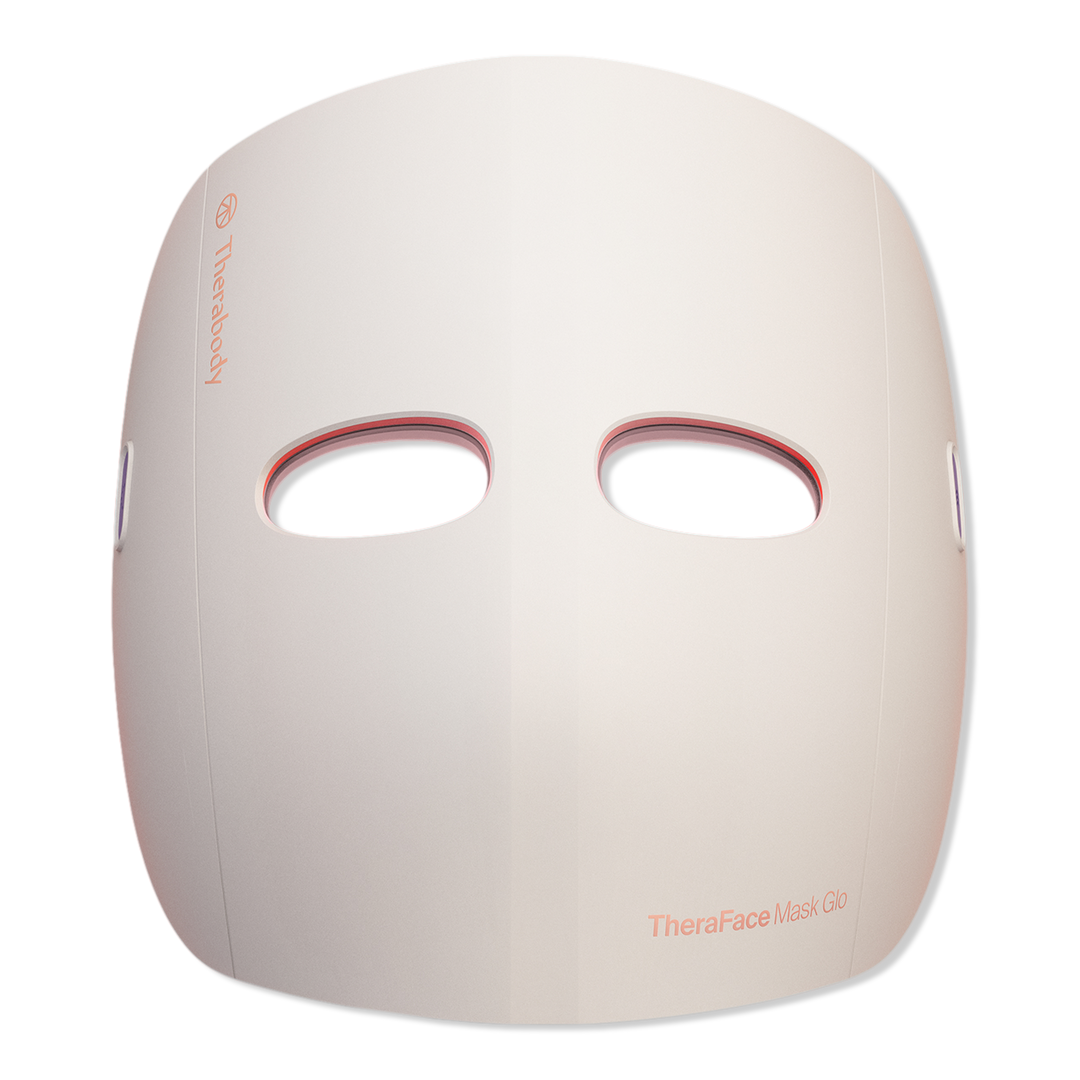
Therabody TheraFace Mask Glo with Vibration Therapy
LED + VibraWave Facial Mask | $379.99
Shop Therabody TheraFace Mask Glo at Ulta →
The TheraFace Mask Glo pairs LED light therapy with VibraWave vibration, which delivers a gentle scalp and temple massage during each session. It is FDA-cleared, dermatologist-approved, and uses 504 medical-grade LEDs across a cordless, full-face panel with a breathable hover fit for comfortable multi-tasking.
Three light settings are available: red for fine lines and dark spots, red plus infrared for firmness and skin quality (per the manufacturer), and blue for blemish-prone skin. The preset 12-minute mode cycles through four minutes of each light type automatically. Individual 4-minute single-light sessions are also available. VibraWave operates at three intensity settings independently from the LED program, so you can use both together or either one alone. HSA/FSA eligible.
Key specs: 504 Medical-Grade LEDs | Red, Red + Infrared, Blue Light | VibraWave Scalp Massage (3 Settings) | 12-Min Preset or 4-Min Individual Modes | Cordless | HSA/FSA Eligible
Ulta Beauty Advisor's Pick: "The vibration setting adds a relaxation element that makes it easier to use on schedule. The LED coverage is genuinely even across the full face, which matters for results."
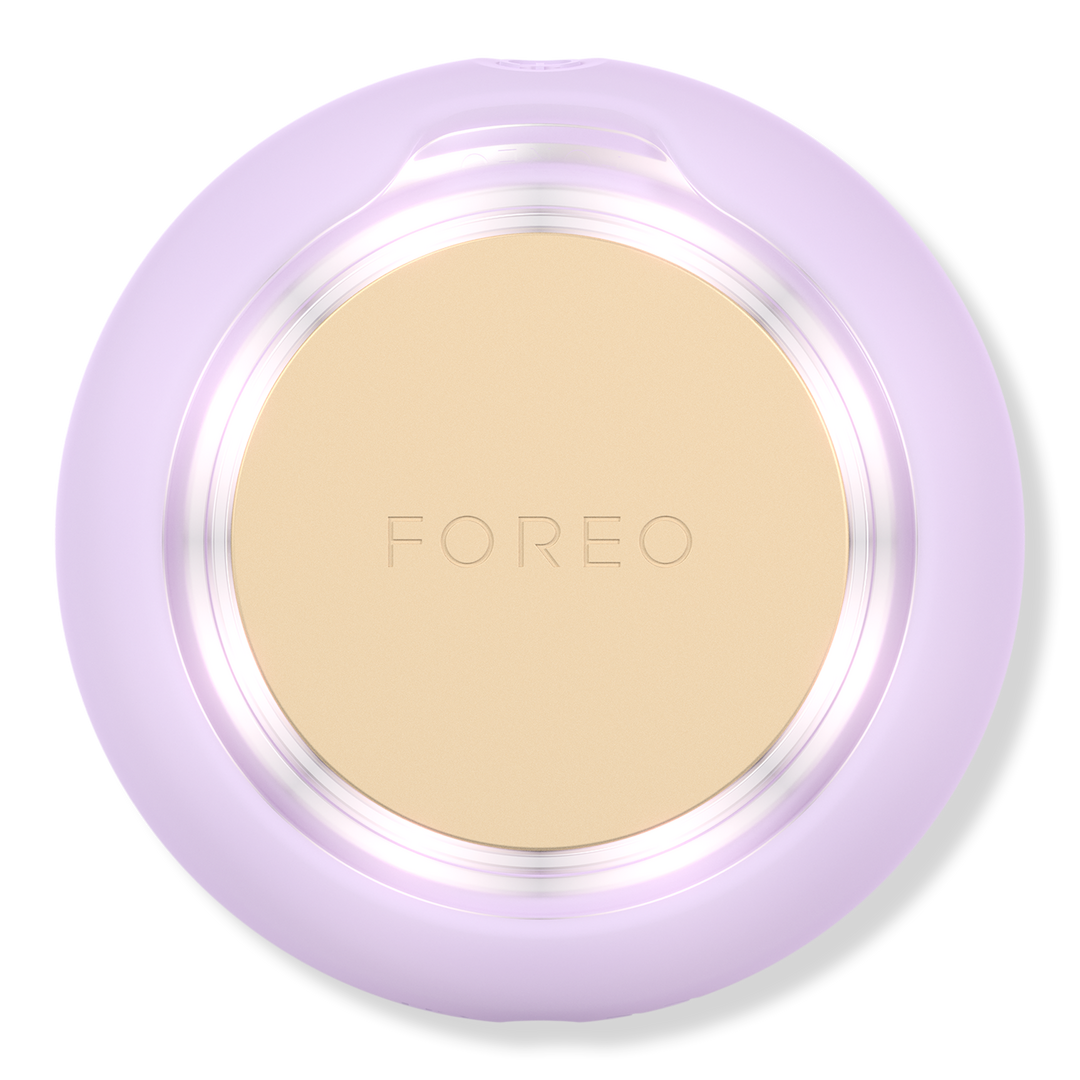
Foreo UFO 3 Go
LED Facial Device | $69.00
Shop Foreo UFO 3 at Ulta →
The Foreo UFO 3 Go is a handheld device rather than a full-face panel. It combines red LED light therapy with thermal heat, cryotherapy cooling, and T-sonic pulsations. Rather than wearing it stationary for a set session, you move it across the face in sections. That approach makes it the most portable option in this list, though it covers less surface area per session than a full-face mask.
It is designed for use with Foreo's UFO-Activated sheet masks, sold separately, which deliver active ingredients with the assistance of heat and light. In LED-only mode, the red light setting addresses anti-aging goals consistent with other red-LED devices. The cooling function may help reduce the look of temporary puffiness.
For someone who wants a layered skin care ritual beyond light therapy alone, the combination works well. For someone whose primary goal is maximum full-face LED coverage, a panel mask delivers more area per session.
Key specs: Red LED, Thermal Heat, Cryotherapy, T-Sonic Pulsations | Handheld | App-Connected | Pairs with UFO-Activated Masks | Travel-Friendly
Ulta Beauty Advisor's Tip: "The UFO 3 is for people who want a full skin care experience rather than a standalone light session. The cooling setting is particularly useful on mornings when skin looks puffy."
How to use an LED face mask
Always follow your specific mask's manual. Session length, eye protection requirements, and treatment frequency are device-specific and take priority over general guidance.
- Read every warning before your first session. Review the intended use, the recommended schedule, eye protection instructions, and contraindications.
- Patch test if the manufacturer recommends it. Follow the stated test procedure and wait period.
- Start with clean, dry skin. Unless the instructions specify otherwise, remove makeup, sunscreen, and skin care products before use.
- Position the mask as directed. Adjust straps without overtightening, and use the required eye protection.
- Select the correct setting for your goal. Match the light program to the device's stated intended use.
- Complete one recommended session. Do not extend the session time or repeat it back to back. More light does not produce faster results and may cause discomfort.
- Apply the rest of your routine. Follow with a hydrating serum or moisturizer unless the manual gives different directions.
- Clean and store the mask after each use. Use the approved cleaning method and keep the device away from water, heat, and direct sunlight.
Take a photo in consistent lighting before you begin your routine and compare at monthly intervals. Day-to-day variation in skin appearance is normal and makes short-interval comparisons unreliable.
Skin care to use with an LED mask
Keep the routine simple enough that you can tell how your skin is responding. Use the mask on clean, dry skin and apply skin care products after each session, unless your device is specifically designed for use over a compatible formula.
A practical post-mask routine may include:
- A hydrating serum
- A fragrance-free moisturizer if your skin tends to feel reactive
- A barrier-supporting cream for dry or sensitized skin
- Broad-spectrum SPF during the day
Use caution when layering strong exfoliating acids, retinoids, or other active ingredients that already leave your skin feeling sensitive. The concern is not that every active ingredient conflicts with every LED device, but that combining multiple potentially irritating steps makes it harder to identify the source of any redness or discomfort.
If a prescription medication or its packaging includes a light-sensitivity warning, ask the prescribing professional whether the specific LED device is appropriate before using it..
Tips for getting more from your routine
Build your LED routine around habits you already have. Complexity is the most common reason routines lapse.
- Pick fixed days. Tie sessions to a consistent time of day or a regular weekly schedule.
- Use the built-in timer. Let the device end the session rather than estimating.
- Track one goal at a time. Choose fine lines, dullness, or blemishes rather than expecting one device to address all three simultaneously.
- Keep progress photos consistent. Same room, same angle, same lighting at each check-in.
- Evaluate on the manufacturer's schedule. Give the device the full recommended evaluation window, typically 8 to 12 weeks, before drawing conclusions.
- Maintain daily sunscreen. Sun protection remains important regardless of your skin care device goals.
- Return to the manual before making changes. Consult it before adjusting frequency, switching settings, or adding new products to the post-mask routine.
If results fall short of what you hoped for, check whether the device's stated intended use actually matches your concern before increasing session frequency. Speak with a dermatologist if you need a more personalized plan.
FAQs
Can an LED face mask tan your skin?
No. Purpose-built LED face masks use visible or near-infrared light wavelengths, not ultraviolet (UV) light. UV exposure is what causes tanning and associated skin damage. LED devices are designed specifically to exclude UV output.
Can I use a face mask device on my neck or chest?
Only use the device on body areas explicitly approved in the instructions. A rigid full-face mask may not fit the neck or chest correctly. If you want light therapy coverage on those areas, look for a device designed specifically for broader use.
Why doesn't my LED mask feel warm?
LED therapy is light-based, not heat-based. A lack of warmth during a session does not indicate that the device is or is not working. Some devices may produce mild warmth, but comfort cues are not a reliable way to gauge light dose delivery.
Related Content:
Best Pimple Patches, Summer Skin Care Sets, Azelaic Acid Benefits, Best Face Sunscreens, Best Ceramides For Skin, Slugging in Skin Care, What do Peptides do for Skin?
Discover more: Skin Care Buying Guides and Beauty Education Articles