The best scalp exfoliators that tackle buildup without making your routine feel harsh
By Ulta Beauty Advisors · Published September 2026
All products featured are available at Ulta Beauty. Ulta Beauty Advisors select products independently. Prices and availability are subject to change.
Product buildup and recurring flakes can make your scalp feel coated, itchy or simply not as fresh as you would like. The right scalp exfoliator format depends on your main concern: a pre-shampoo liquid or exfoliating shampoo may work well for styling residue, while a dedicated anti-dandruff shampoo may be the better fit when flakes are recurring and accompanied by itch.
Look for a pre-shampoo treatment or exfoliating shampoo that loosens oil, dead skin and styling residue without requiring hard scrubbing. If your flakes feel dry and powdery, choose a moisturizing formula and use it sparingly. If they look oily, feel itchy or return quickly, an anti-dandruff shampoo may suit your needs better than frequent exfoliation.
Ahead, you will learn how the main exfoliator types work, which one fits your scalp and how to use it without turning wash day into a stripping session.
What is a scalp exfoliator?
A scalp exfoliator helps remove dead skin, excess oil and residue from products such as dry shampoo, hairspray, gel and leave-in treatments. It can come as a pre-shampoo liquid, serum, scrub, cleansing shampoo or brush-assisted treatment.
Scalp exfoliation is not the same as washing your hair more often. Shampoo mainly cleanses, while an exfoliating formula targets stubborn material that regular washing may leave behind. Some products do both jobs in one step.
The key is controlled use. Your scalp does not need to feel squeaky or tight to be clean, and stronger scrubbing does not always mean better results.
Benefits of scalp exfoliation
When your scalp tolerates it, occasional exfoliation can help your wash routine feel more thorough. Possible benefits include:
Loosening dry flakes and dead skin before shampooing
Breaking up layers of dry shampoo and styling residue
Reducing the coated feeling that can build between wash days
A scalp exfoliator is best treated as a supporting step, not a cure-all. Flaking can have several causes, so pay attention to how your scalp looks and feels rather than automatically exfoliating more often.
Types of scalp exfoliators
Scalp exfoliators generally fall into three groups: chemical exfoliants, physical scrubs and cleansing formulas. The right format depends on what is sitting on your scalp and how easily your skin becomes irritated.
Chemical scalp exfoliators
Chemical exfoliators use ingredients that help loosen dead skin and residue without gritty particles. Salicylic acid is a common choice in scalp products because it is oil-soluble, making it a practical option to consider for oily buildup and residue around the roots. Whether it suits your scalp depends on the full formula and how your skin responds.
Other formulas may contain alpha hydroxy acids, often shortened to AHAs, such as glycolic or lactic acid. These appear in some scalp treatments, but the full formula and how your scalp responds matters more than choosing an ingredient by name alone.
Chemical exfoliators may be a good fit if you:
Use dry shampoo or styling products regularly
Have oily roots with visible buildup
Prefer not to scrub your scalp
Wear curls, coils or dense hair that makes gritty formulas hard to rinse away
Physical scalp scrubs
Physical scrubs contain small particles that manually lift residue as you massage. They can feel satisfying when your scalp has a noticeable layer of product, but pressure matters. A gentle fingertip massage is plenty.
Choose particles that rinse cleanly, and skip any formula that feels sharp or scratchy. Scrubs may be harder to remove from thick, curly or coily hair, so sectioning and a careful rinse can make a big difference.
Exfoliating and clarifying shampoos
An exfoliating shampoo combines scalp care with cleansing. This format is handy if you want one rinse-out step rather than a separate pre-shampoo treatment.
A clarifying shampoo focuses on removing oil, minerals and product residue, but it may not contain an exfoliating ingredient. It can still be useful when the main issue is styling buildup rather than visible dead skin.
Scalp brushes
A soft silicone scalp brush is a tool, not an exfoliating formula. It can help distribute shampoo across the scalp, but it should glide over the scalp rather than scrape it.
Use a brush with flexible tips and light pressure. Avoid using it on sore, scratched or visibly irritated areas.
The best scalp exfoliator by scalp concern
The best scalp exfoliator matches both the type of buildup you have and your scalp's comfort level. Start with the gentlest format that addresses your main concern, then adjust only if needed.
Best for heavy product buildup
Try a rinse-out chemical exfoliator or an exfoliating shampoo designed to remove styling residue. Salicylic acid is a practical ingredient to look for when buildup feels oily or waxy.
You may also benefit from a clarifying shampoo if you regularly layer dry shampoo, texturizing spray, edge control, gel or silicone-rich styling products. Do not stack several deep-cleansing steps in the same wash unless the labels say they can be paired.
Best for dry, powdery flakes
Choose a gentle liquid or creamy pre-shampoo treatment with moisturizing ingredients alongside mild exfoliation. A coarse salt or sugar scrub may feel too rough when the scalp already feels tight.
Use the product less often than you would for oily buildup, and follow with a comfortable cleansing and conditioning routine. If your scalp feels tighter after each use, pause exfoliation and reassess.
Best for oily roots and recurring flakes
A rinse-out salicylic acid scalp treatment may help lift oily residue and loose flakes. If the flakes return soon after washing or come with ongoing itchiness, though, repeated exfoliation may not address the reason they keep appearing.
An anti-dandruff shampoo is a different product category with a different job. Read its directions closely, including any recommended contact time, and avoid piling an exfoliator on top unless both labels support that pairing.
Best for sensitive-feeling scalps
Look for a fragrance-free or low-fragrance formula with a short contact time and no gritty particles. Start with a small area and rinse promptly if you notice stinging, burning or growing discomfort.
A sensitive-feeling scalp may do better with an exfoliating shampoo than a leave-on acid treatment. Use your scalp's response as the guide, not the strongest frequency suggested on social media.
Best for curls, coils and dense hair
Liquid pre-shampoo treatments with nozzle applicators can reach the scalp without coating the full length of your hair. Apply in sections, focusing on the scalp rather than soaking your strands.
A formula that rinses cleanly is especially helpful for dense textures. If you use a physical scrub, take extra time to rinse around the crown, hairline and nape.
Best for protective styles
Choose a lightweight liquid made for targeted scalp application. Avoid thick scrubs that can become trapped near braids, twists, extension points or tightly styled sections.
Use a small amount, keep manipulation gentle and follow the care guidance for your specific style. If you cannot rinse the product fully, wait until takedown day.
How to choose the best scalp exfoliator
A long ingredient list does not automatically make a scalp treatment more useful. Focus on format, frequency and how your scalp behaves after use.
Consider these points before buying:
Your main concern: Choose exfoliation for dead skin and stubborn residue, clarifying for product film and anti-dandruff care for flakes that appear consistent with dandruff.
Your scalp's oil level: Oily scalps may prefer salicylic acid or a cleansing formula, while dry scalps may prefer a creamy treatment with moisturizing ingredients.
Your hair density: Nozzle applicators and thin liquids are often easier to place directly on the scalp through thick hair.
Your styling habits: Frequent dry shampoo, gel or hairspray use may call for occasional deeper cleansing.
Your preferred routine: Pick a pre-shampoo treatment if you like targeted care, or an exfoliating shampoo if you want fewer steps.
The label directions: Check how long the formula should sit, how often it can be used and whether it belongs on a wet or dry scalp.
You can browse different scalp care treatments by formula type, then narrow your options based on your scalp and wash routine.
How often should you exfoliate your scalp?
For many routines, once a week or every other week is a reasonable starting point. The correct timing depends on the formula, your styling habits and the directions on the package.
Use these cues to adjust:
Exfoliate less often if your scalp feels tight, tender or unusually dry afterward.
Consider regular but spaced-out use if buildup returns between wash days and your scalp stays comfortable.
Avoid using an exfoliator simply because a calendar says it is time.
Do not combine multiple exfoliating products unless their labels clearly allow it.
More frequent use is not always more helpful. Your scalp needs time to settle between deeper-cleansing sessions.
Best scalp exfoliators and treatments available at Ulta Beauty
These picks cover different kinds of buildup and flakes, so choose one that matches your main concern. Prices and availability can change, and product directions should guide how often you use each one.
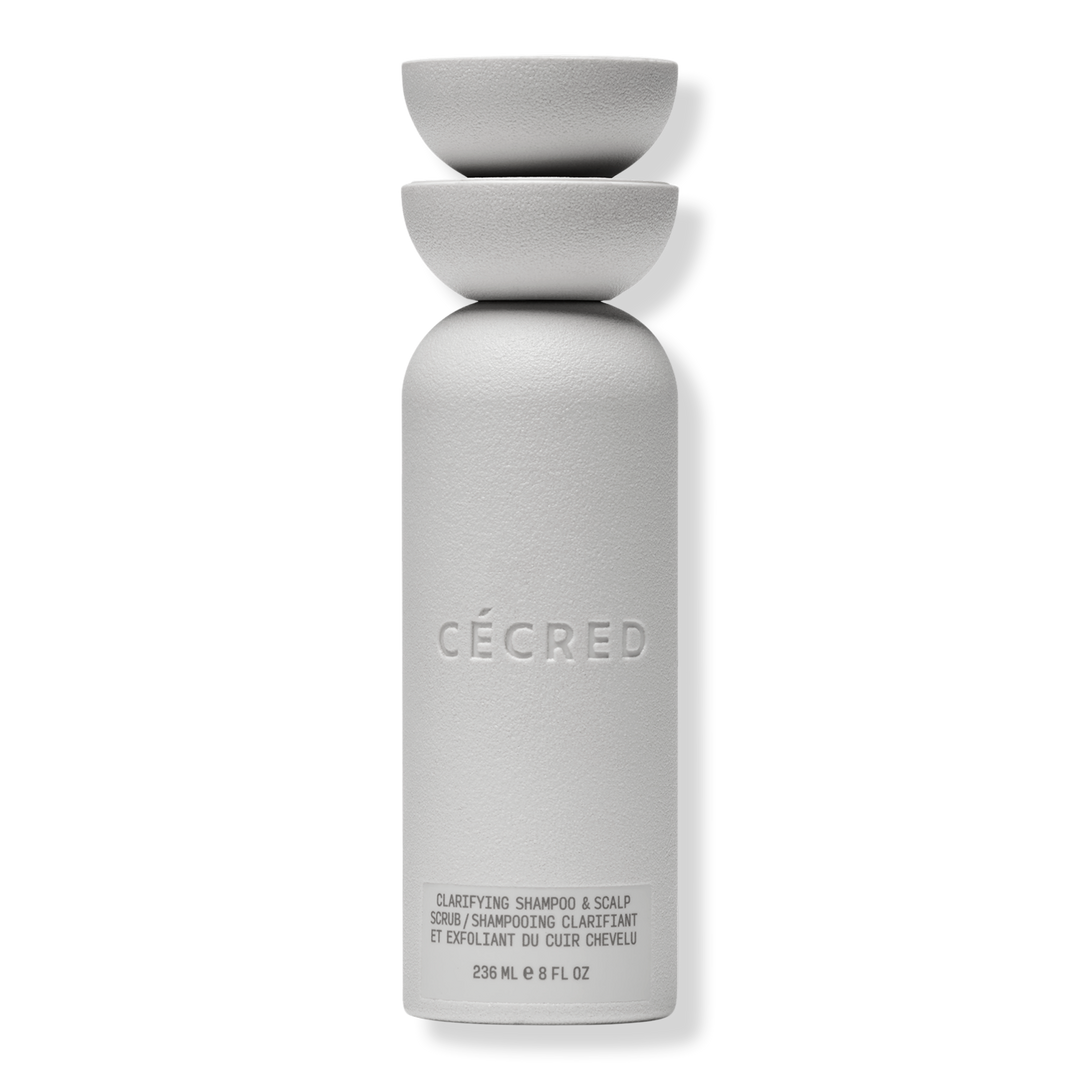
1 of 5: For heavy product buildup
CÉCRED Clarifying Shampoo & Scalp Scrub
Clarifying scrub shampoo, 8.0 oz | $39.00
Shop CÉCRED Clarifying Shampoo & Scalp Scrub at Ulta →
This two-in-one wash is a practical pick when styling residue and oil leave the roots feeling coated. It combines a physical exfoliant with fermented purple willow bark and a cleanser, so you can focus on one deep-cleansing step instead of stacking a scrub and clarifying shampoo. The nozzle helps place product along part lines, including through dense hair. Massage gently and rinse thoroughly.
Key specs: Clarifying shampoo and scalp scrub, microcrystalline cellulose exfoliant, fermented purple willow bark, nozzle applicator, color-safe per product listing
Use this in place of a separate scalp scrub on a deep-clean day, rather than pairing it with another strong exfoliator.
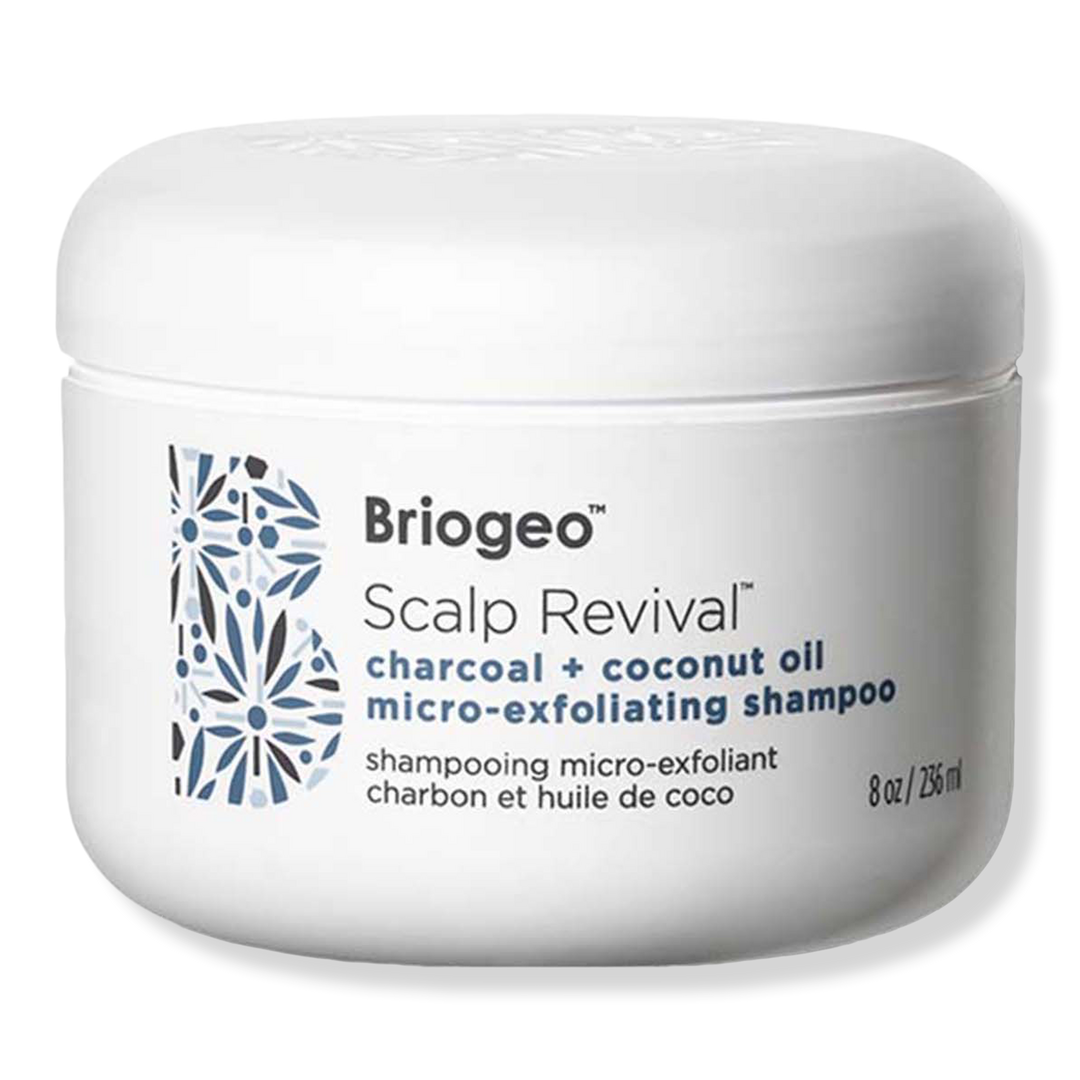
2 of 5: For dry-feeling flakes
Briogeo Scalp Revival Charcoal + Coconut Oil Micro-Exfoliating Scrub Shampoo
Micro-exfoliating scrub shampoo, 8.0 oz | $42.00
Shop Briogeo Scalp Revival Scrub Shampoo at Ulta →
This rinse-out scrub shampoo pairs a physical exfoliant with coconut oil and panthenol. If you find that exfoliating alone leaves your scalp feeling tight, a formula with moisturizing ingredients alongside the scrub may feel more comfortable. It is still a scrub, so use light fingertip pressure and take time to rinse particles out of thick or curly hair. The product directions suggest weekly or every-other-week use.
Key specs: Rinse-out scrub shampoo, microcrystalline cellulose, coconut oil, charcoal, weekly or every-other-week use per listing
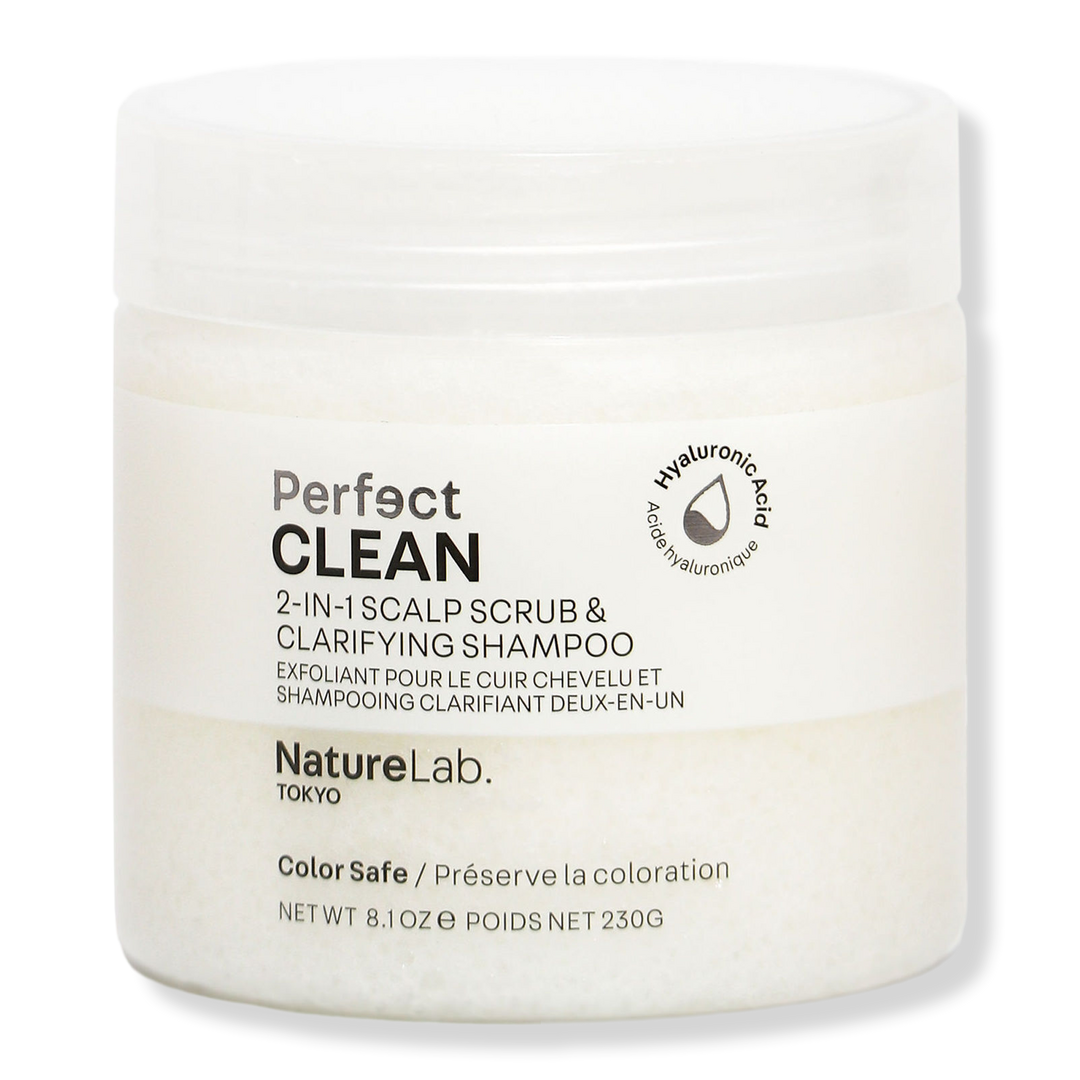
3 of 5: Two-in-one exfoliating wash for styling buildup
NatureLab. Tokyo Perfect Clean 2-In-1 Scalp Scrub & Clarifying Shampoo
Sugar scrub and clarifying shampoo, 8.1 oz | $19.99
Shop NatureLab. Tokyo Perfect Clean at Ulta →
Sugar crystals give this formula its manual exfoliation, while the wash lathers into a clarifying shampoo. It is a straightforward choice if your main issue is occasional styling buildup and you prefer to combine scrub and shampoo in one step. Work it onto a wet scalp with gentle pressure, then rinse well and follow with conditioner where your hair needs it.
Key specs: Sugar-based physical scrub, clarifying shampoo, rinse-out formula, online only on the checked listing, use 1-2 times weekly per product directions
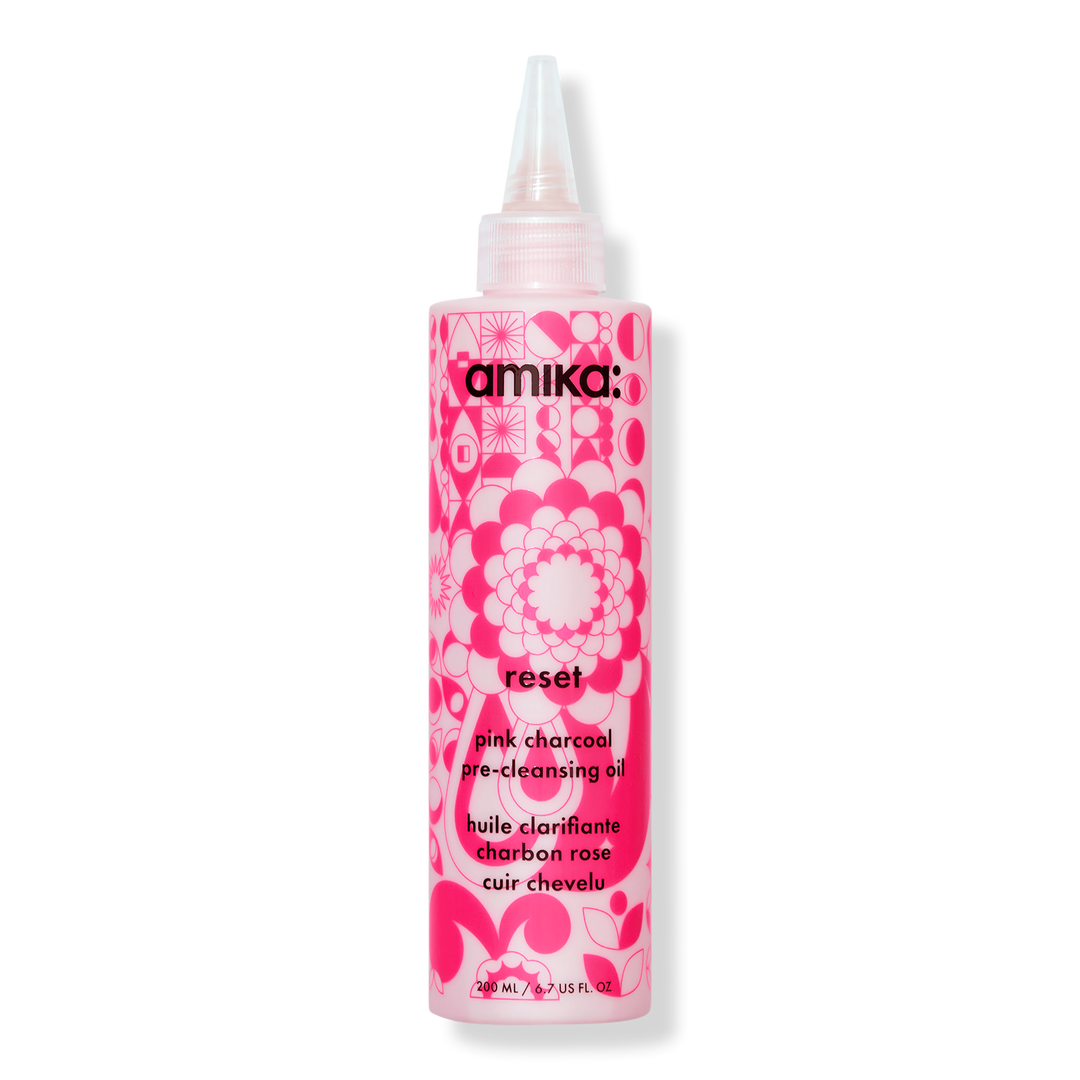
4 of 5: Pre-wash cleanser for oily product residue
amika Reset Pink Charcoal Scalp Cleansing Oil
Oil-to-foam pre-wash cleanser, 6.7 oz | $33.00
Shop amika Reset Pink Charcoal Scalp Cleansing Oil at Ulta →
This is a pre-wash cleansing oil, not an acid exfoliator or gritty scrub. Apply it to dry, sectioned roots before washing to help loosen oil and styling residue; add water to turn it into a lather, then rinse and shampoo as directed. Note that its menthol and fragrance may not feel comfortable on a reactive scalp.
Key specs: Pre-wash oil-to-foam cleanser, charcoal and pink clay, apply to dry scalp, wait 3-5 minutes per directions, follow with shampoo
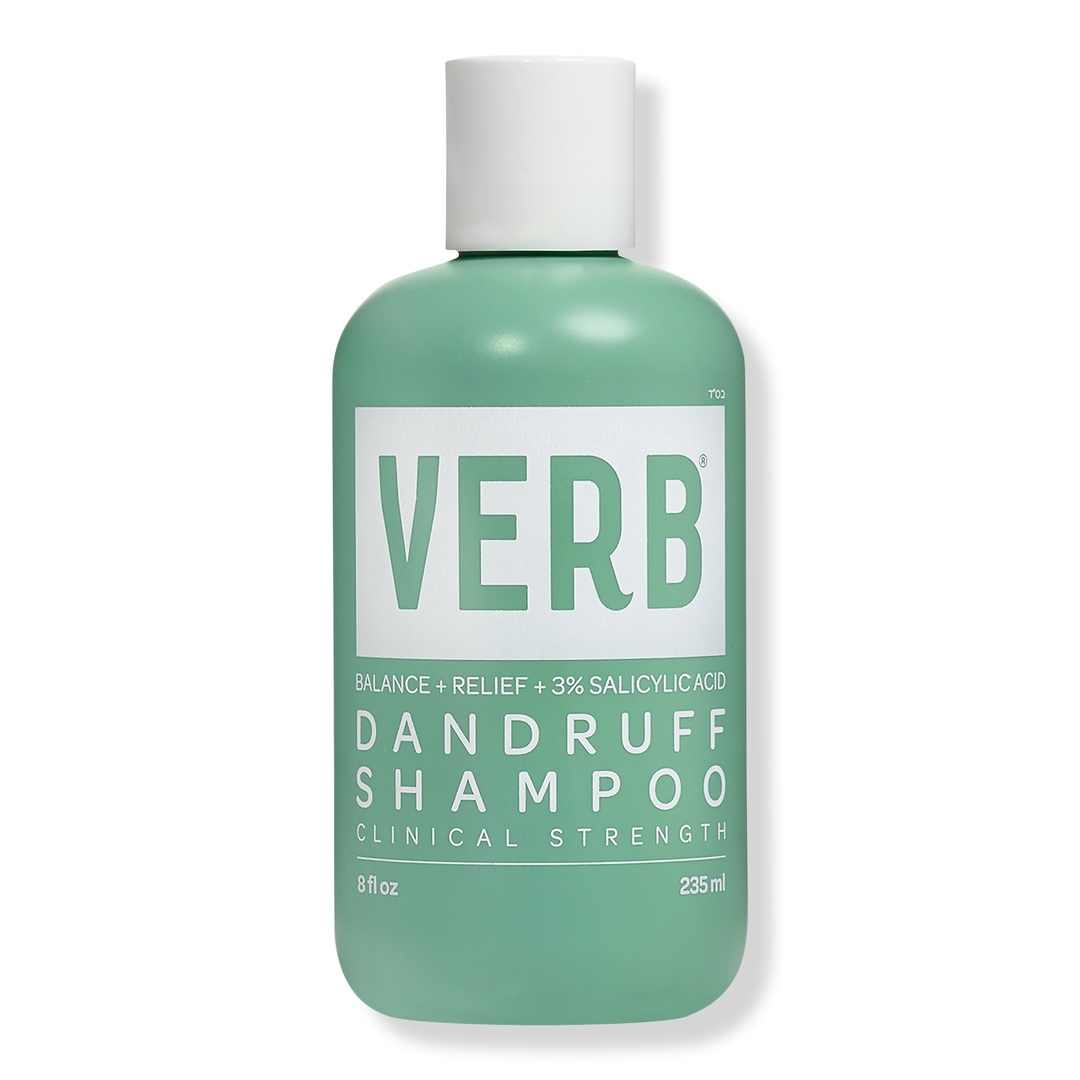
5 of 5: Anti-dandruff shampoo for recurring flakes
Verb Dandruff Shampoo with Salicylic Acid for Dry and Flaky Scalp
Anti-dandruff shampoo, 8.0 oz | $22.00
Shop Verb Dandruff Shampoo at Ulta →
If flakes keep returning with itch, an anti-dandruff shampoo may be a more appropriate fit than increasing how often you exfoliate. This one lists 3% salicylic acid as its active ingredient and directs users to leave it on the scalp for a few minutes before rinsing. Follow the package instructions and do not layer it with a separate exfoliating treatment unless both labels allow it. Seek professional advice if symptoms persist or worsen.
Key specs: Anti-dandruff shampoo, 3% salicylic acid active ingredient, 8.0 oz, label directs use at least twice weekly or as directed by a doctor for ages 12 and older
Treat recurring, itchy flakes as a separate concern from ordinary styling buildup. Follow the product's labeled directions and consult a healthcare professional if symptoms do not improve.
Frequently asked questions
Can a scalp exfoliator fade hair color?
Deep-cleansing and exfoliating formulas may affect how quickly some hair colors lose vibrancy. Check whether the product is labeled for color-treated hair, use it only as directed and ask your colorist about timing around your color service.
Can I exfoliate my scalp before coloring my hair?
Avoid aggressive exfoliation immediately before a color appointment because a freshly scrubbed scalp may feel more sensitive. Follow the timing guidance from your colorist and the exfoliator label.
Why does my scalp feel greasy after exfoliating?
The formula may not have rinsed fully, or a heavy follow-up product may have reached your roots. Rinse carefully and keep rich conditioners and masks on the areas of your hair that need them most.
Can I use a scalp exfoliator with hair extensions?
It depends on the extension type and product formula. Keep gritty scrubs and oily treatments away from attachment points, rinse gently and follow your extension care instructions.
Should I exfoliate my scalp before or after shampooing?
Pre-shampoo liquids and scrubs usually go before cleansing, while exfoliating shampoos replace your regular shampoo for that wash. The package directions should settle the order for your specific product.
Related Content: What is Scalp Serum, Curly Hair Care Routine, Best Scalp Treatments, Root Lifting Texture Spray vs Mousse, What is Co-Wash?, What is Hair Porosity?, How to Stop Greasy Hair, Hair Toner for Bleached Hair, What is an Ionic Hair Dryer, Best Sea Salt Sprays, Protein vs Deep Conditioner Treatment For Hair
Explore more Hair Care Buying Guides and Beauty Education Articles